Vik


Toshiba Announces Three New NVMe SSD Families
Toshiba Announces Three New NVMe SSD Families

On the eve of Flash Memory Summit (August 11-13), Toshiba has announced a full range of NVMe-based PCIe SSDs using Toshiba controllers and Toshiba MLC flash.

Toshiba NVMe Drive Families
Drive Series PX04P XG3 BG1
Form Factors and Interface PCIe 3.0 x4 HHHL /
2.5” U.2
PCIe 3.1 x4 M.2 2280 / 2.5” SATA Express M.2 2230 /
16mm*20mm soldered module “M.2 1620”
Capacities 800 GB, 1600 GB, 3200 GB Up to 1024GB Up to 256 GB
QSBC Error Correction Yes Yes No
TCG Pyrite Security No Yes Yes
Sequential Read 3100 MB/s ? ?
Sequential Write 2350 MB/s ? ?
4kB Random Read IOPS 660k ? ?
4kB Random Write IOPS 185k ? ?

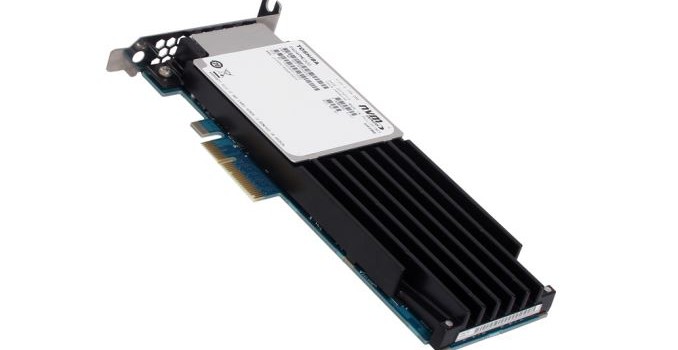
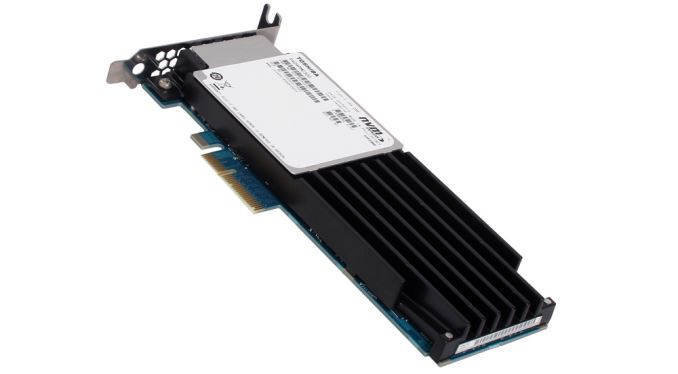
For the enterprise market, the PX04P series complements the SAS-based PX04S drives announced last week. The PX04P is available as a 2.5” drive with a U.2 (SFF-8639) connector, or as a PCIe expansion card. In either case, the drive supports four lanes of PCIe 3.0 and can make good use of that bandwidth to offer up to 3.1 GB/s sequential read speeds. With an endurance rating of 10 drive writes per day it is intended for relatively write-heavy workloads.

For the high-performance client market, the XG3 is available in the M.2 2280 form factor using four lanes of PCIe 3.1, or as a 2.5” drive using the two-lane SATA Express connector. If these drives make it in to the retail channel, it means that consumers whose motherboards have a SATA Express connector but no M.2 slot will finally have an easy way to get in on the PCIe storage revolution.

For tablets and ultra-thin laptops, the BG1 is optimized for low power in very small packages. It comes as either an M.2 2230 card or a soldered-down module measuring 16mm by 20mm. The BG1’s maximum capacity is only 256 GB, and given the power and size constraints it is probably not using a 4-lane PCIe connection.

The two client drive families implement support for the Trusted Computing Group Pyrite standard, a subset of TCG Opal that includes features necessary for things like secure boot but does not include encryption.
Lenovo Launches New P50 And P70 Mobile Workstations With First Mobile Xeon Chips

Lenovo Launches New P50 And P70 Mobile Workstations With First Mobile Xeon Chips

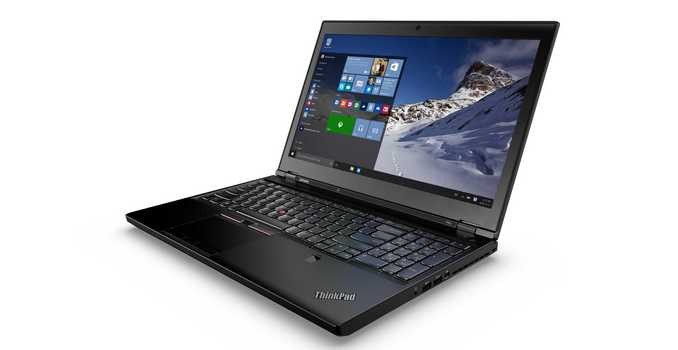
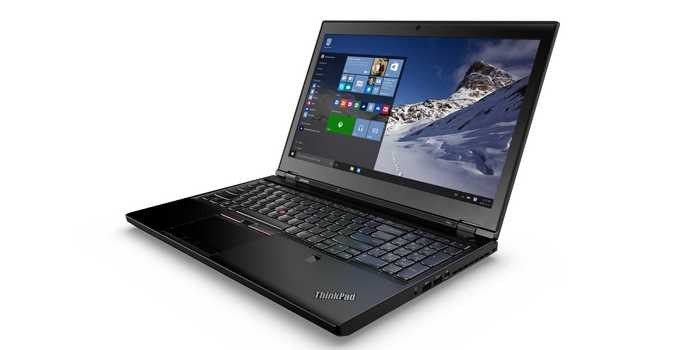
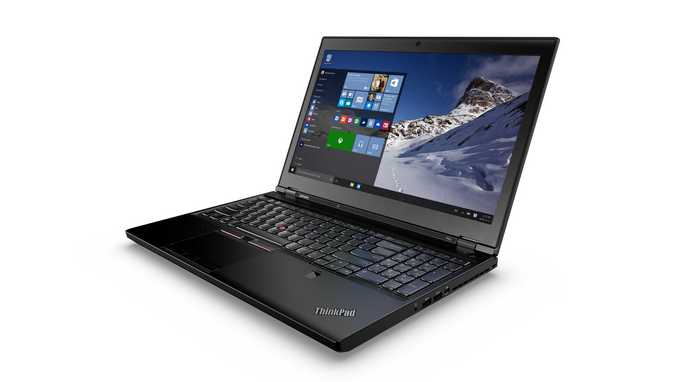
Today at the SIGGRAPH 2015 Conference and Exhibition, Lenovo unveiled some new mobile workstations. The new ThinkPad P series are aimed at high-end professionals who need a lot of compute on the go. There are two models, with the P50 being a 15.6-inch version, which is a follow-on to the W541. The larger P70 features a 17.3-inch display. Both can pack some serious specifications under the hood, starting with the processor.

Both models will feature a new processor from Intel, which is going to be the first official mobile version of their Xeon line. Intel has not released much information yet, but the Intel Xeon E3-1500M v5 is going to be powering these workstations from Lenovo. While we don’t have exact frequencies yet, the v5 version is going to be based on the just released Skylake architecture, which brings a lot of new technology to the plate. Lenovo will offer the new P series with up to 64 GB of DDR4 memory, arranged in 4 SODIMM slots. One of the reasons to use Xeon is that it supports ECC memory, and these workstations leverage that for the workloads they will be expected to run Also part of the new Xeon will be Thunderbolt 3, and both models have this connectivity. We’re not sure yet if Thunderbolt is built into the Xeons, or if something like the Aipine Ridge as an IO controller for this.

On the GPU side, Lenovo has included a Quadro card, however the exact model is not known yet.

There is also up to 1 TB of PCIe SSD storage available, and up to a 2 TB hard drive. In addition to the Thunderbolt, there will also be HDMI 1.4, mini DisplayPort 1.2, ExpressCard, SDXC, and of course what workstation would not have Gigabit Ethernet, so the P Series has this as well.

Wireless is a new card from Intel as well, with the Intel 8260 card which is an 802.11ac model, and Lenovo will be offering it with Bluetooth 4.1 and vPro as well. For those that need connectivity on the go, Lenovo is offering a Sierra EM7445 LTE-A option as well.

Lenovo P Series Mobile Workstations
  P50 P70
CPU Intel Xeon E3 1500M v5
Quad-core Skylake
~47W TDP
GPU NVIDIA Quadro
Model number unknown
Memory Up to 64 GB DDR4-2133 ECC
Storage Up to 1TB PCIe SSD
Up to 2TB HDD
Display 15.6″ 1920×1080 IPS w/optional touch
Optional 3840×2160 IPS
X-Rite Pantone Color Correction
17.3″ 1920×1080 IPS w/optional touch
Optional 3840×2160 IPS
X-Rite Pantone Color Correction
Ports USB 3.0 x 4
Mini DP 1.2
HDMI 1.4
Thunderbolt 3
Docking Connector
Smart Card Reader
ExpressCard
SDXC
Headset
Networking Intel 8260 Wireless-AC 802.11ac WiFi
Bluetooth 4.11
Optional vPro
Gigabit Ethernet
Sierra EM7445 4G LTE-A
Dimensions H: 0.96-1.02″ (24.5-25.9 mm)
W: 14.86″ (377.4 mm)
D: 9.93″ (252.3 mm)
H: 1.17-1.2″ (29.9-31.5 mm)
W: 16.4″ (416 mm)
D: 10.8″ (275.5 mm)
Weight Starting at 5.6 lbs (2.5kg) Starting at 7.6 lbs (3.4 kg)
Battery Life 4 Cell 66 Whr
Optional 6 Cell 90 Whr
8 Cell 96 WHr
Price $1599+ $1999+

Other than the larger display, the P70 can also be had with a DVD-RW drive, but hopefully but the time it launches they will at least offer Blu-ray as an option.

Speaking of the displays, Lenovo has packed some pretty impressive sounding displays into both models. The P series will offer a 1920x1080p as the base, with optional touch, and there is also a UHD 3840×2160 IPS offering as well. All of the panels are IPS models, and Lenovo has turned to X-Rite to offer Pantone color calibration out of the box, and over the lifetime of the device.

The P series can be had with a good choice of operating systems too, from Windows 10 Pro, Windows 8.1 Pro, or downgrade rights to Windows 7 Professional. If you need Linux for your workstation, they will also be offering Ubuntu and RHEL.

Gallery: Lenovo P Series

These MIL-SPEC tested and ISV Certified professional workstations will be available in Q4 2015 with the P50 starting at $1599, and the P70 starting at $1999.

Source: Lenovo

Lenovo Launches New P50 And P70 Mobile Workstations With First Mobile Xeon Chips

Lenovo Launches New P50 And P70 Mobile Workstations With First Mobile Xeon Chips

Today at the SIGGRAPH 2015 Conference and Exhibition, Lenovo unveiled some new mobile workstations. The new ThinkPad P series are aimed at high-end professionals who need a lot of compute on the go. There are two models, with the P50 being a 15.6-inch version, which is a follow-on to the W541. The larger P70 features a 17.3-inch display. Both can pack some serious specifications under the hood, starting with the processor.

Both models will feature a new processor from Intel, which is going to be the first official mobile version of their Xeon line. Intel has not released much information yet, but the Intel Xeon E3-1500M v5 is going to be powering these workstations from Lenovo. While we don’t have exact frequencies yet, the v5 version is going to be based on the just released Skylake architecture, which brings a lot of new technology to the plate. Lenovo will offer the new P series with up to 64 GB of DDR4 memory, arranged in 4 SODIMM slots. One of the reasons to use Xeon is that it supports ECC memory, and these workstations leverage that for the workloads they will be expected to run Also part of the new Xeon will be Thunderbolt 3, and both models have this connectivity. We’re not sure yet if Thunderbolt is built into the Xeons, or if something like the Aipine Ridge as an IO controller for this.

On the GPU side, Lenovo has included a Quadro card, however the exact model is not known yet.

There is also up to 1 TB of PCIe SSD storage available, and up to a 2 TB hard drive. In addition to the Thunderbolt, there will also be HDMI 1.4, mini DisplayPort 1.2, ExpressCard, SDXC, and of course what workstation would not have Gigabit Ethernet, so the P Series has this as well.

Wireless is a new card from Intel as well, with the Intel 8260 card which is an 802.11ac model, and Lenovo will be offering it with Bluetooth 4.1 and vPro as well. For those that need connectivity on the go, Lenovo is offering a Sierra EM7445 LTE-A option as well.

Lenovo P Series Mobile Workstations
  P50 P70
CPU Intel Xeon E3 1500M v5
Quad-core Skylake
~47W TDP
GPU NVIDIA Quadro
Model number unknown
Memory Up to 64 GB DDR4-2133 ECC
Storage Up to 1TB PCIe SSD
Up to 2TB HDD
Display 15.6″ 1920×1080 IPS w/optional touch
Optional 3840×2160 IPS
X-Rite Pantone Color Correction
17.3″ 1920×1080 IPS w/optional touch
Optional 3840×2160 IPS
X-Rite Pantone Color Correction
Ports USB 3.0 x 4
Mini DP 1.2
HDMI 1.4
Thunderbolt 3
Docking Connector
Smart Card Reader
ExpressCard
SDXC
Headset
Networking Intel 8260 Wireless-AC 802.11ac WiFi
Bluetooth 4.11
Optional vPro
Gigabit Ethernet
Sierra EM7445 4G LTE-A
Dimensions H: 0.96-1.02″ (24.5-25.9 mm)
W: 14.86″ (377.4 mm)
D: 9.93″ (252.3 mm)
H: 1.17-1.2″ (29.9-31.5 mm)
W: 16.4″ (416 mm)
D: 10.8″ (275.5 mm)
Weight Starting at 5.6 lbs (2.5kg) Starting at 7.6 lbs (3.4 kg)
Battery Life 4 Cell 66 Whr
Optional 6 Cell 90 Whr
8 Cell 96 WHr
Price $1599+ $1999+

Other than the larger display, the P70 can also be had with a DVD-RW drive, but hopefully but the time it launches they will at least offer Blu-ray as an option.

Speaking of the displays, Lenovo has packed some pretty impressive sounding displays into both models. The P series will offer a 1920x1080p as the base, with optional touch, and there is also a UHD 3840×2160 IPS offering as well. All of the panels are IPS models, and Lenovo has turned to X-Rite to offer Pantone color calibration out of the box, and over the lifetime of the device.

The P series can be had with a good choice of operating systems too, from Windows 10 Pro, Windows 8.1 Pro, or downgrade rights to Windows 7 Professional. If you need Linux for your workstation, they will also be offering Ubuntu and RHEL.

Gallery: Lenovo P Series

These MIL-SPEC tested and ISV Certified professional workstations will be available in Q4 2015 with the P50 starting at $1599, and the P70 starting at $1999.

Source: Lenovo

Qualcomm Launches Snapdragon 616, 412, and 212

Qualcomm Launches Snapdragon 616, 412, and 212

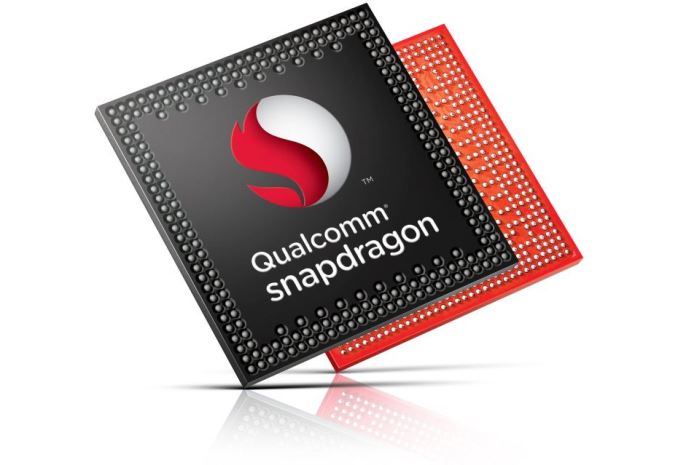
Today, Qualcomm launched a set of new SoCs, namely the Snapdragon 616, 412, and 212. These are updates to the Snapdragon 615, 410, and 210 respectively.

If you were to guess that these are relatively minor updates, you’d be right. First off, the Snapdragon 616 leaves the 615 mostly unchanged, with the top clockspeed of the little cluster jumping from 1 GHz to 1.2 GHz. However it should be noted that there are iterations of the 615 with a 1.11 GHz little cluster clock as well.

Qualcomm’s SoC Refresh Lineup
  Snapdragon 616 Snapdragon 412 Snapdragon 212
Manufacturing Process 28nm LP 28nm LP 28nm LP
CPU 4 x ARM Cortex A53 @ 1.7GHz
4x ARM Cortex A53 @ 1.2GHz
4 x ARM Cortex A53 @ 1.4GHz 4 x ARM Cortex A7 @ 1.3GHz
ISA 32/64-bit ARMv8-A 32/64-bit ARMv8-A 32-bit ARMv7
GPU Adreno 405 Adreno 306 Adreno 304
H.265 Decode Yes (1080p) Yes (720p) Yes (1080p)
Memory Interface 32-bit LPDDR3-800 32-bit LPDDR2/3-600 32-bit LPDDR2/3-533
Integrated Modem 9×25 core, LTE Category 4, DC-HSPA+, DS-DA 9×25 core, LTE Category 4, DC-HSPA+, DS-DA 9×25 core, LTE Category 4, DC-HSPA+, DS-DA
Integrated WiFi Qualcomm VIVE 802.11ac 1-stream 802.11n 1-stream 802.11n 1-stream
eMMC Interface 4.51 4.51 4.5

Meanwhile the Snapdragon 410 to 412 upgrade is a bit bigger, with the single cluster of A53s going from 1.2 GHz to 1.4 GHz and the memory interface going from a max of 533 MHz to 600 MHz. The Snapdragon 210 to 212 upgrade on the other hand is similar to the 615 to 616 upgrade, with the single cluster of A7s going from 1.1 to 1.3 GHz and are otherwise unchanged.

Overall it’s a bit unfortunate that none of these SoCs have made the move from a traditional polySiON gate oxide to a high-k metal gate process yet. However I suspect that in these lower tiers even the cost of HKMG would dramatically affect competitiveness and price.

Finally, at this point it’s unclear when these new variants will begin shipping, but it’s likely that this part is sampling now. Which means that devices with these new SoCs should be available before the end of the year.

Qualcomm Launches Snapdragon 616, 412, and 212

Qualcomm Launches Snapdragon 616, 412, and 212

Today, Qualcomm launched a set of new SoCs, namely the Snapdragon 616, 412, and 212. These are updates to the Snapdragon 615, 410, and 210 respectively.

If you were to guess that these are relatively minor updates, you’d be right. First off, the Snapdragon 616 leaves the 615 mostly unchanged, with the top clockspeed of the little cluster jumping from 1 GHz to 1.2 GHz. However it should be noted that there are iterations of the 615 with a 1.11 GHz little cluster clock as well.

Qualcomm’s SoC Refresh Lineup
  Snapdragon 616 Snapdragon 412 Snapdragon 212
Manufacturing Process 28nm LP 28nm LP 28nm LP
CPU 4 x ARM Cortex A53 @ 1.7GHz
4x ARM Cortex A53 @ 1.2GHz
4 x ARM Cortex A53 @ 1.4GHz 4 x ARM Cortex A7 @ 1.3GHz
ISA 32/64-bit ARMv8-A 32/64-bit ARMv8-A 32-bit ARMv7
GPU Adreno 405 Adreno 306 Adreno 304
H.265 Decode Yes (1080p) Yes (720p) Yes (1080p)
Memory Interface 32-bit LPDDR3-800 32-bit LPDDR2/3-600 32-bit LPDDR2/3-533
Integrated Modem 9×25 core, LTE Category 4, DC-HSPA+, DS-DA 9×25 core, LTE Category 4, DC-HSPA+, DS-DA 9×25 core, LTE Category 4, DC-HSPA+, DS-DA
Integrated WiFi Qualcomm VIVE 802.11ac 1-stream 802.11n 1-stream 802.11n 1-stream
eMMC Interface 4.51 4.51 4.5

Meanwhile the Snapdragon 410 to 412 upgrade is a bit bigger, with the single cluster of A53s going from 1.2 GHz to 1.4 GHz and the memory interface going from a max of 533 MHz to 600 MHz. The Snapdragon 210 to 212 upgrade on the other hand is similar to the 615 to 616 upgrade, with the single cluster of A7s going from 1.1 to 1.3 GHz and are otherwise unchanged.

Overall it’s a bit unfortunate that none of these SoCs have made the move from a traditional polySiON gate oxide to a high-k metal gate process yet. However I suspect that in these lower tiers even the cost of HKMG would dramatically affect competitiveness and price.

Finally, at this point it’s unclear when these new variants will begin shipping, but it’s likely that this part is sampling now. Which means that devices with these new SoCs should be available before the end of the year.