Vik


AMD Announces Ryzen AGESA 1.0.0.6 Update: Enables Memory Clocks Up To DDR4-4000

AMD Announces Ryzen AGESA 1.0.0.6 Update: Enables Memory Clocks Up To DDR4-4000

Demonstrating their commitment to keep improving the AM4 platform, AMD has just published a suite of details about their upcoming AGESA 1.0.0.6 firmware. Of particular interest here, the latest firmware is going to enhance memory overclocking and compability, as well as add a much needed virtualization-related feature.

AGESA is an acronym for “AMD Generic Encapsulated System Architecture”, and it is essentially the foundational code on which BIOS files for AM4 motherboards are built. When the Ryzen AM4 platform was launched back in March, the early AGESA versions lacked a lot of the core capabilities and settings that we have come to expect from a modern platform. As a result, motherboard manufacturers did not have a lot to work with when it came to creating feature-rich custom BIOSes for their own motherboards. Since then AMD has been pretty vocal and proactive about fixing any bugs, opening up new BIOS features, and improving overclocking.

With this new AGESA version, AMD has added 26 new memory-related parameters. The most dramatic improvement is the significant expansion of memory speed options. If we exclude base block overclocking – which relatively few motherboards support – the AM4 platform has thus far been effectively limited to memory speeds of DDR4-3200. Not only that, but the supported range of options from DDR4-1866 to DDR4-3200 was in large 266MT/s increments. With AGESA 1.0.0.6, memory frequencies have not only been expanded all the way up to DDR4-4000, but between DDR4-2667 and DDR4-4000 the increments have been reduced to 133MT/s. Not only does this mean that more memory kits will be able to be run at their rated speed – and not get kicked down to the nearest supported speed – but it also significantly reduces the high-speed memory gap that the AM4 platform had with Intel’s mainstream LGA1151 platform.

The other important announcement is the unlocking of about two dozen memory timings. Up until now, only five primary memory timings have been adjustable and there wasn’t even a command rate option, which was natively locked to the most aggressive 1T setting. All of this should help improve overclocking and most importantly compatibility with the large swathe of DDR4 memory kits that have largely been engineered with Intel platforms in mind.

The last addition should excite those interested in virtualization. AMD has announced “fresh support” for PCI Express Access Control Services (ACS), which enables the ability to manually assign PCIe graphics cards within IOMMU groups. This should be a breath of fresh air to those who have previously tried to dedicate a GPU to a virtual machine on a Ryzen system, since it is a task that has thus far been fraught with difficulties.

AMD has already distributed the AGESA 1.0.0.6 to its motherboard partners, so BIOS updates should be available starting in mid to late June. Having said that, there are apparently beta versions currently available for the ASUS Crosshair VI and GIGABYTE GA-AX370-Gaming 5.

Related Reading

AMD Announces Ryzen AGESA 1.0.0.6 Update: Enables Memory Clocks Up To DDR4-4000

AMD Announces Ryzen AGESA 1.0.0.6 Update: Enables Memory Clocks Up To DDR4-4000

Demonstrating their commitment to keep improving the AM4 platform, AMD has just published a suite of details about their upcoming AGESA 1.0.0.6 firmware. Of particular interest here, the latest firmware is going to enhance memory overclocking and compability, as well as add a much needed virtualization-related feature.

AGESA is an acronym for “AMD Generic Encapsulated System Architecture”, and it is essentially the foundational code on which BIOS files for AM4 motherboards are built. When the Ryzen AM4 platform was launched back in March, the early AGESA versions lacked a lot of the core capabilities and settings that we have come to expect from a modern platform. As a result, motherboard manufacturers did not have a lot to work with when it came to creating feature-rich custom BIOSes for their own motherboards. Since then AMD has been pretty vocal and proactive about fixing any bugs, opening up new BIOS features, and improving overclocking.

With this new AGESA version, AMD has added 26 new memory-related parameters. The most dramatic improvement is the significant expansion of memory speed options. If we exclude base block overclocking – which relatively few motherboards support – the AM4 platform has thus far been effectively limited to memory speeds of DDR4-3200. Not only that, but the supported range of options from DDR4-1866 to DDR4-3200 was in large 266MT/s increments. With AGESA 1.0.0.6, memory frequencies have not only been expanded all the way up to DDR4-4000, but between DDR4-2667 and DDR4-4000 the increments have been reduced to 133MT/s. Not only does this mean that more memory kits will be able to be run at their rated speed – and not get kicked down to the nearest supported speed – but it also significantly reduces the high-speed memory gap that the AM4 platform had with Intel’s mainstream LGA1151 platform.

The other important announcement is the unlocking of about two dozen memory timings. Up until now, only five primary memory timings have been adjustable and there wasn’t even a command rate option, which was natively locked to the most aggressive 1T setting. All of this should help improve overclocking and most importantly compatibility with the large swathe of DDR4 memory kits that have largely been engineered with Intel platforms in mind.

The last addition should excite those interested in virtualization. AMD has announced “fresh support” for PCI Express Access Control Services (ACS), which enables the ability to manually assign PCIe graphics cards within IOMMU groups. This should be a breath of fresh air to those who have previously tried to dedicate a GPU to a virtual machine on a Ryzen system, since it is a task that has thus far been fraught with difficulties.

AMD has already distributed the AGESA 1.0.0.6 to its motherboard partners, so BIOS updates should be available starting in mid to late June. Having said that, there are apparently beta versions currently available for the ASUS Crosshair VI and GIGABYTE GA-AX370-Gaming 5.

Related Reading
Fractal Design Unveils Focus G Series Cases

Fractal Design Unveils Focus G Series Cases

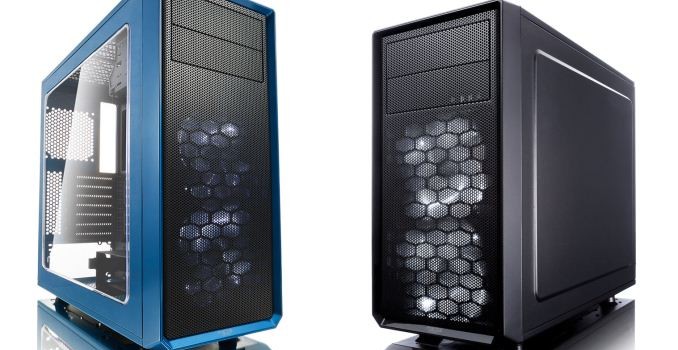
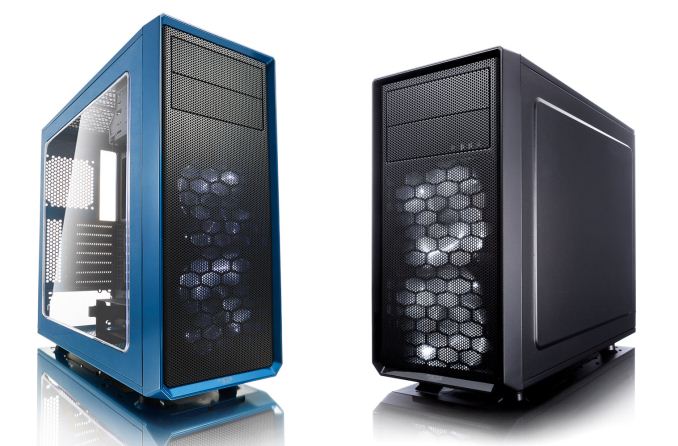
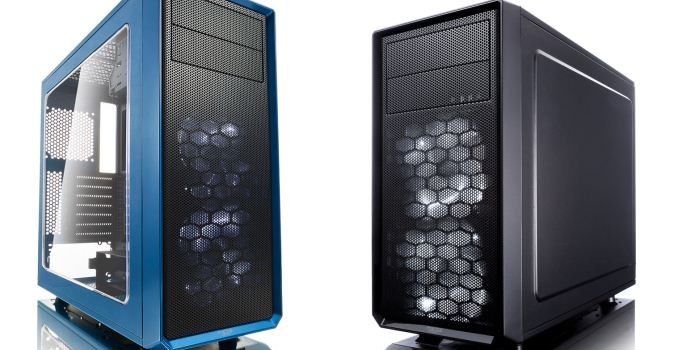
Fractal Design has just launched two new cases under the banner of the new Focus G series. The Focus G is a standard ATX mid-tower, while the Focus G Mini features a more compact footprint and is intended for Micro-ATX and Mini-ITX builds. While both models will be offered in black, the larger Focus G will also be offered in white and a brand new choice of Gunmetal Gray, Mystic Red, and Petrol Blue. This multiple color option is a first for Fractal Design.

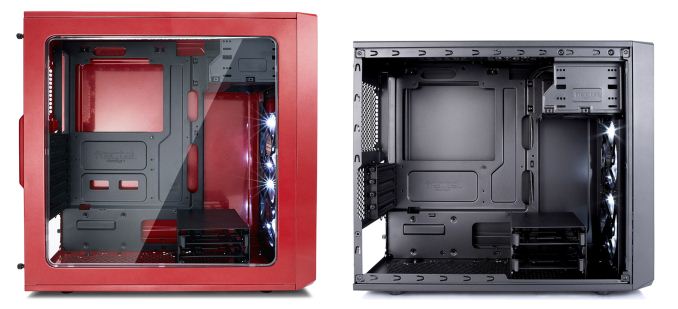
The Focus G series is manufactured using a combination of steel and plastic as you would expect from a cost-conscious case series. What you wouldn’t necessarily expect in 2017 are the two external 5.25” drive bays. Size and color differences aside, these two models are effectively twins and they share numerous key features.

Both cases have a large side panel window, removeable and vibration dampened storage drive bays, 18mm to 25mm of cable routing room behind the motherboard tray, and a front I/O panel that includes one USB 3.0 port, USB 2.0 port, and two audio jacks. When it comes to fans, both models have a total of six 120mm fan mounts, four of which can also hold 140mm fans (three on the Focus G Mini). There are removable dust filters everywhere but the rear. Fractal Design has included two front-mounted Silent Series LL 120mm LED fans that glow white light through the front mesh.

Fractal Design Focus G Series
  Focus G Focus G Mini
Motherboard Size ATX, Micro-ATX, Mini-ITX Micro-ATX, Mini-ITX
Drive Bays External
Internal 2 × 2.5″ or 3.5″ and 1 × 2.5″ 2 × 2.5″ or 3.5″ and 1 × 2.5″
AIB Bays Internal 7, up to 380 mm cards are supported 4, up to 380 mm cards are supported
Cooling Front 2 × 120 mm or 2 × 140 mm 2 × 120 mm or 1 × 140 mm
Rear 1 × 120 mm 1 × 120 mm
Top 2 × 120 mm or 2 × 140 mm 2 × 120 mm or 2 × 140 mm
Middle
Bottom 1 × 120 mm 1 × 120 mm
Radiator Support Front 1 × 120/240 mm or 140/280 mm 1 × 120/240 mm or 140 mm
Rear 1 × 120 mm 1 × 120 mm
Top 1 × 240 mm 1 × 240 mm
Middle
Bottom
I/O Port 1 × USB 2.0
1 × USB 3.0
1 × Headphone
1 × Mic
1 × USB 2.0
1 × USB 3.0
1 × Headphone
1 × Mic
Power Supply Size Up to 230 mm Up to 230 mm
Dimensions
Colors Multiple colors Black
Features Large side window panel Large side window panel
Price $49.99 $49.99

These Focus G series models also have extensive liquid cooling support, with radiator mounts in the front, rear, and the top of the cases. Those more interested in air cooling will be able to fit heatsinks that are up to 165mm tall, which means just about every cooler on the market. Both models can also handle graphics cards up to 380mm long, while power supply depth is a very spacious 230mm. The other similarity is that both models are going to retail for $49.99 USD, which places them firmly in the competitive budget case market.

We have no word on availability, but sometime after Computex is a firm bet.

Related Reading

Gallery: Focus G

Gallery: Focus G Mini

Fractal Design Unveils Focus G Series Cases

Fractal Design Unveils Focus G Series Cases

Fractal Design has just launched two new cases under the banner of the new Focus G series. The Focus G is a standard ATX mid-tower, while the Focus G Mini features a more compact footprint and is intended for Micro-ATX and Mini-ITX builds. While both models will be offered in black, the larger Focus G will also be offered in white and a brand new choice of Gunmetal Gray, Mystic Red, and Petrol Blue. This multiple color option is a first for Fractal Design.

The Focus G series is manufactured using a combination of steel and plastic as you would expect from a cost-conscious case series. What you wouldn’t necessarily expect in 2017 are the two external 5.25” drive bays. Size and color differences aside, these two models are effectively twins and they share numerous key features.

Both cases have a large side panel window, removeable and vibration dampened storage drive bays, 18mm to 25mm of cable routing room behind the motherboard tray, and a front I/O panel that includes one USB 3.0 port, USB 2.0 port, and two audio jacks. When it comes to fans, both models have a total of six 120mm fan mounts, four of which can also hold 140mm fans (three on the Focus G Mini). There are removable dust filters everywhere but the rear. Fractal Design has included two front-mounted Silent Series LL 120mm LED fans that glow white light through the front mesh.

Fractal Design Focus G Series
  Focus G Focus G Mini
Motherboard Size ATX, Micro-ATX, Mini-ITX Micro-ATX, Mini-ITX
Drive Bays External
Internal 2 × 2.5″ or 3.5″ and 1 × 2.5″ 2 × 2.5″ or 3.5″ and 1 × 2.5″
AIB Bays Internal 7, up to 380 mm cards are supported 4, up to 380 mm cards are supported
Cooling Front 2 × 120 mm or 2 × 140 mm 2 × 120 mm or 1 × 140 mm
Rear 1 × 120 mm 1 × 120 mm
Top 2 × 120 mm or 2 × 140 mm 2 × 120 mm or 2 × 140 mm
Middle
Bottom 1 × 120 mm 1 × 120 mm
Radiator Support Front 1 × 120/240 mm or 140/280 mm 1 × 120/240 mm or 140 mm
Rear 1 × 120 mm 1 × 120 mm
Top 1 × 240 mm 1 × 240 mm
Middle
Bottom
I/O Port 1 × USB 2.0
1 × USB 3.0
1 × Headphone
1 × Mic
1 × USB 2.0
1 × USB 3.0
1 × Headphone
1 × Mic
Power Supply Size Up to 230 mm Up to 230 mm
Dimensions
Colors Multiple colors Black
Features Large side window panel Large side window panel
Price $49.99 $49.99

These Focus G series models also have extensive liquid cooling support, with radiator mounts in the front, rear, and the top of the cases. Those more interested in air cooling will be able to fit heatsinks that are up to 165mm tall, which means just about every cooler on the market. Both models can also handle graphics cards up to 380mm long, while power supply depth is a very spacious 230mm. The other similarity is that both models are going to retail for $49.99 USD, which places them firmly in the competitive budget case market.

We have no word on availability, but sometime after Computex is a firm bet.

Related Reading

Gallery: Focus G

Gallery: Focus G Mini