News


Compulab Passively-Cooled Airtop2 Inferno with GeForce GTX 1080

Compulab Passively-Cooled Airtop2 Inferno with GeForce GTX 1080

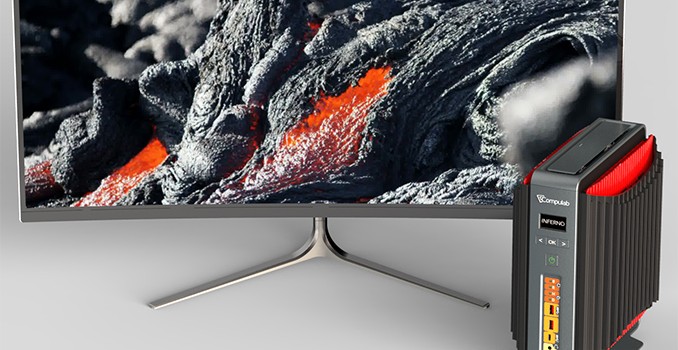
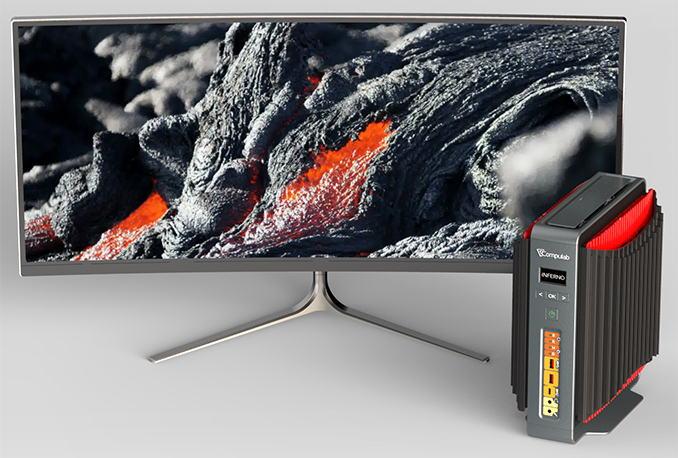
Compulab has announced its first passively-cooled gaming desktop computer developed using the company’s expertise in fanless SFF systems. The Airtop2 Inferno uses an enhanced version of the Compulab’s proprietary natural air-flow (NAF) cooling system that can handle Intel’s Core i7-7700K processor as well as NVIDIA’s GeForce GTX 1080 graphics card. The Airtop2 Inferno will only be mass-produced if the company sees interest from the end user towards such systems.

Miniature gaming computers are certainly a part of an ongoing trend towards miniaturization of PCs in general — numerous manufacturers offer SFF gaming systems. Passively-cooled gaming PCs represent another category. Numerous companies have attempted to build such systems and/or produce appropriate components (e.g., Calyos, Zalman, etc.), but they were either very expensive, large, or had compromises when it comes to performance. Enter, Compulab. The company has been producing fanless special-purpose SFF PCs since 2007 and has experience with passive cooling. Compulab has been selling its specialized Airtop-branded fanless workstations for over two years now and this month it announces plans to expand its business to gaming systems. The first of such machines will be the Airtop2 Inferno that builds upon the workstation introduced earlier this month, but has an improved cooling system that can handle higher TDPs.

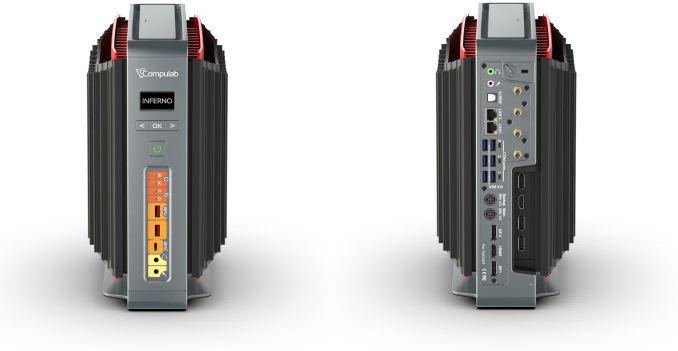
The Compulab Airtop2 Inferno relies on a specially-designed Intel C236-based motherboard and will be equipped with Intel’s Core i7-7700K processor as well as NVIDIA’s GeForce GTX 1080 graphics card. The system can be outfitted with up to 64 GB of DDR4-2400 memory, two M.2 NVMe SSDs and four 2.5”/9.5mm SATA storage devices. When it comes to I/O capabilities, the Airtop Inferno2 will have two USB 3.1 Gen 2 (USB-A and USB-C) ports (enabled by a FACE module), seven USB 3.0 headers, two GbE controllers, optional 802.11ac Wi-Fi, Bluetooth, audio connectors, DisplayPort 1.2 as well as HDMI outputs and so on. Since the Airtop2 Inferno relies on the Airtop2, it has almost the same connectivity capabilities as the fanless workstation, so it supports an optional 4G/LTE modem as well as FACE expansion modules.

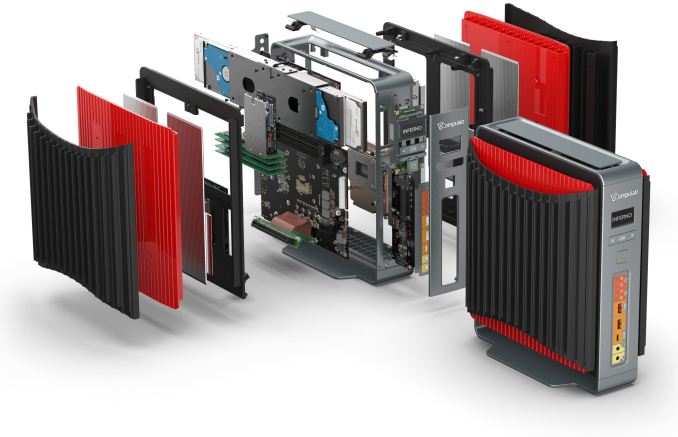
The key difference between the Airtop2 and the Airtop2 Inferno is the enhanced natural air-flow (NAF) cooling technology capable of removing up to 300 W of heat. As discussed two years ago, the NAF heat-exchange system uses two special side-panels, each of which can dissipate heat. The side-panels are equipped with traditional flat copper heat-pipe arrays (with micro-channels) that take away heat from the hottest components (i.e., the CPU and the GPU) and spread it across the side-panel. The heat from the heat-pipe arrays is removed by the special air-tube panels consisting of 14 tubes with air inside. Once the air gets hot, it starts to rise up, removing heat from the side panels. The Airtop2 Inferno has side panels that feature additional aluminum tubes/heat spreaders that can dissipate more heat than the regular NAF panels and therefore handle TDP of Intel’s Core i7-7700K as well as NVIDIA’s GeForce GTX 1080. Compulab believes that the maximum TDP rating that the NAF Inferno cooling system can handle is 300 W, enough to keep the aforementioned CPU and GPU cool, but without overclocking.

Compulab Airtop2 Inferno
  General Specifications
CPU Intel Core i7-7700K (4C/8T, 4.2/4.5 GHz)
Chipset Intel C236
SKL, KBL support,
up to 20 PCIe 3.0 PCIe lanes
x1, x2, x4 bifurcation
RAID, vPro, TXT etc.
RAM Up to 64 GB DDR4-2400
GPU NVIDIA GeForce GTX 1080 8 GB
Intel HD Graphics 630
Storage DFF 4 × 2.5″/9.5mm SATA HDDs/SSDs or
2 × 2.5″/15mm SATA drives
Modules 2 × M.2-2280 PCIe NVMe SSDs
3 × M.2-22110 PCIe NVMe SSDs on backplane card installed instead of discrete graphics card
Expansion PCIe x16
FACE Modules
Display Outputs iGPU 2 × DisplayPort 1.4
1 × HDMI 1.4
dGPU 3 × DisplayPort 1.4 + 1 × HDMI 2.0b
Networking Wired Dual GbE: Intel I219 + Intel I210
Wireless 802.11ac, 2T2R, 2.4 GHz/5GHz
Bluetooth 4.2
WWAN Optional M.2 B-key 3042 + 2×RP-SMA antennas modem with micro-SIM
I/O Front: 2 × USB 3.1 Gen 2 (USB-A, USB-C), 1 × USB 3.0
Back: 6 × USB 3.0, 3 × RS232
Audio Realtek ALC1150 audio codec with line-out, mic, S/PDIF
Dimensions 150 × 300 × 255 mm
5.9″ × 11.8″ × 10″
Volume ?
Operating System Windows 10
FACE Modules FM-AT2 Built-in-self-test LED indicators | 2x USB 3.0 | audio | micro-SD | mini-PCIe
FM-POE 4x Gbit Ethernet with PoE (PSE) | 2x USB 2.0
FM-LANE4U4 4x Gbit Ethernet | 4x USB 2.0
FM-OPLN 2x Optical Gbit Ethernet (SFP+) | 2x USB 2.0
FM-EBP Gigabit Ethernet bypass
FM-SER 6x RS232 / RS485
FM-XTDM2 2x mini-PCIe

Compulab describes its Inferno as the Airtop2 on steroids. It is very similar, but uses a different processor, graphics card, cooling system, PSU and is equipped with a module that enables USB 3.1 Gen 2 connectivity. The company has finished development of the system, but needs to fabricate the extra passive cooling elements, for which it plans to run a special crowdfunding campaign. With all things go, Compulab intends to ship the system in June. The actual price of the Airtop2 Inferno will depend on exact configurations of RAM and storage, but expect starting price to be comparable with pricing of beefed-up Airtop2 workstation.

Compulab expects to start selling the Airtop2 Inferno direct from its website in a couple of months.

Related Reading

HP’s Snapdragon 835-Based Envy X2 2-in-1 Available for Pre-Order, Starts at $999

HP’s Snapdragon 835-Based Envy X2 2-in-1 Available for Pre-Order, Starts at $999

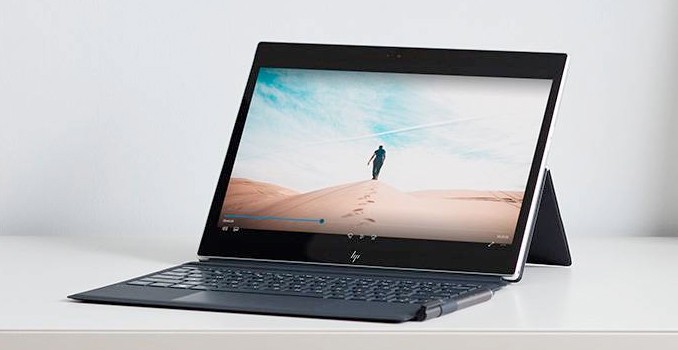
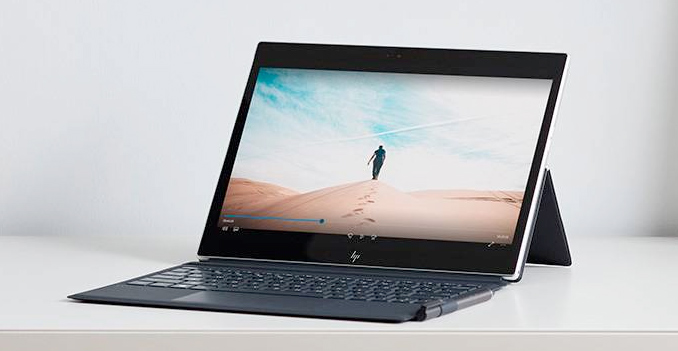
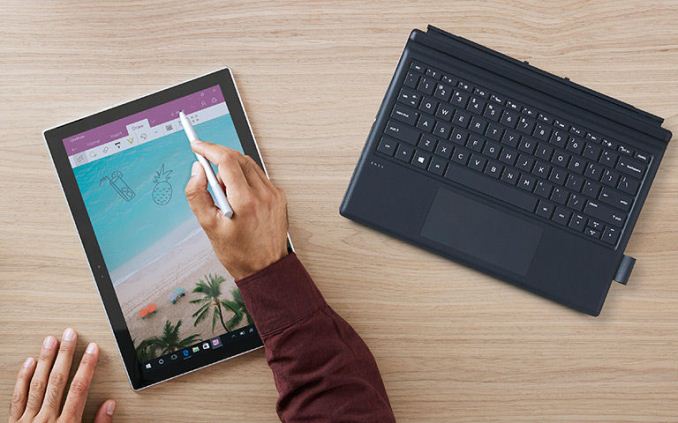
HP has started to take pre-orders on its new Envy X2 2-in-1 notebook based on Qualcomm’s Snapdragon 835 SoC and Windows 10 S. The 12.3” device is designed as a thin always connected unit, and rated for up to 22 hours on one charge. The price of the new Envy X2 is higher than we imagined when these devices were first announced: it starts at $999.

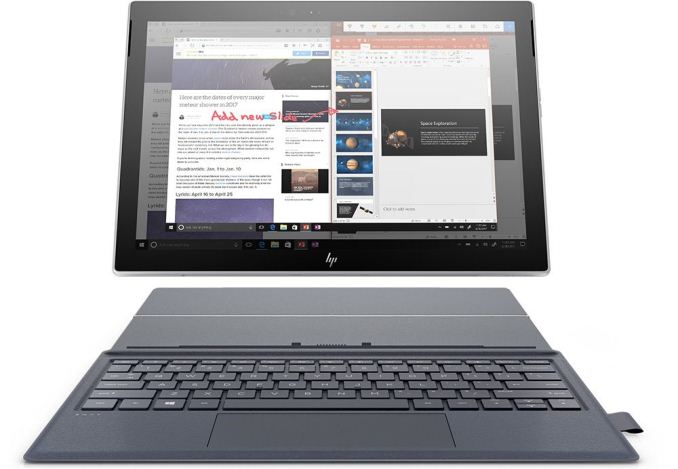
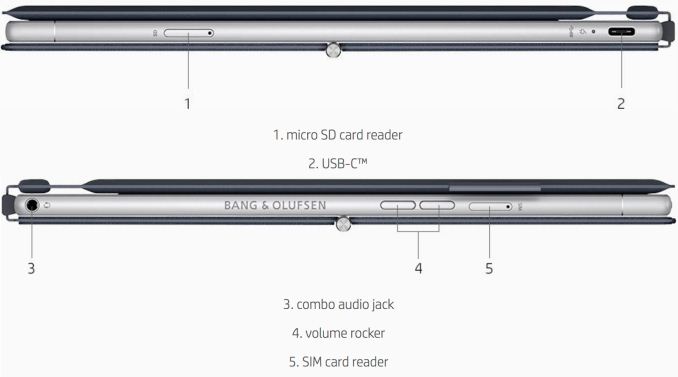
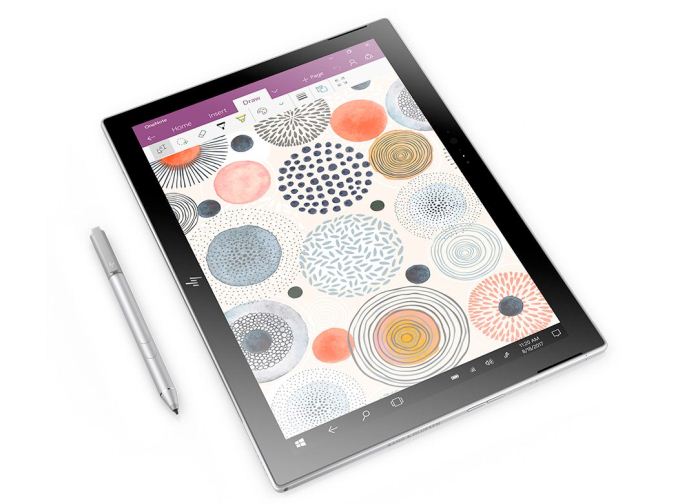
The 2018 HP Envy X2 2-in-1 detachable laptop comes with a 12.3” WUXGA+ touch-enabled display covered with Corning Gorilla Glass. The system runs the Qualcomm Snapdragon 835 SoC equipped with 4 GB of LPDDR4-3733 DRAM and 128 GB of eUFS storage (models with enhanced DRAM and storage are expected to be available later). The PC’s physical interfaces include one physical USB 3.1 Type-C header (with DisplayPort and USB Power Delivery support), a microSD card reader, and a 3.5-mm TRRS audio input. Wireless connectivity capabilities comprise of a 2×2 802.11ac Wi-Fi module with Bluetooth 5, and the built in Gigabit LTE modem from the SoC. The built-in SoC modem is meant to be one of the key features of the Envy X2 – it makes the device always connected in all areas with 3G and/or 4G networks, which essentially means everywhere in well-developed countries. For imaging, the device uses a 13 MP rear camera and a 5 MP front-facing camera.

The new Envy X2 is equipped with a 49.33 Wh battery that is rated to enable up to 19 hours of continuous video playback (at 150 nits brightness) or up to 22 hours of mixed-use workloads (HP does not tell how it tested these).

When it comes to portability, the HP Envy X2 is in line with professional tablets and advanced thin-and-light notebooks. The tablet itself it is 6.85 mm (0.27”) thick and weighs 698.5 grams (1.54 lbs), which is comparable to Apple iPad Pro 12.9”. When outfitted with a keyboard, the weight of the new Envy X2 bumps to 1.211 kilograms (2.67 lbs), which is similar to fully-fledged 13”-class laptops.

HP lists the S835 as running at 2.2 GHz base and 2.6 GHz turbo, which is typically how we describe an x86 PC, not a smartphone SoC: the S835 has two sets of cores, normally listed as 1.90 GHz on the efficiency cores and 2.45 GHz on the performance cores, neither of which correlates to HPs listing. So either this is a faster Snapdragon S835 bin, or there is miscommunication in the specification sheet. In this form factor there is a better opportunity for more cooling, which would be suitable for a higher frequency bin of SoC. But nonetheless, the 2.2-2.6 GHz listed on HP’s website is not telling the whole story.

Specifications of the HP Envy X2 (2018)
  Model 12-e011nr
Display 12.3″
1920×1280
187 PPI
CPU Qualcomm Snapdragon 835
4 x Kryo 280 Performance (2.2 GHz – 2.6 GHz)
4 x Kryo Efficiency (? GHz)
Graphics Adreno 540 GPU at 710 MHz
RAM 4 GB
Storage 128 GB eUFS
Wi-Fi Qualcomm WCN3990
2×2 802.11ac Wi-Fi
Bluetooth Bluetooth 5
WWAN Qualcomm X16 Gigabit LTE
USB 3.0 1 × Type-C
Cameras Front 5 MP
Rear 13 MP
Other I/O Microphone, stereo speakers, audio jack, trackpad, MicroSD card reader, etc.
Battery 49.33 Wh
Battery Life 19-22 hours
Dimensions Width 292.8 mm | 11.53″
Height 210.3 mm | 8.28″
Thickness 6.85 mm | 0.27” (tablet only)
Weight Tablet 698.5 grams | 1.54 lbs
Tablet+KB 1.211 kilograms | 2.67 lbs

Like all Envy-branded devices, the new Envy X2 is designed to offer a premium experience: it comes in a brushed aluminum enclosure, features an audio sub-system co-developed with Bang & Olufsen, has a full-size magnetically attached keyboard/cover, and a stylus supporting Windows Ink technology (it is plausible to assume that the pen supports at least 1024 levels of sensitivity, but HP has not formally confirmed that). This premium look and feel comes at a price.

The Envy X2 model with 4 GB of RAM and 128 GB of NAND flash storage costs $999.99 and will ship on March 9. By contrast, the ASUS NovaGo TP370 with 8 GB of RAM and 128 GB of storage is priced at $799, whereas Lenovo’s Miix 630 is also expected to start from $799. Apple’s iPad Pro 12.9” with 4 GB of RAM, 64 GB of storage, a 4G/LTE modem and a keyboard is priced at $1197 (a version with 256 GB of NAND, a keyboard and stylus costs $1347), evidently HP aims its new Envy X2 at the same segment.

The latest HP Envy X2 is a product of Microsoft’s new attempt to marry nearly full-sized Windows and ARM. For HP, this is the first device running an ARM SoC and Windows for PCs. Several years ago, HP did not support Microsoft’s Windows RT (the software giant’s previous failed shot for ARM) and decided to focus on Atom- and then Core M-based Envy X2 running Windows 8/8.1/10 instead (many of such systems cost less than $1000). This time HP decided to go with S835 in a bid to offer a sleek always-connected Windows 10 device with an extra-long battery life. Since it is an Envy, it is priced accordingly and it remains to be seen whether end users are willing to spend this amount of money on this device. Obviously, the new Envy X2 is always connected and can work for a long time on one charge, but in Windows 10 S environment it can only run either specially-optimized applications, or perform binary translation (or another form of emulation) for 32-bit x86 applications (64-bit x86 apps are not supported) which naturally results in reduced performance.

Related Reading

Cat at MWC 2018: S61 Smartphone with FLIR Cam, Laser Distance Measurer, Air Quality Sensor

Cat at MWC 2018: S61 Smartphone with FLIR Cam, Laser Distance Measurer, Air Quality Sensor

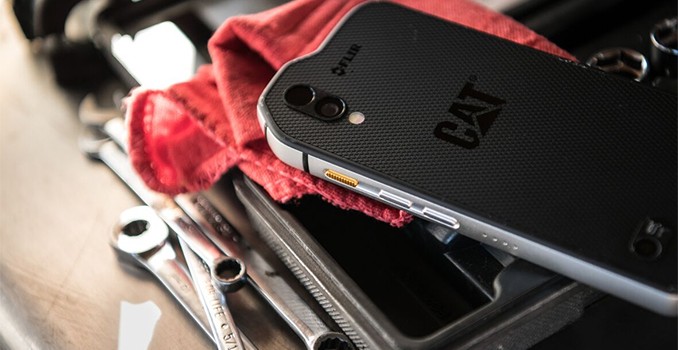
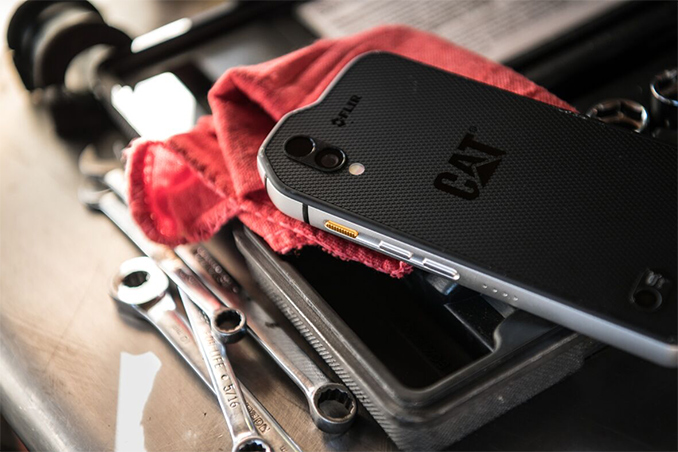
BARCELONA, ESP — Bullitt Group has announced its new flagship Cat-branded rugged smartphone, which is listed with improved performance and new features over its predecessor. The Cat S61 is aimed at people who work in harsh environments and require special-purpose tools, such as a thermal camera, a laser-assisted measurement tool, or an air quality sensor.

Ruggedized smartphones are not uncommon, especially in environments that have harsher condititions than an office. While the latest handsets from the main Android vendors are splash-resistant, and some also enhanced protection against liquids and drops, these are still aimed at the bulk of the professional market that do a lot of sitting down. By contast, there are a number of companies building smartphones for severe environments, so ruggedizing itself is both an additional step up, but no longer a unique differentiator. Users that actually need smartphones with enhanced protection usually have to do work that requires various special-purpose tools.

Cat/Bullitt realized this several years ago and decided to build the Swiss-army knife smartphone that would offer more special-purpose capabilities than other ruggedized handsets. The first of this family was the Cat S60, with an integrated FLIR thermal imaging sensor, released in 2016. Apparently, market response was good, so the company decided to enhance feature set of its Cat S61 even further by integrating more special-purpose hardware.
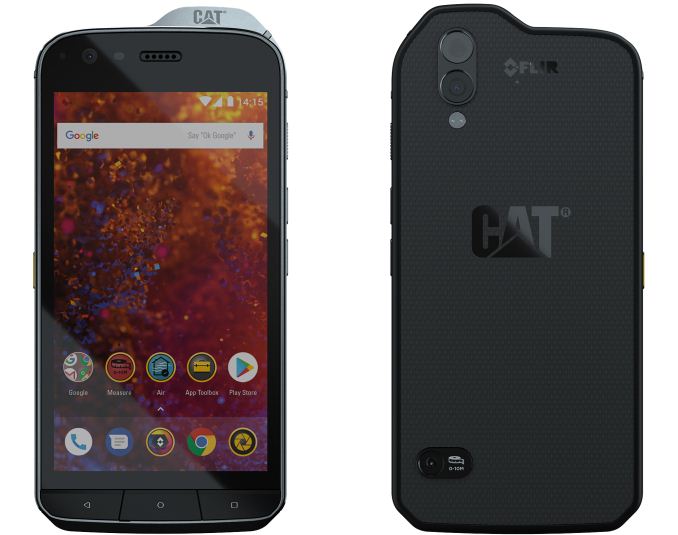
The new Cat S61 has FLIR’s latest Lepton thermal sensor and software that can measure temperatures from -20°C to 400°C and features an HD resolution. The manufacturer claims that the new sensor not only improves precision/quality, but also enables new use cases. In addition, the Cat S61 comes with an indoor air quality sensor from Sensirion that can detect indoor air pollutants (Volatile Organic Compounds or VOCs) and notify users when an unhealthy environment is detected. In addition, this sensor can detect humidity and current temperature. Finally, the Cat S61 also has a laser assisted distance measurement tool.

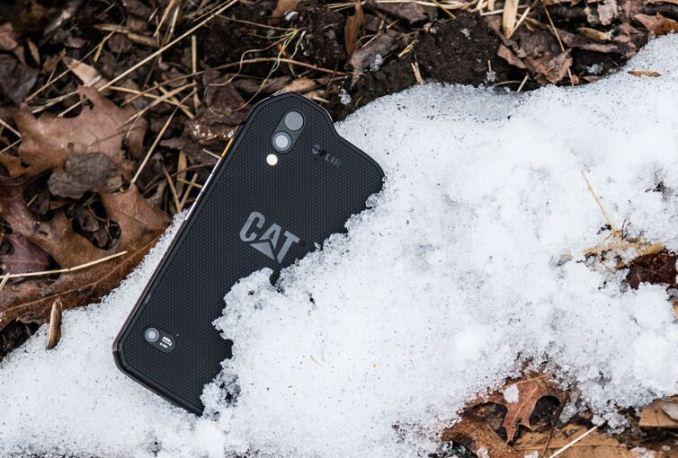
While the advanced sensors that Cat has integrated into its S61 provide valuable capabilities, the combination of these features essentially transforms the smartphone. Just like its predecessor, the Cat S61 is completely dust- and water-proof, and the IP68 rating means it can survive for one hour if it is submerged three meters underwater (the S60 is rated for five meters). It can also be repeatedly dropped from 1.8 meters on concrete without fatal consequences due to reinforced aluminum die-cast frame and Corning Gorilla Glass 5 display protection. Speaking of the LCD, Cat has upgraded it from top-to-bottom: it is now 5.2-inch in size and has a Full-HD (1080p) resolution. It is designed to be operated with wet fingers or while wearing gloves.
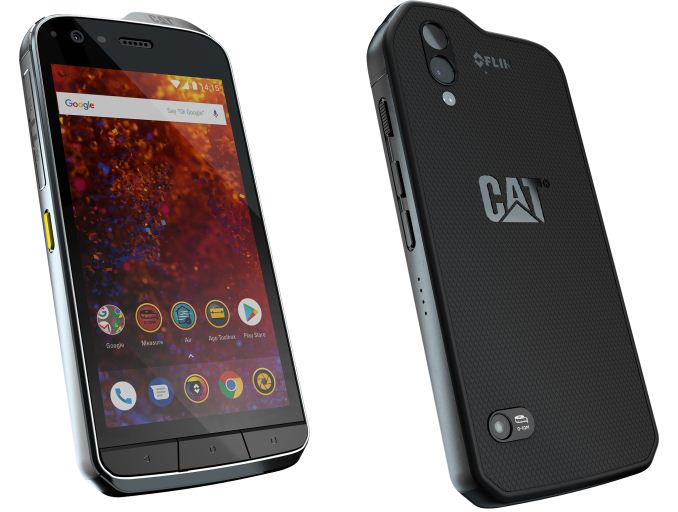
The smartphone is based on the Qualcomm Snapdragon 630 SoC (four ARM Cortex A53 cores running at 2.2 GHz and four more A53 cores clocked at 1.8 GHz, Adreno 508 graphics, a dual-channel LPDDR4 memory controller, Wi-Fi, Bluetooth 5.0, an integrated X12 LTE modem with Cat 12/13 baseband capabilities, etc.) that is outfitted with 4 GB of LPDDR4 DRAM and 64 GB of NAND flash storage (expandable using microSD cards). Since we are dealing with the A53 cores, we do not expect the S61 to set records in benchmarks, but because the target audience of this handset hardly uses demanding games or data intensive applications, but rather prefers long battery life, the choice of low-power cores seems logical. In addition, the developer equipped the S61 with a 4500 mAh battery to maximize its life on one charge. As for imaging capabilities, the device comes with a 16 MP rear camera with a dual LED flash as well as an 8 MP front camera. Last but not least, the S61 now uses a USB Type-C interface for charging and connecting to computers.

The Cat S61 Ruggedized Smartphones with Special Features
  Specifications
SoC Qualcomm Snapdragon 630
4 × ARM Cortex-A53 at 2.2 GHz
4 × ARM Cortex-A53 at 1.8 GHz
Adreno 508
RAM  4 GB LPDDR4
Storage 64 GB + microSD
Display 5.2″ 1920×1080 (423 ppi)
? nits brightness
? contrast ratio
? NTSC color gamut
Corning Gorilla Glass 5
Network 4G/LTE Bands:
EU/ROW: 1, 2, 3, 5, 7, 8, 19, 20, 26, 28, 38, 39, 40, 41
Americas: 1, 2, 3, 4, 5, 7, 8, 12, 13, 17, 25, 26, 28, 29, 66

3G Bands:
EU/ROW: 850, 900, 1700, 1900, 2100
Americas: 850, 900, A WS, 1900, 2100

2G Bands:
850, 900, 1800, 1900

LTE Down: 600 Mb/s
Up: 150 Mb/s
Sensors Thermal camera (FLIR)
Indoor Air Quality Sensor (humidity & temperature)
E-compass
Proximity Sensor
Ambient Light Sensor
Accelerometer
Gyroscope
Location
Barometer
Fingerprint  No
Dimensions 150 × 76 × 13 mm
Weight ? grams
Ingress Protection IP68: Sand, dust and dirt resistant
Waterproof: Up to 3M for 60 minutes
Military Standard Tests MIL SPEC 810G
Thermal Shock: handles low to high temperature differences between -30°C (-22°F) to 65°C (149°F) for up to 24 hours Resistant to vibration: Category 4
Resistant to humidity and salt mist
Rear Camera 16 MP with autofocus, PDAF, dual LED flash
FLIR Lepton thermal sensor
Front Camera 8 MP
Battery 4500 mAh
OS Google Android Oreo
Connectivity 802.11 b/g/n Wi-Fi, Bluetooth 5, USB-C, 3.5mm TRRS
Navigation GPS, GLONASS, Galileo, QZSS, SBAS, iZat, BeiDou (select SKUs)
SIM Size Nano SIM/Dual Nano SIM
Colors Black + Grey
Launch Countries U.S., U.K., E.U.,etc
Price €899/£799/$999

The product will be available in Q2 at an MSRP of €899/£799/$999. The Cat S60 used to carry a €649 price tag when it was released in 2016. Given that the S61 does not have direct rivals with the same set of sensors, its price point can arguably be justified. Moreover, given its capabilities, most of these phones will be sold to businesses, not to individuals. Companies are naturally less worried about the actual price and performance of smartphones in general applications but are more concerned about the advantages these devices might bring to their businesses immediately and going forward. To ensure that buyers can deploy the Cat S61 quickly, the manufacturer will offer a catalogue of pre-selected applications for ruggedized smartphones. Furthermore, Bullitt will ship the S61 with Android 8 (Oreo) to ensure compatibility with the latest software today and going forward.
Related Reading