News


Western Digital: Sales of Helium-Filled HDDs Accelerating, 15M Sold So Far
Western Digital: Sales of Helium-Filled HDDs Accelerating, 15M Sold So Far

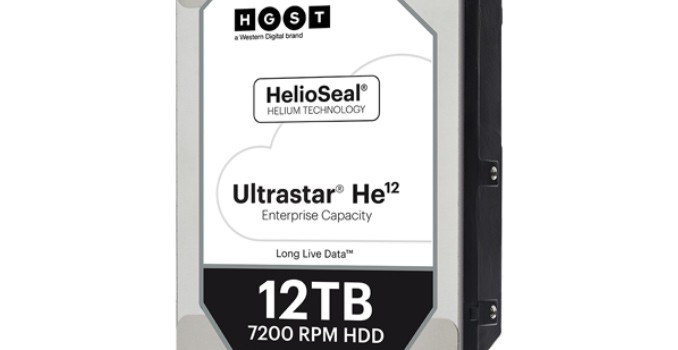
Western Digital recently announced that it had sold 15 million helium-filled hard drives, indicating that sales of such HDDs are accelerating. Since the launch of the HGST HelioSeal platform about 3.5 years ago, it has enabled HGST to make a number of technological improvements to its hard drives in terms of their capacities. It is noteworthy that while Western Digital is expanding usage of helium, it has not announced plans to expand usage of shingled-magnetic recording (SMR).

HGST, a subsidiary of Western Digital, started volume shipments of its first-generation helium-filled Ultrastar He-series hard drives in November 2013. HGST sold about a million HelioSeal HDDs in the first 1.5 years on the market, but once numerous operators of large cloud datacenters qualified such drives, their sales started to accelerate. For example, HGST supplied 1.1 million of helium-filled HDDs in Q3 2015 — more than in their first six quarters on the market. Meanwhile back in October of last year, Western Digital said it had sold 10 million HelioSeal hard drives. As it appears from the recent comments made by the company, in just a couple of quarters it has managed to sell another five million helium HDDs with cumulative shipments of such drives topping 15 million units since late 2013.

“I am pleased to note that we have now shipped approximately 15 million helium hard drives cumulatively since the platform’s launch four years ago,” said Michael D. Cordano, president of Western Digital, during a conference call with investors and analysts.

There are multiple reasons why sales of HelioSeal-based HDDs are accelerating. First, the demand for datacenter hard drives is growing, and operators have finally qualified helium-filled HDDs for new deployments. Second, with the systematic increase of drive capacities (a new capacity point is launched every 12 – 18 months), Western Digital can gradually increase shipments of helium-filled drives to existing and new deployments. Third, Western Digital is expanding usage of helium beyond datacenter-class drives to NAS and even consumer HDDs.

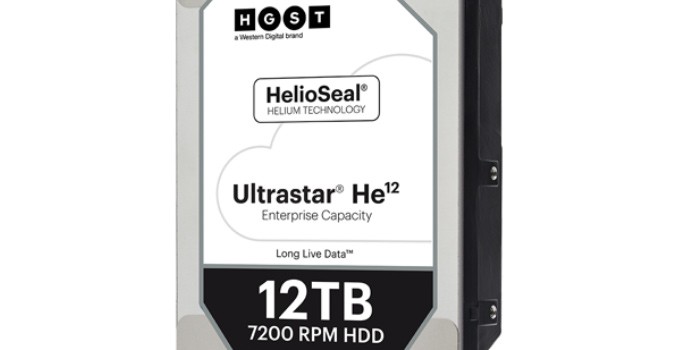
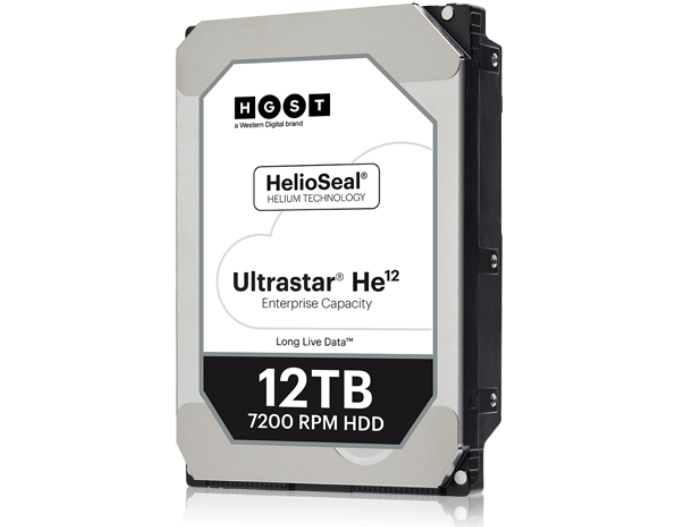
From technology standpoint, HelioSeal has made quite a bit of progress in the recent 3.5 years. Initially, it enabled HGST to place seven platters into a single 3.5” HDD and offer a 6 TB drive, which in turn had lower power consumption and higher performance than various competitors. Installation of seven platters into one drive required HGST to redesign some of the internal HDD components, and this is always a challenge. Moreover, late last year HGST introduced an even denser hard drive, the Ultrastar He12 with eight platters, which again required the company to redevelop internal architecture of the HDD.

When it comes to practical progress, the helium-filled Ultrastar drives doubled their capacity from 6 TB in Q4 2013 to 12 TB in Q1 2017. By contrast, conventional air-filled PMR-based drives have not yet made it past 8 TB, increasing their capacity by 33% from 6 TB in Q1 2014. Meanwhile, if we take the SMR-based Ultrastar He12 with 14 TB capacity into account, then the progress will seem quite impressive as well (a 75% increase from 8 TB in August 2013 to 14 TB in 2H 2017).

Speaking of SMR, it does not look like Western Digital is eager to share its plans regarding usage of the technology.

“Shingle [magnetic recording] has been a little bit more limited in terms of the applications because of some of the performance implications of that and that sort of thing,” said Stephen Milligan, CEO of Western Digital. “We feel comfortable with where we are at in terms of SMR transition and the applicability and the drives that we are providing to our customers.”

Unlike drive-managed SMR HDDs from Seagate, SMR HDDs from Western Digital should be managed by hosts and are therefore used only for active archive/deep-archive applications that can support it. This reduces their addressable market, but the company still sells plenty of them: 20 – 35% of data stored today belongs to the two aforementioned categories. Meanwhile, Seagate offers drive-managed SMR-based HDDs for both consumers and datacenters, something that Western Digital does not. For the time being at least, it looks like the company is not planning on disclosing any kind of roadmap for drive-managed SMR devices.

Related Reading:

Western Digital: Sales of Helium-Filled HDDs Accelerating, 15M Sold So Far

Western Digital: Sales of Helium-Filled HDDs Accelerating, 15M Sold So Far

Western Digital recently announced that it had sold 15 million helium-filled hard drives, indicating that sales of such HDDs are accelerating. Since the launch of the HGST HelioSeal platform about 3.5 years ago, it has enabled HGST to make a number of technological improvements to its hard drives in terms of their capacities. It is noteworthy that while Western Digital is expanding usage of helium, it has not announced plans to expand usage of shingled-magnetic recording (SMR).

HGST, a subsidiary of Western Digital, started volume shipments of its first-generation helium-filled Ultrastar He-series hard drives in November 2013. HGST sold about a million HelioSeal HDDs in the first 1.5 years on the market, but once numerous operators of large cloud datacenters qualified such drives, their sales started to accelerate. For example, HGST supplied 1.1 million of helium-filled HDDs in Q3 2015 — more than in their first six quarters on the market. Meanwhile back in October of last year, Western Digital said it had sold 10 million HelioSeal hard drives. As it appears from the recent comments made by the company, in just a couple of quarters it has managed to sell another five million helium HDDs with cumulative shipments of such drives topping 15 million units since late 2013.

“I am pleased to note that we have now shipped approximately 15 million helium hard drives cumulatively since the platform’s launch four years ago,” said Michael D. Cordano, president of Western Digital, during a conference call with investors and analysts.

There are multiple reasons why sales of HelioSeal-based HDDs are accelerating. First, the demand for datacenter hard drives is growing, and operators have finally qualified helium-filled HDDs for new deployments. Second, with the systematic increase of drive capacities (a new capacity point is launched every 12 – 18 months), Western Digital can gradually increase shipments of helium-filled drives to existing and new deployments. Third, Western Digital is expanding usage of helium beyond datacenter-class drives to NAS and even consumer HDDs.

From technology standpoint, HelioSeal has made quite a bit of progress in the recent 3.5 years. Initially, it enabled HGST to place seven platters into a single 3.5” HDD and offer a 6 TB drive, which in turn had lower power consumption and higher performance than various competitors. Installation of seven platters into one drive required HGST to redesign some of the internal HDD components, and this is always a challenge. Moreover, late last year HGST introduced an even denser hard drive, the Ultrastar He12 with eight platters, which again required the company to redevelop internal architecture of the HDD.

When it comes to practical progress, the helium-filled Ultrastar drives doubled their capacity from 6 TB in Q4 2013 to 12 TB in Q1 2017. By contrast, conventional air-filled PMR-based drives have not yet made it past 8 TB, increasing their capacity by 33% from 6 TB in Q1 2014. Meanwhile, if we take the SMR-based Ultrastar He12 with 14 TB capacity into account, then the progress will seem quite impressive as well (a 75% increase from 8 TB in August 2013 to 14 TB in 2H 2017).

Speaking of SMR, it does not look like Western Digital is eager to share its plans regarding usage of the technology.

“Shingle [magnetic recording] has been a little bit more limited in terms of the applications because of some of the performance implications of that and that sort of thing,” said Stephen Milligan, CEO of Western Digital. “We feel comfortable with where we are at in terms of SMR transition and the applicability and the drives that we are providing to our customers.”

Unlike drive-managed SMR HDDs from Seagate, SMR HDDs from Western Digital should be managed by hosts and are therefore used only for active archive/deep-archive applications that can support it. This reduces their addressable market, but the company still sells plenty of them: 20 – 35% of data stored today belongs to the two aforementioned categories. Meanwhile, Seagate offers drive-managed SMR-based HDDs for both consumers and datacenters, something that Western Digital does not. For the time being at least, it looks like the company is not planning on disclosing any kind of roadmap for drive-managed SMR devices.

Related Reading:

Lian Li Launches ASUS ROG-Inspired PC-O11WGX Case: Two Chambers, E-ATX, USB-C

Lian Li Launches ASUS ROG-Inspired PC-O11WGX Case: Two Chambers, E-ATX, USB-C

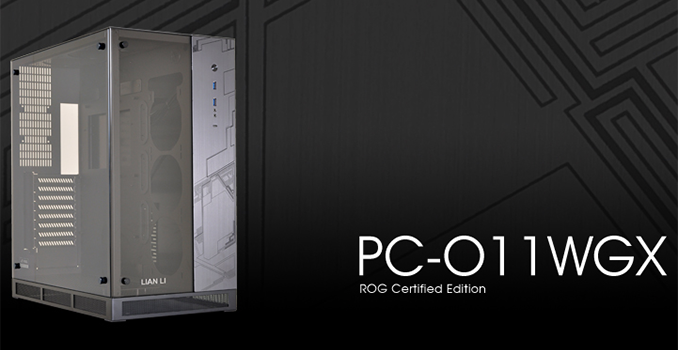
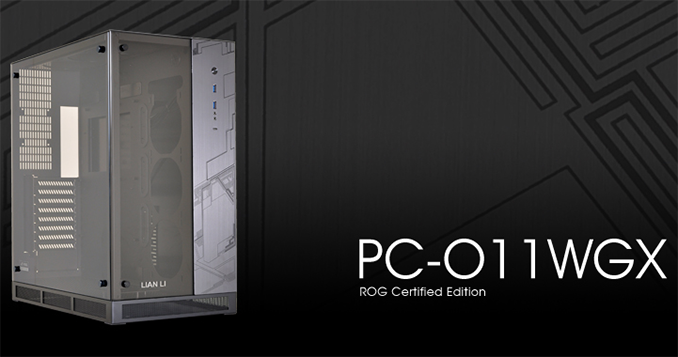
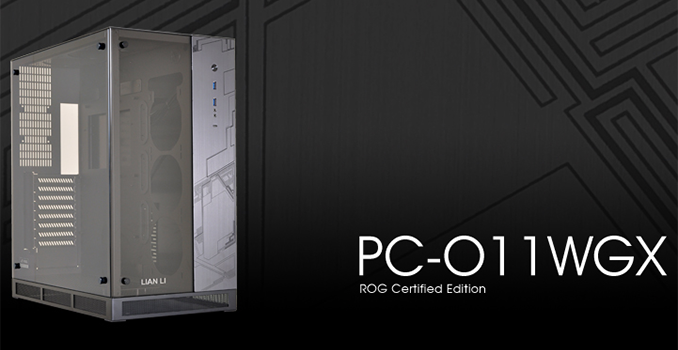
Lian Li has introduced its new chassis for advanced desktops, the PC-O11WGX. The company’s latest case has two chambers for more efficient cooling, is compatible with motherboards in the E-ATX form-factor, can fit in nine storage devices in drive form-factor, three 360-mm radiators and has a USB 3.1 Type-C header on its front panel. Stylistically, the case comes with a front panel featuring ASUS ROG stylings, which means incorporating Mayan patterns. Being aimed at modders and overclockers, the Lian Li PC-O11WGX is everything but affordable.

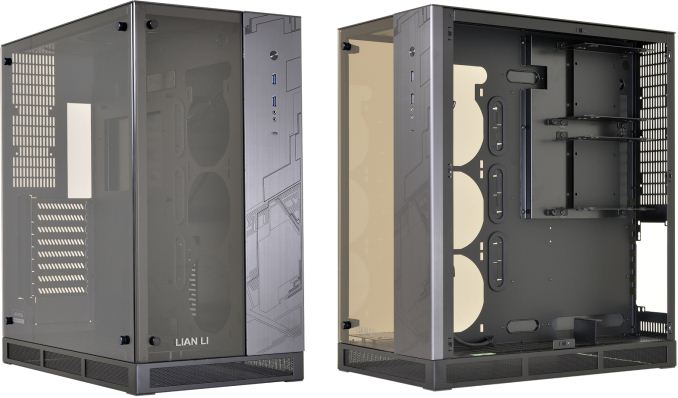
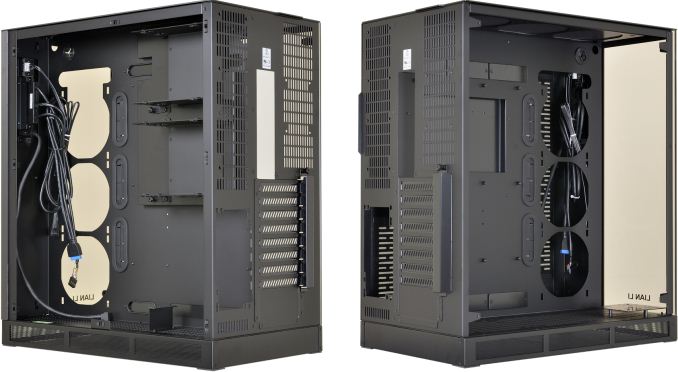
The Lian Li PC-O11 WGX chassis follows the latest trends in PC building and is designed to be suitable for highly-modded systems while also being very efficient in terms of cooling and compatibility. On the outside, the case has two panels made of tempered glass, exposing the key components of the computer. Inside, like many other contemporary PC cases, the PC-O11WGX uses a two-chamber design: one of the compartments housing the motherboard, graphics card, memory, and cooling, another accommodating the power supply, cables, along with nine HDDs and/or SSDs.

The new case from Lian Li can fit in a motherboard in ATX, E-ATX, Mini-ITX and Micro-ATX form-factors with up to eight add-in cards. Moreover, for those who like to see/expose their graphics cards, Lian Li supplies a special riser cable to install the graphics card vertically. The maximum length of the graphics card is 430 mm, so, not only single-GPU, but dual-GPU boards are supported with plenty of space left. Meanwhile, the maximum height of the CPU cooling system is 150 mm, so not all mega-coolers can fit in (e.g., Thermalright’s Archon IB-E X2 cannot).

Speaking of cooling, Lian Li built the PC-O11 WGX primarily with liquid cooling in mind: the chassis has space for three 360-mm radiators for closed-loop or custom liquid coolers, enabling its owner to build a gaming system with a HEDT CPU, a couple of graphics cards, and then cool each of those components using its own LCS (or build one LCS with three radiators if necessary). To provide enough power for everything, the case can accommodate a PSU that is up to 430 mm long.

Since we are talking about a high-end chassis, the PSU and HDD/SSD mounts are equipped with rubber vibration dampers, whereas the top and bottom panels are equipped with mesh dust filters (unclear whether they are removable though).

Lian Li PC-O11WGX
Motherboard Size ATX, E-ATX, Micro-ATX, Mini-ITX
Drive Bays External
Internal 4 × 3.5″ and 4 × 2.5″
Cooling Front 3 × 120 mm/1 × 360 mm
Rear 2 × 80 mm
Top 2 × 120 mm
Middle
Bottom 3 × 120 mm
Radiator Support Front
Rear
Top 1 × 360 mm
Middle 2 × 360 mm
Bottom
I/O Port 1 × USB-c 3.1, 2 × USB 3.0, 1 × Headphone, 1 × Mic
Power Supply Size Up to 430 mm
Dimensions W: 277 mm × H: 506 mm × D: 457 mm
Colors Grey
Features Glass front and side panels
Price $319

Lian Li says that ASUS has certified the case, guaranteeing that all the ROG-family components will fit in and will work flawlessly. This is not the first ROG-certified chassis from Lian Li – and arguably it’s more of a co-branding exercise than any kind of stringent technical qualification – but the additional styling and verification from ASUS engineers never hurts.

The Lian Li PC-O11WGX computer chassis will be available in North America in mid-May for $319. The price of the case is rather high, but since we are dealing with a top-of-the-range product aimed at modders and performance enthusiasts, it is not surprising.

Related Reading:

Lian Li Launches ASUS ROG-Inspired PC-O11WGX Case: Two Chambers, E-ATX, USB-C

Lian Li Launches ASUS ROG-Inspired PC-O11WGX Case: Two Chambers, E-ATX, USB-C

Lian Li has introduced its new chassis for advanced desktops, the PC-O11WGX. The company’s latest case has two chambers for more efficient cooling, is compatible with motherboards in the E-ATX form-factor, can fit in nine storage devices in drive form-factor, three 360-mm radiators and has a USB 3.1 Type-C header on its front panel. Stylistically, the case comes with a front panel featuring ASUS ROG stylings, which means incorporating Mayan patterns. Being aimed at modders and overclockers, the Lian Li PC-O11WGX is everything but affordable.

The Lian Li PC-O11 WGX chassis follows the latest trends in PC building and is designed to be suitable for highly-modded systems while also being very efficient in terms of cooling and compatibility. On the outside, the case has two panels made of tempered glass, exposing the key components of the computer. Inside, like many other contemporary PC cases, the PC-O11WGX uses a two-chamber design: one of the compartments housing the motherboard, graphics card, memory, and cooling, another accommodating the power supply, cables, along with nine HDDs and/or SSDs.

The new case from Lian Li can fit in a motherboard in ATX, E-ATX, Mini-ITX and Micro-ATX form-factors with up to eight add-in cards. Moreover, for those who like to see/expose their graphics cards, Lian Li supplies a special riser cable to install the graphics card vertically. The maximum length of the graphics card is 430 mm, so, not only single-GPU, but dual-GPU boards are supported with plenty of space left. Meanwhile, the maximum height of the CPU cooling system is 150 mm, so not all mega-coolers can fit in (e.g., Thermalright’s Archon IB-E X2 cannot).

Speaking of cooling, Lian Li built the PC-O11 WGX primarily with liquid cooling in mind: the chassis has space for three 360-mm radiators for closed-loop or custom liquid coolers, enabling its owner to build a gaming system with a HEDT CPU, a couple of graphics cards, and then cool each of those components using its own LCS (or build one LCS with three radiators if necessary). To provide enough power for everything, the case can accommodate a PSU that is up to 430 mm long.

Since we are talking about a high-end chassis, the PSU and HDD/SSD mounts are equipped with rubber vibration dampers, whereas the top and bottom panels are equipped with mesh dust filters (unclear whether they are removable though).

Lian Li PC-O11WGX
Motherboard Size ATX, E-ATX, Micro-ATX, Mini-ITX
Drive Bays External
Internal 4 × 3.5″ and 4 × 2.5″
Cooling Front 3 × 120 mm/1 × 360 mm
Rear 2 × 80 mm
Top 2 × 120 mm
Middle
Bottom 3 × 120 mm
Radiator Support Front
Rear
Top 1 × 360 mm
Middle 2 × 360 mm
Bottom
I/O Port 1 × USB-c 3.1, 2 × USB 3.0, 1 × Headphone, 1 × Mic
Power Supply Size Up to 430 mm
Dimensions W: 277 mm × H: 506 mm × D: 457 mm
Colors Grey
Features Glass front and side panels
Price $319

Lian Li says that ASUS has certified the case, guaranteeing that all the ROG-family components will fit in and will work flawlessly. This is not the first ROG-certified chassis from Lian Li – and arguably it’s more of a co-branding exercise than any kind of stringent technical qualification – but the additional styling and verification from ASUS engineers never hurts.

The Lian Li PC-O11WGX computer chassis will be available in North America in mid-May for $319. The price of the case is rather high, but since we are dealing with a top-of-the-range product aimed at modders and performance enthusiasts, it is not surprising.

Related Reading:

Fractal Design Launches New S24 and S36 Celsius AIO Liquid Coolers

Fractal Design Launches New S24 and S36 Celsius AIO Liquid Coolers

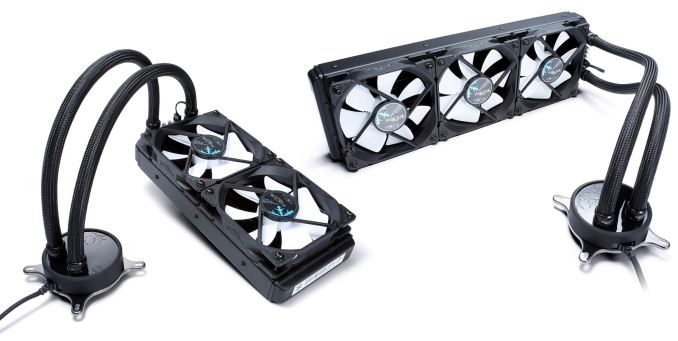
Fractal Design has just unveiled a different take on a new line of all-in-one liquid coolers, called the Celsius series. Unlike conventional AIOs, these new models are not actually closed-loop: they have threaded fittings on the radiator side in order to allow for expansion possibilities with common DIY liquid cooling components.

The two units being launched are the Celsius S24 and Celsius S36, which feature 240mm and 360mm radiators respectively. The radiators feature aluminium housings and fins, and they are both around 30mm thick. As mentioned above, it is the fittings that are the really interesting part of this new product line. While the CPU block fittings are non-removable, the radiator fittings are knurled metal and feature a standard G 1/4″ thread. Since the G 1/4″ fitting is so common in the custom liquid cooling market, the expansion options are vast. As long as you add additional coolant, you could loop in a second waterblock, a second radiator, or even a reservoir. As a result, you cannot consider these Celsius models to be strictly closed-loop coolers (CLCs), but instead something of a new hybrid.

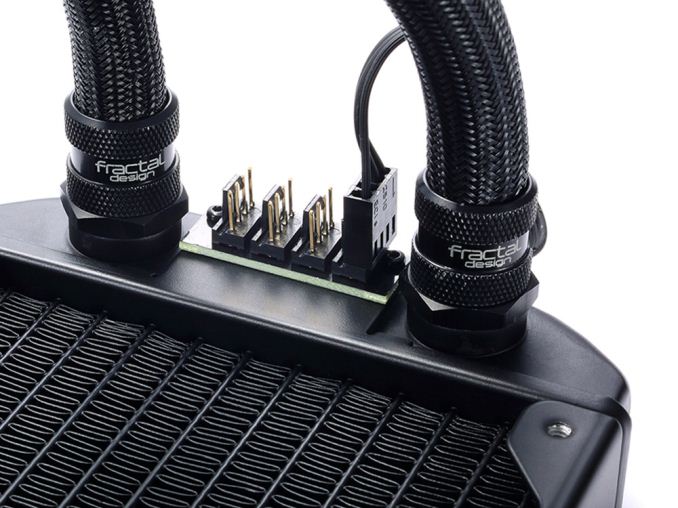
There is an integrated fan hub located between the radiator’s inlet and output ports, with two free 4-pin fan headers on the S24 model and three unoccupied 4-pin fan headers on the S36 model. Surprisingly, these fan headers are actually attached to a hardware fan controller that is built into the CPU block. Fractal Design has been incredibly clever and slipped the cable in between the sleeving and the rubber tubing, and they have run it the entire 400mm tubing length to the CPU block/pump/fan controller unit.

Gallery: Celsius S24

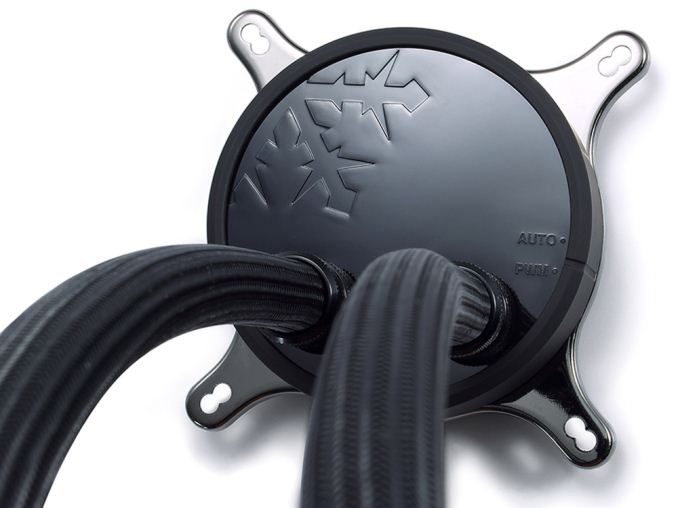
The fan controller has two user-selectable modes, either “auto” (which is based on the liquid temperature and handled by the cooler itself), or a “PWM” mode (which gives control to the motherboard and is based on the actual CPU temperature). In either mode, both the pump and the fan speeds will be increased/decreased since they are all PWM capable.

Speaking of fans, these Celsius coolers come with either two or three of the high-quality Dynamic X2 GP-12 PWM fans that Fractal Design launched last summer. They have rotational speeds of between 500-2000 RPM, and use “LLS” bearings, with a claimed 32.2 dB(A) full speed noise levels, a stated airflow of 87.6 CFM, 2.30mm H2O of static pressure, and they are rated for up to 100,000 hours of use.

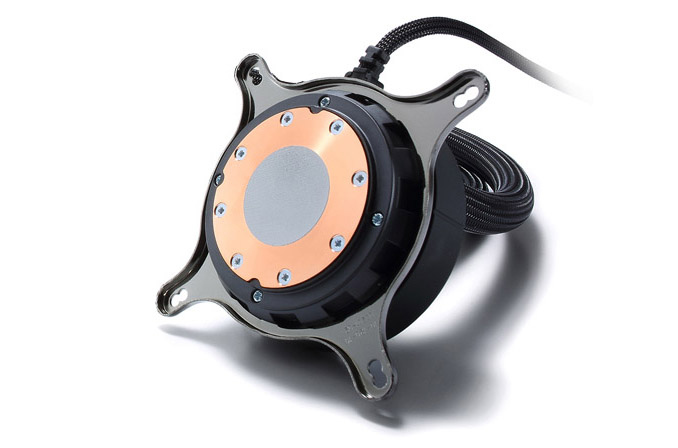
The pump, which is built into the CPU block housing, has a rotational speed of between 1950-3150 RPM, and a full speed noise level of 20.0 dB(A). This gives it a 50,000 hour MTBF (or 5.7 years full use). Total power consumption for the Celsius S36 is listed at 9.0W, while the smaller S24 clocks in at 6.6W. All of this is powered from a single fan header on your motherboard, so a dedicated water pump header with high amperage capabilities is probably a good thing. The CPU block has a copper base and features sound-dampening materials in order to reduce operating noise output. High thermal conductivity thermal paste is pre-applied.

These liquid coolers support all modern CPU sockets, including the latest AMD AM4 platform. We have no word on availability, but the Fractal Design Celsius S24 will retail for $109 USD and the larger Fractal Design Celsius S36 for $119 USD. Both of these units are covered by a five-year warranty.

Gallery: Celsius S36

Related Reading