News


Pre-Orders for LG’s 32UD99 Display Available: 4K, DCI-P3, HDR10, FreeSync for $999
Pre-Orders for LG’s 32UD99 Display Available: 4K, DCI-P3, HDR10, FreeSync for $999

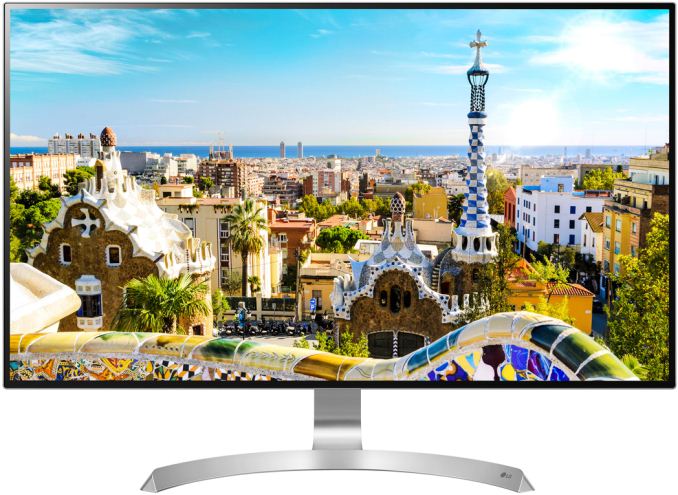
LG and its partners recently disclosed the complete specifications as well as the price of the LG 32UD99 flagship consumer display. The 32-inch display will feature a 4K (UHD) resolution, support for HDR10, a 95% DCI-P3 color gamut, and support for AMD’s FreeSync that the manufacturer announced in December. Multiple retailers in the U.S. are now taking orders on the monitor with ETA in April or May. The price of the display is in line with other high-end consumer products, clearly emphasizing its positioning for enthusiasts and prosumers.

As reported, the LG 32UD99 is based on an IPS panel with a native 3840×2160 resolution that can reproduce 1.07 billion colors and cover over 95% of the DCI-P3 color space as well as 100% of the sRGB color gamut. The display supports HDR10 capabilities (LG does not disclose information about 3D LUT (look-up tables)) and comes factory-calibrated. The panel features 350 nits typical brightness, 5 ms response time, a 60 Hz refresh rate and 178° viewing angles. The display also supports AMD’s FreeSync technology that works in the range between 40 and 60 Hz via DisplayPort.
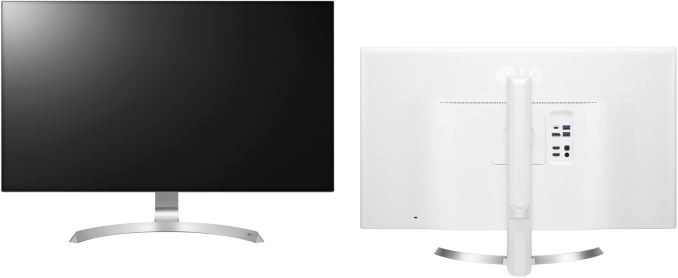
Specifications of the LG32UD99 Display
  32UD99-W
Panel 31.5″ IPS
Native Resolution 3840 × 2160
Maximum Refresh Rate 60 Hz
Response Time 5 ms
Brightness 350 cd/m² (typical)
500 cd/m² (peak)
Contrast unknown
Viewing Angles 178°/178° horizontal/vertical
HDR HDR10
Dynamic Refresh Rate AMD FreeSync (at 40 ~ 60 Hz)
Pixel Pitch 0.1816 mm²
Pixel Density 140 ppi
Display Colors 1.07 billion
Color Gamut Support DCI-P3: 95%
sRGB: 100%
Stand Tilt (2~15°),
pivot (90°) and
height (110 mm) adjustable
Inputs 1 × DisplayPort 1.2
2 × HDMI 2.0a (HDCP 2.2)
1 × USB Type-C (DP 1.2).
USB Hub 2-port USB 3.0 hub
(supports Quick Charging)
Audio 5 W × 2
audio out port
Launch Price $999.99 (not confirmed by LG)

Judging by the specifications and feature-set of the 32UD99, we can guess that LG generally positions the monitor for different kinds of applications. The consumer standard for DCI is used by a number of consumer electronics devices, a variety of Apple devices and has good prospects to be adopted for televisions as well. While LG is not confirming that they’re going with the consumer version of DCI (as opposed to the digital projection version), it’s reasonable to assume that like their other DCI-capable monitors, the 32UD99 will follow the consumer standard as well. As with other DCI-P3 displays, we have to remind you that at present Microsoft’s Windows 10 needs better support for differing color spaces. That being said, HDR will be the most distinctive feature of the new monitor because it is still rare on consumer displays.

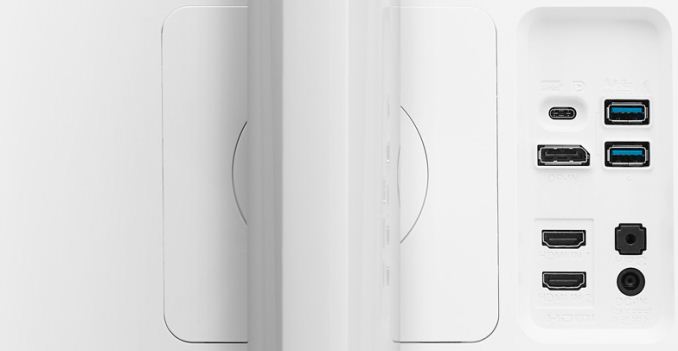
When it comes to input/output capabilities, the LG 32UD99 is equipped with two HDMI 2.0a ports supporting HDCP 2.2 protection technology (these are the ports that must be used to watch content with HDR10), one DisplayPort 1.2 and one USB Type-C header that can be used as a video input as well for charging laptops. Like many flagship displays today, the 32UD99 comes with speakers – in this case 2×5 W. In addition, the monitor has a dual-port USB 3.0 hub and an audio output.
Amazon and B&H are now taking orders on the LG32UD99 for $999.99. Amazon promises to ship the product in 2-4 weeks, whereas B&H expects the display to become available in late May. Keep in mind that as of today LG does not have an exact launch date for the monitor and thus retailers may delay their shipments.

Related Reading:

Toshiba Launches MG05ACA Enterprise HDDs: 8 TB, 7200 RPM, NAND Cache

Toshiba Launches MG05ACA Enterprise HDDs: 8 TB, 7200 RPM, NAND Cache

Toshiba recently introduced its new generation of enterprise-class nearline HDDs for servers, surveillance, and higher-end NAS systems. The new MG05ACA-series hard drives offer up to 8 TB of capacity and 12% higher performance than their direct predecessors, but one of their key selling points is Toshiba’s NAND flash-based cache technology for data protection in case of power-loss events that was originally designed for mission-critical HDDs.

Toshiba’s MG05ACA-series HDDs are currently available only in 8 TB configurations and are based on multiple PMR (perpendicular magnetic recording) platters with either 4Kn or 512e sectors. The hard drives use a SATA 6 Gbps interface, feature a 7200 RPM spindle speed, a 128 MB cache buffer, and Toshiba’s persistent write cache (PWC) with power loss protection (PLP) that stores data that is not yet written to the HDD media. When it comes to performance, Toshiba declares up to 230 MB/s sustained host to media transfer speed as well as 4.17 ms average latency. As for power consumption, the MG05ACA-series hard drives are rated to consume up to 11.4 W during random reads and 6.2 W in active idle mode.

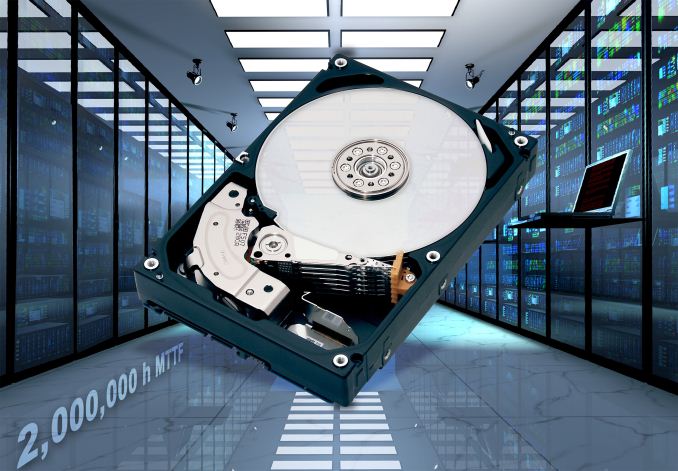
The Toshiba MG05-series HDDs are designed for nearline applications (i.e. somewhere between rapid access and cold storage) that operate for 24/7. The model is rated for 550 TB/year annual workload (read and write) as well as for 2 million hours MTBF. Typ enterprise-class hard drives are based on special platforms with improved endurance prone to operate under high vibration conditions (i.e., in rack servers) due to rotational vibration compensation technology as well as special spindle mounting mechanism.

Toshiba MG05ACA-Series HDDs
  MG05ACA800A MG05ACA800E
Capacity 8 TB
RPM 7200 RPM
Interface SATA 6 Gbps
DRAM Cache 128 MB
Data Transfer Speed
(Sustained)
230 MB/s
Average Latency 4.17 ms
Sectors 4 KB native 512 B emulated
MTBF 2 million hours
Rated Annual Workload (read and write) 550 TB/year
Power Operating (read) 11.4 W
Active Idle 6.2 W
Warranty 5 years

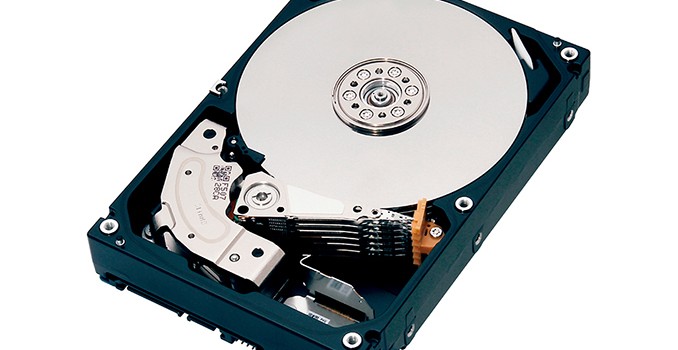
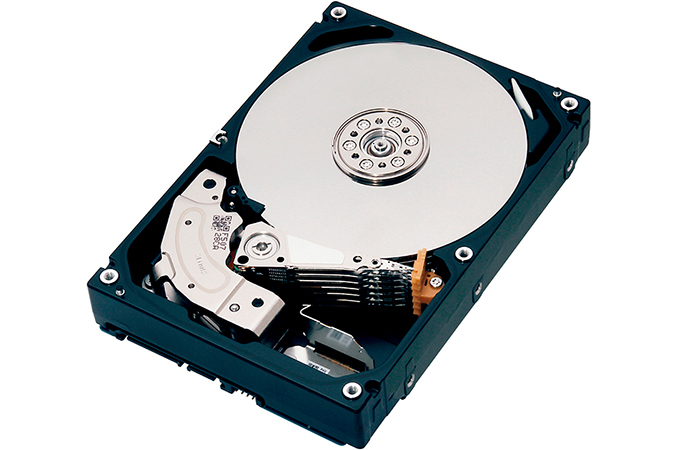
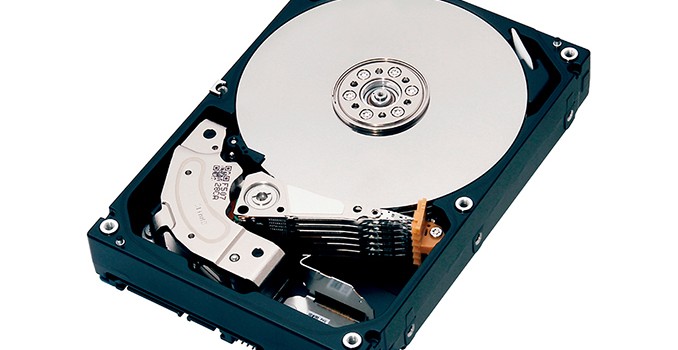
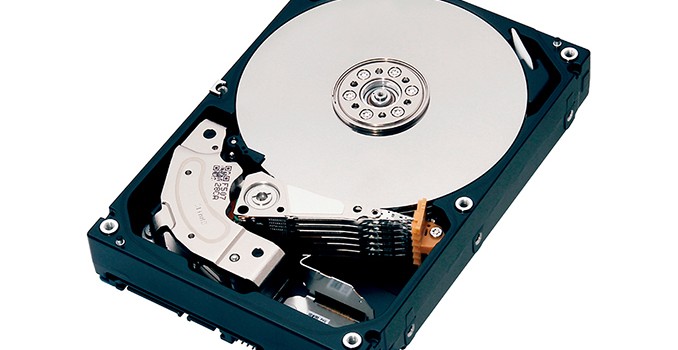
The performance of the drives (and their positioning) indicates that we are dealing with PMR-based products, but Toshiba remains tight-lipped regarding the exact number and capacity (areal density) of the platters it uses. The only photo of the MG05ACA HDD that Toshiba has published depicts a hard drive with seven arms and six platters, but press images are not always accurate. Meanwhile, power consumption of the HDDs (well over 10 W) indicates that we see a typical air-filled HDD. Apparently, Toshiba plans to first use SMR (shingled magnetic recording) and helium for read-oriented drives designed for cold archives and only then use the latter helium drives for its enterprise-capacity HDDs. At this point not using helium puts Toshiba in a tough position as it has nothing to compete against 10 TB and 12 TB drives from its rivals.

It is noteworthy that Toshiba’s MG05-series HDDs are the company’s second-gen 3.5” nearline hard drives to feature its persistent write cache with power loss protection technology. The manufacturer does not disclose capacity of the NAND flash-based cache, but it does not have to be too high. There are several situations when the PWC with PLP comes into play, with the main one being when the HDD write cache contains data not yet written to media and a power loss occurs, the data is moved to non-volatile memory.

Toshiba’s MG05ACA800A and MG05ACA800E are available to the company’s customers now. We expect the MG05 lineup will over time be expanded with models featuring lower capacity as well as with versions that use the SAS 12 Gb/s interface. All the Toshiba MG-series drives are covered by the company’s five-year warranty.

Related Reading:

Toshiba Launches MG05ACA Enterprise HDDs: 8 TB, 7200 RPM, NAND Cache

Toshiba Launches MG05ACA Enterprise HDDs: 8 TB, 7200 RPM, NAND Cache

Toshiba recently introduced its new generation of enterprise-class nearline HDDs for servers, surveillance, and higher-end NAS systems. The new MG05ACA-series hard drives offer up to 8 TB of capacity and 12% higher performance than their direct predecessors, but one of their key selling points is Toshiba’s NAND flash-based cache technology for data protection in case of power-loss events that was originally designed for mission-critical HDDs.

Toshiba’s MG05ACA-series HDDs are currently available only in 8 TB configurations and are based on multiple PMR (perpendicular magnetic recording) platters with either 4Kn or 512e sectors. The hard drives use a SATA 6 Gbps interface, feature a 7200 RPM spindle speed, a 128 MB cache buffer, and Toshiba’s persistent write cache (PWC) with power loss protection (PLP) that stores data that is not yet written to the HDD media. When it comes to performance, Toshiba declares up to 230 MB/s sustained host to media transfer speed as well as 4.17 ms average latency. As for power consumption, the MG05ACA-series hard drives are rated to consume up to 11.4 W during random reads and 6.2 W in active idle mode.

The Toshiba MG05-series HDDs are designed for nearline applications (i.e. somewhere between rapid access and cold storage) that operate for 24/7. The model is rated for 550 TB/year annual workload (read and write) as well as for 2 million hours MTBF. Typ enterprise-class hard drives are based on special platforms with improved endurance prone to operate under high vibration conditions (i.e., in rack servers) due to rotational vibration compensation technology as well as special spindle mounting mechanism.

Toshiba MG05ACA-Series HDDs
  MG05ACA800A MG05ACA800E
Capacity 8 TB
RPM 7200 RPM
Interface SATA 6 Gbps
DRAM Cache 128 MB
Data Transfer Speed
(Sustained)
230 MB/s
Average Latency 4.17 ms
Sectors 4 KB native 512 B emulated
MTBF 2 million hours
Rated Annual Workload (read and write) 550 TB/year
Power Operating (read) 11.4 W
Active Idle 6.2 W
Warranty 5 years

The performance of the drives (and their positioning) indicates that we are dealing with PMR-based products, but Toshiba remains tight-lipped regarding the exact number and capacity (areal density) of the platters it uses. The only photo of the MG05ACA HDD that Toshiba has published depicts a hard drive with seven arms and six platters, but press images are not always accurate. Meanwhile, power consumption of the HDDs (well over 10 W) indicates that we see a typical air-filled HDD. Apparently, Toshiba plans to first use SMR (shingled magnetic recording) and helium for read-oriented drives designed for cold archives and only then use the latter helium drives for its enterprise-capacity HDDs. At this point not using helium puts Toshiba in a tough position as it has nothing to compete against 10 TB and 12 TB drives from its rivals.

It is noteworthy that Toshiba’s MG05-series HDDs are the company’s second-gen 3.5” nearline hard drives to feature its persistent write cache with power loss protection technology. The manufacturer does not disclose capacity of the NAND flash-based cache, but it does not have to be too high. There are several situations when the PWC with PLP comes into play, with the main one being when the HDD write cache contains data not yet written to media and a power loss occurs, the data is moved to non-volatile memory.

Toshiba’s MG05ACA800A and MG05ACA800E are available to the company’s customers now. We expect the MG05 lineup will over time be expanded with models featuring lower capacity as well as with versions that use the SAS 12 Gb/s interface. All the Toshiba MG-series drives are covered by the company’s five-year warranty.

Related Reading:

Toshiba Launches MG05ACA Enterprise HDDs: 8 TB, 7200 RPM, NAND Cache

Toshiba Launches MG05ACA Enterprise HDDs: 8 TB, 7200 RPM, NAND Cache

Toshiba recently introduced its new generation of enterprise-class nearline HDDs for servers, surveillance, and higher-end NAS systems. The new MG05ACA-series hard drives offer up to 8 TB of capacity and 12% higher performance than their direct predecessors, but one of their key selling points is Toshiba’s NAND flash-based cache technology for data protection in case of power-loss events that was originally designed for mission-critical HDDs.

Toshiba’s MG05ACA-series HDDs are currently available only in 8 TB configurations and are based on multiple PMR (perpendicular magnetic recording) platters with either 4Kn or 512e sectors. The hard drives use a SATA 6 Gbps interface, feature a 7200 RPM spindle speed, a 128 MB cache buffer, and Toshiba’s persistent write cache (PWC) with power loss protection (PLP) that stores data that is not yet written to the HDD media. When it comes to performance, Toshiba declares up to 230 MB/s sustained host to media transfer speed as well as 4.17 ms average latency. As for power consumption, the MG05ACA-series hard drives are rated to consume up to 11.4 W during random reads and 6.2 W in active idle mode.

The Toshiba MG05-series HDDs are designed for nearline applications (i.e. somewhere between rapid access and cold storage) that operate for 24/7. The model is rated for 550 TB/year annual workload (read and write) as well as for 2 million hours MTBF. Typ enterprise-class hard drives are based on special platforms with improved endurance prone to operate under high vibration conditions (i.e., in rack servers) due to rotational vibration compensation technology as well as special spindle mounting mechanism.

Toshiba MG05ACA-Series HDDs
  MG05ACA800A MG05ACA800E
Capacity 8 TB
RPM 7200 RPM
Interface SATA 6 Gbps
DRAM Cache 128 MB
Data Transfer Speed
(Sustained)
230 MB/s
Average Latency 4.17 ms
Sectors 4 KB native 512 B emulated
MTBF 2 million hours
Rated Annual Workload (read and write) 550 TB/year
Power Operating (read) 11.4 W
Active Idle 6.2 W
Warranty 5 years

The performance of the drives (and their positioning) indicates that we are dealing with PMR-based products, but Toshiba remains tight-lipped regarding the exact number and capacity (areal density) of the platters it uses. The only photo of the MG05ACA HDD that Toshiba has published depicts a hard drive with seven arms and six platters, but press images are not always accurate. Meanwhile, power consumption of the HDDs (well over 10 W) indicates that we see a typical air-filled HDD. Apparently, Toshiba plans to first use SMR (shingled magnetic recording) and helium for read-oriented drives designed for cold archives and only then use the latter helium drives for its enterprise-capacity HDDs. At this point not using helium puts Toshiba in a tough position as it has nothing to compete against 10 TB and 12 TB drives from its rivals.

It is noteworthy that Toshiba’s MG05-series HDDs are the company’s second-gen 3.5” nearline hard drives to feature its persistent write cache with power loss protection technology. The manufacturer does not disclose capacity of the NAND flash-based cache, but it does not have to be too high. There are several situations when the PWC with PLP comes into play, with the main one being when the HDD write cache contains data not yet written to media and a power loss occurs, the data is moved to non-volatile memory.

Toshiba’s MG05ACA800A and MG05ACA800E are available to the company’s customers now. We expect the MG05 lineup will over time be expanded with models featuring lower capacity as well as with versions that use the SAS 12 Gb/s interface. All the Toshiba MG-series drives are covered by the company’s five-year warranty.

Related Reading:

G.Skill Announces Trident Z RGB DDR4 Kits with 16 GB Modules, Up to 128 GB

G.Skill Announces Trident Z RGB DDR4 Kits with 16 GB Modules, Up to 128 GB

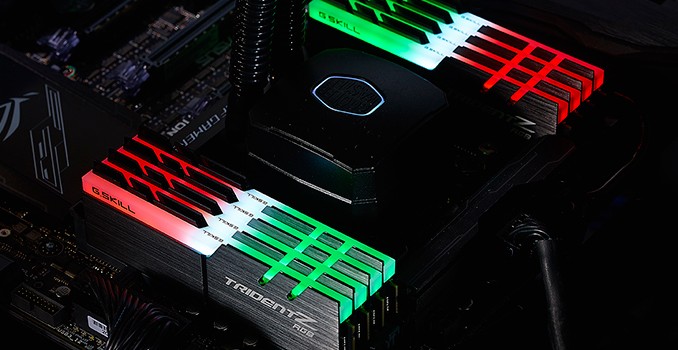
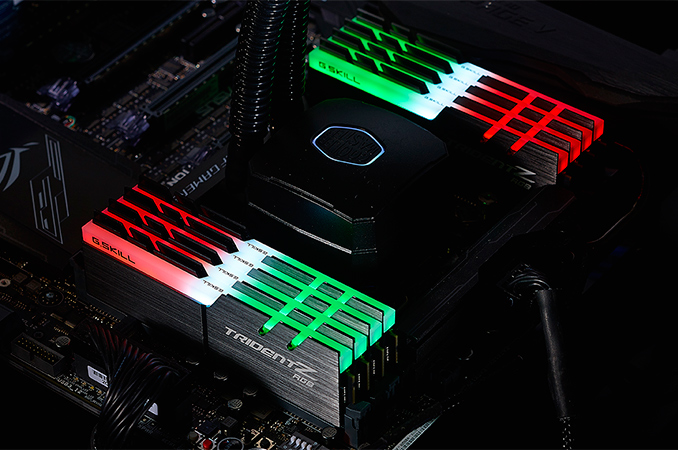
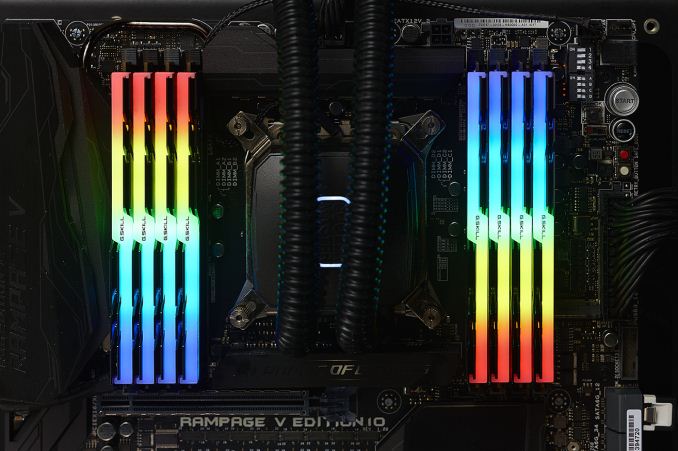
G.Skill has recently launched new Trident Z RGB memory kits, this time aimed at Intel X99 platforms, and following the RGB trend they give owners of high-end desktops an opportunity to customize the look of DRAM inside their machines. This is also the launch where the company introduces its first 16 GB memory modules with programmable LED lighting.

The Trident Z RGB memory modules feature programmable LED lightbars and can change their colors in accordance with user’s demands (G.Skill offers special software to customize lighting effects), providing the ability to modify the look of a PC on the fly. G.Skill first announced its Trident Z RGB memory modules in late 2016 and started to sell them early in 2017. Initially, G.Skill’s Trident Z RGB dual-channel kits were only focused on Intel’s Z270-based platforms and contained 8 GB DIMMs running at up to DDR4-3866 MT/s. Going forward, G.Skill will offer 16 GB Trident Z RGB modules in both dual-channel and quad-channel kits.

Just like the Trident Z RGB 8 GB modules, the Trident Z RGB 16 GB DIMMs are based on Samsung’s 8 Gb B-die memory chips made using 20 nm process technology. The 16 GB modules will run at DDR4-2400 to DDR4-3866 with CL14-18 latencies at 1.2 V or 1.35 V, depending on the kit performance. The Trident Z RGB fully support Intel’s XMP 2.0 as well.

G.Skill’s fastest dual-channel Trident Z RGB 32 GB (2×16 GB) kit will run at 3866 MT/s with CL18 18-18-38 timings. RGB commands a premium, so while the company’s fastest DDR4 kits (rated for DDR4-4266) are not RGB, the new modules are still a very high data rate for 16 GB modules. As for the fastest quad-channel kits, G.Skill now offers the Trident Z RGB 64 GB (4×16 GB) rated to operate at 3600 MT/s with CL17 19-19-39 latency settings as well as the Trident Z RGB 128 GB (8×16 GB) DDR4-3333 kit with CL16 18-18-38 timings.

G.Skill’s New Trident Z RGB Memory for Intel’s X99 and Z270 Platforms
Speed CL Timing Voltage Kit Configuration Kit Capacity
DDR4-2400 CL15 15-15-35 1.2 V 2×16 GB
4×16 GB
8×16 GB
8×8 GB
32 GB
64 GB
128 GB
64 GB
DDR4-3000 CL14 14-14-34 1.35 V*
DDR4-3200 CL14 14-14-34
CL15 15-15-35
DDR4-3333 CL16 18-18-38 8×16 GB
8×8 GB
128 GB
64 GB
DDR4-3466 CL16 18-18-38 2×16 GB
4×16 GB
8×8 GB
32 GB
64 GB
64 GB
DDR4-3600 CL17 19-19-39 2×16 GB
4×16 GB
32 GB
64 GB
DDR4-3866 CL18 18-18-38 2×16 GB 32 GB

*1.35V is the standard high-performance voltage setting for DDR4

While these kits are aimed at Intel systems, we would assume that qualification on Ryzen systems will be an ongoing process. G.Skill has just sent us a 2x8GB DDR4-3200 C14 kit of G.Skill FlareX (non-RGB) modules for our Ryzen testing, so it’s clear that G.Skill (and others) will have AMD qualified kits in their roadmaps. Motherboard manufacturers typically have memory qualified validation lists on their websites for each motherboard, showing which modules have been confirmed to work. Initially it was hit and miss on DRAM qualification with the launch of Ryzen 7 due to timing, but most vendors are falling into place with appropriate BIOS updates.

G.Skill traditionally does not announce MSRPs for its memory modules, due to the volatility of the DRAM ICs, but given the fact that DRAM pricing is generally increasing, expect the new Trident Z RGB kits to be priced at high levels. Moreover, since it is not easy to handpick 8 Gb chips for high-speed 16 GB DDR4 memory modules, expect the manufacturer to charge a premium for kits that use high-capacity DIMMs. As an example, right now G.Skill offers 32 GB (4×8 GB) DDR4-3600 and DDR4-3866 kits without RGB for $410 and $460, respectively.

Related Reading: