News


The OpenPOWER Saga Continues: Can You Get POWER Inside 1U?

When we saw that Tyan made a 1U server based upon this Habanero platform, that caught our eye. The power-hungry POWER8 inside a density optimized form factor? And they feed it with a PSU of “only” 750 W? Is that really a viable option?

Today we’ll be taking a loot at Tyan’s GT75 system to find out the answer to that, and to see if a 1U configuration makes sense for a POWER8 system.

The OpenPOWER Saga Continues: Can You Get POWER Inside 1U?

When we saw that Tyan made a 1U server based upon this Habanero platform, that caught our eye. The power-hungry POWER8 inside a density optimized form factor? And they feed it with a PSU of “only” 750 W? Is that really a viable option?

Today we’ll be taking a loot at Tyan’s GT75 system to find out the answer to that, and to see if a 1U configuration makes sense for a POWER8 system.

SilverStone Launches SST-TP01-M.2 Thermal Pads for M.2 SSDs

SilverStone Launches SST-TP01-M.2 Thermal Pads for M.2 SSDs

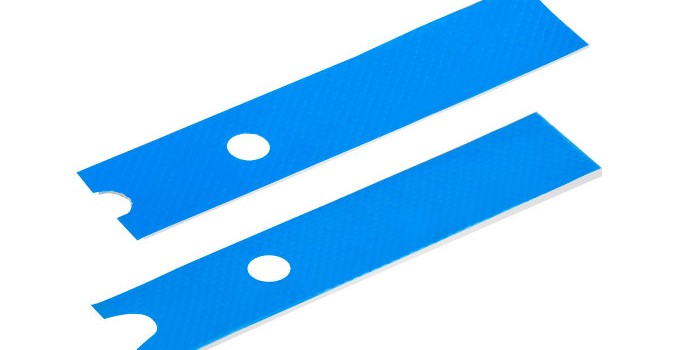
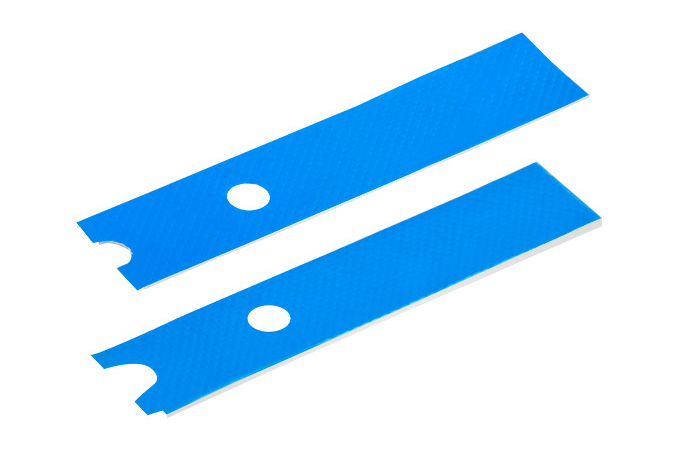
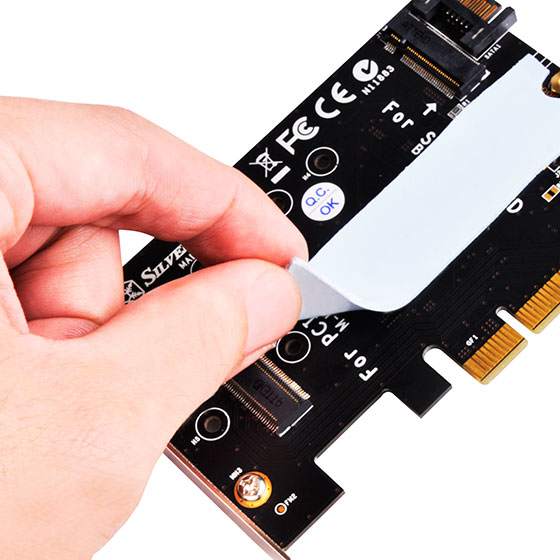
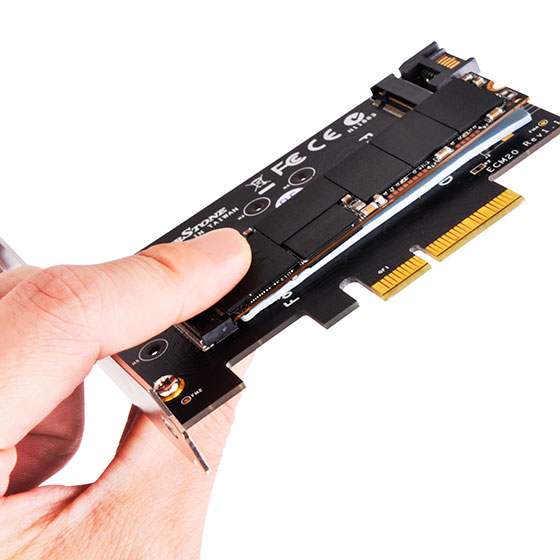
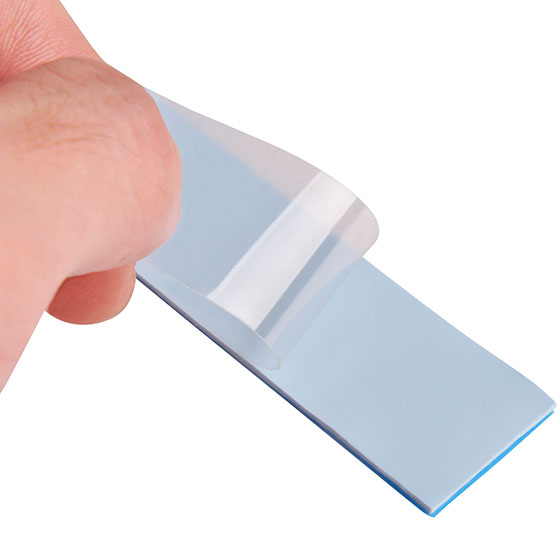
In a bit of offbeat news this afternoon, SilverStone has announced a set of thermal pads for M.2 SSDs, the SST-TP01-M.2. These pads are designed to eliminate (or at least reduce) throttling of modern, high-performance drives under high loads. The pads are made of silicone and Silverstone claims they can reduce temperature of SSDs by over 10°C.

M.2 SSDs have a number of advantages over drives in traditional 2.5” form-factor: they are smaller, they are faster (because they use the PCIe interface with the NVMe protocol), they are (sometimes) cheaper to make, and so on. However, one of the main drawbacks of higher-end M.2 SSDs is the high heat dissipation of their controllers (and memory chips) despite their small form factor, which can lead to thermal throttling and reduced overall performance. Manufacturers have been aware of this for a bit now and have been addressing it in a couple of different ways. Plextor, for example, installs aluminum heat spreaders on their M8Pe drives, whereas Samsung’s latest HDDs come with other types of heat spreaders. However since not all SSD suppliers equip their products with sufficient cooling, SilverStone has developed an aftermarket thermal pad that should work with most drives.

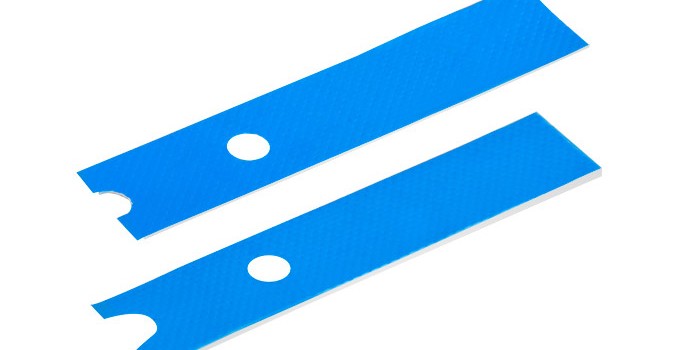
The SilverStone SST-TP01-M.2 thermal pads are made of electrically non-conductive silicone – a material that offers decent thermal conductivity (up to 4 W/m.k) – and can fit M.2 drives that are up to 110 mm long. The SST-TP01-M.2 package includes both 0.5 mm and 1.5 mm thick pads for accommodating different setups.

According to SilverStone, usage of the thermal pads can reduce temperature of Samsung’s SM951 SSDs from 86°C to 71.4°C under high loads, thus ensuring they operate at peak performance more often. The actual performance of SilverSone’s thermal pads will heavily depend on the SSD and the surrounding system – the heat still needs to go somewhere – but there’s some potential here as silicone heatpads are by no means a new thing in PC hardware and have proven themselves to be useful.

SilverStone has already started to produce its M.2 thermal pads, and in Japan stores in the famous Akihabara district are already demonstrating them. Unfortunately, pricing has not yet been announced. But M.2 SSD owners who suffer from thermal throttling of M.2 SSDs will want to keep an eye on this.

SilverStone Launches SST-TP01-M.2 Thermal Pads for M.2 SSDs

SilverStone Launches SST-TP01-M.2 Thermal Pads for M.2 SSDs

In a bit of offbeat news this afternoon, SilverStone has announced a set of thermal pads for M.2 SSDs, the SST-TP01-M.2. These pads are designed to eliminate (or at least reduce) throttling of modern, high-performance drives under high loads. The pads are made of silicone and Silverstone claims they can reduce temperature of SSDs by over 10°C.

M.2 SSDs have a number of advantages over drives in traditional 2.5” form-factor: they are smaller, they are faster (because they use the PCIe interface with the NVMe protocol), they are (sometimes) cheaper to make, and so on. However, one of the main drawbacks of higher-end M.2 SSDs is the high heat dissipation of their controllers (and memory chips) despite their small form factor, which can lead to thermal throttling and reduced overall performance. Manufacturers have been aware of this for a bit now and have been addressing it in a couple of different ways. Plextor, for example, installs aluminum heat spreaders on their M8Pe drives, whereas Samsung’s latest HDDs come with other types of heat spreaders. However since not all SSD suppliers equip their products with sufficient cooling, SilverStone has developed an aftermarket thermal pad that should work with most drives.

The SilverStone SST-TP01-M.2 thermal pads are made of electrically non-conductive silicone – a material that offers decent thermal conductivity (up to 4 W/m.k) – and can fit M.2 drives that are up to 110 mm long. The SST-TP01-M.2 package includes both 0.5 mm and 1.5 mm thick pads for accommodating different setups.

According to SilverStone, usage of the thermal pads can reduce temperature of Samsung’s SM951 SSDs from 86°C to 71.4°C under high loads, thus ensuring they operate at peak performance more often. The actual performance of SilverSone’s thermal pads will heavily depend on the SSD and the surrounding system – the heat still needs to go somewhere – but there’s some potential here as silicone heatpads are by no means a new thing in PC hardware and have proven themselves to be useful.

SilverStone has already started to produce its M.2 thermal pads, and in Japan stores in the famous Akihabara district are already demonstrating them. Unfortunately, pricing has not yet been announced. But M.2 SSD owners who suffer from thermal throttling of M.2 SSDs will want to keep an eye on this.

AOC Expands AGON Family with Curved AG322QCX and AG272FCX 144 Hz Displays

AOC Expands AGON Family with Curved AG322QCX and AG272FCX 144 Hz Displays

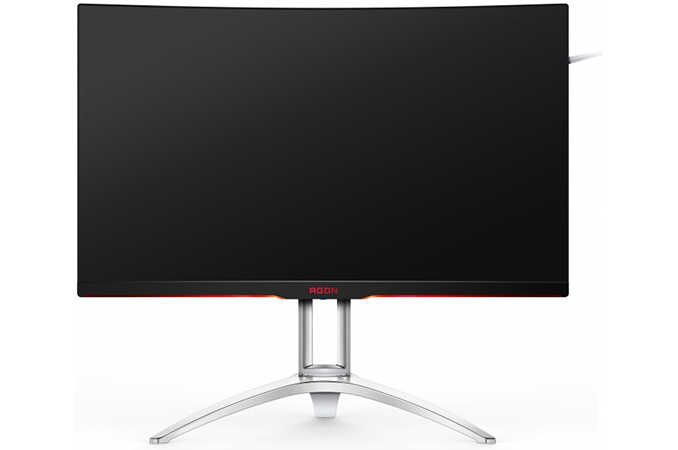
AOC has introduced two new curved gaming monitors as part of the AGON family, the AG322QCX and the AG272FCX. The new monitors feature rather high refresh rates along with VESA’s Adaptive-Sync technology (which generally means support for AMD’s FreeSync). The displays have a number of similarities, but are aimed at different segments of the market, with varying prices and feature sets..

The AOC AGON AG272FCX is the smaller of the two and uses a 27” VA panel with 1920×1080 resolution, whereas the AOC AGON AG322QCX is the larger one and features a 31.5” VA panel with 2560×1440 resolution. The monitors have 1800R curvature, a 16:9 aspect ratio, as well as refresh rates between 48 Hz and 144 Hz. The general specifications of the displays resembles those of many other gaming monitors: 250/300 nits brightness, 3000:1/2000:1 contrast ratio, 178°/178° viewing angles, 16.7 million colors (and the sRGB color gamut), a 4 ms response time (grey-to-grey) and so on. The monitors support VESA’s Adaptive-Sync technology, and I expect it’s only a matter of time until AMD certifies them for FreeSync.
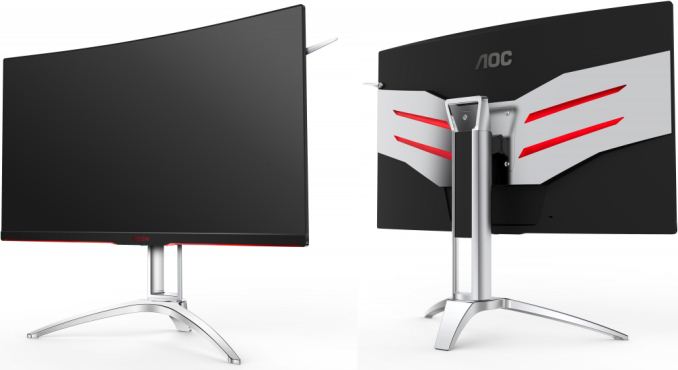
As for connectivity, the AGON AG272FCX has a D-Sub(!), DisplayPort, and two HDMI inputs, whereas the AGON AG322QCX comes with two HDMI and two DisplayPort inputs. The smaller display also has a dual-port USB 3.0 hub as well as integrated 3 W stereo speakers, two logical features for an entry-level monitor. By contrast, the larger screen is a much more straightforward pure monitor, which is par for the course as higher-end monitors rarely ship with speakers since customers usually already have external speakers/headphones. A more important drawback is the lack of any HDCP support on the AG322QCX, which greatly limits the monitor’s ability to be used with protected HD video content such as Blu-rays or Netflix streaming.

AOC’s AGON Curved 16:9 Displays
  AGON AG272FCX AGON AG322QCX
Panel 27″ VA 31.5″ VA
Native Resolution 1920 × 1080 2560 × 1440
Maximum Refresh Rate 144 Hz
Response Time 4 ms
Dynamic Refresh Rate Adaptive-Sync (not yet FreeSync certified)
Brightness 250 cd/m² 300 cd/m²
Contrast 3000:1 2000:1
Viewing Angles 178°/178° horizontal/vertical
Curvature 1800R
Pixel Pitch 0.3114 mm 0.2724 mm
Pixel Density 82 ppi 93 ppi
Anti-Glare Coating Yes
Inputs 1 × DisplayPort (HDCP)
1 × D-Sub
2 × HDMI (HDCP)
2× DisplayPort
2 × HDMI
USB Hub 2-port USB 3.0 hub
Audio 3 W × 2
audio in/out ports
Power Consumption Idle: 0.5 W
Operating: 47 W
Idle: 0.5 W
Operating: 40 W
Launch Price £389 ($485) in the U.K. £519 ($647) in the U.K.

When it comes to visual aesthetics, the new AGON displays feature ultra-thin bezels as well as an aggressive design that highlights their gaming nature. Furthermore, the monitors have four large LEDs with adjustable colors (red, green, blue) located on the back and two located on the bottom edges of the displays.

The addition of these latest AGON displays brings AOC to a total of four curved monitors introduced under the brand in the last few months, joining the company’s previously launched ultrawide curved monitors and making these the company’s first curved 16:9 monitors. So it appears that AOC is pinning a lot of its hopes for the AGON brand on curved gaming screens with high refresh rates designed for gamers. 

AOC’s AGON AG322QCX and AGON AG272FCX monitors will be available in May. The exact MSRPs of the displays in the U.S. and Continental Europe are unknown, but Hexus reports that in the U.K. they will cost £519 ($647) and £389 ($485) respectively.

Related Reading: