News


JapanNext JN-VC490UHD and JN-VC550UHD: 49-55 inch, Curved 4K, FreeSync, HDCP 2.2, Under $900
JapanNext JN-VC490UHD and JN-VC550UHD: 49-55 inch, Curved 4K, FreeSync, HDCP 2.2, Under $900

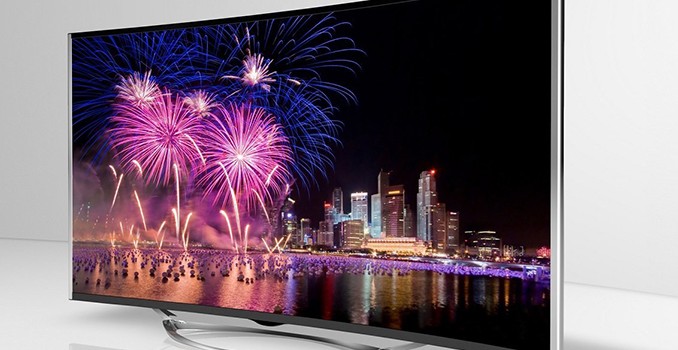
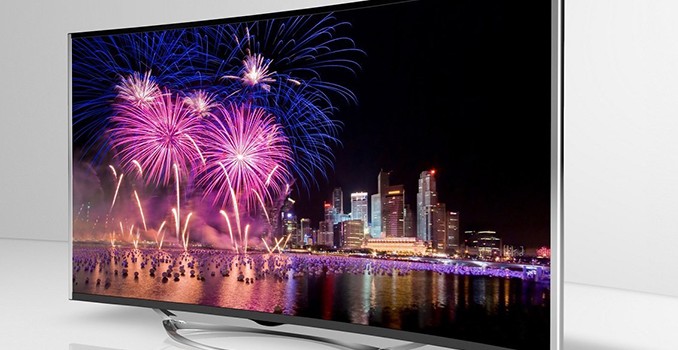
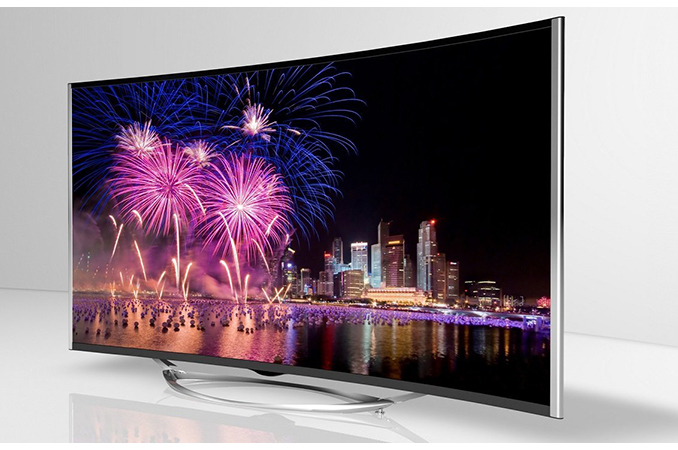
JapanNext has started to sell its new ultra-large 49” and 55” curved displays that feature an Ultra HD resolution, a low response time, AMD’s FreeSync dynamic refresh rate technology as well as HDCP 2.2 copyright protection. The monitors are not too expensive: they are currently available for less than $900.

Ultra-large displays are not so common but are not something extremely rare too. For example, companies like NEC offer displays with 40”+ diagonals for professional and industrial applications. Such monitors tend to be too expensive for personal use because they are built according to different standards asking for 24/7 operation and rated for maximum endurance. For many people displays larger than 40” are simply too big, but there are gamers as well as those need to keep a lot of information on their screens, who may want to have a huge monitor. Last year TPV (Philips) introduced two 40” and 43” UHD 4K monitors for prosumers that retail for less than $1000. This month a Japanese company called JapanNext introduced its JN-VC490UHD and JN-VC550UHD monitors that are even larger and support a dynamic refresh rate technology.
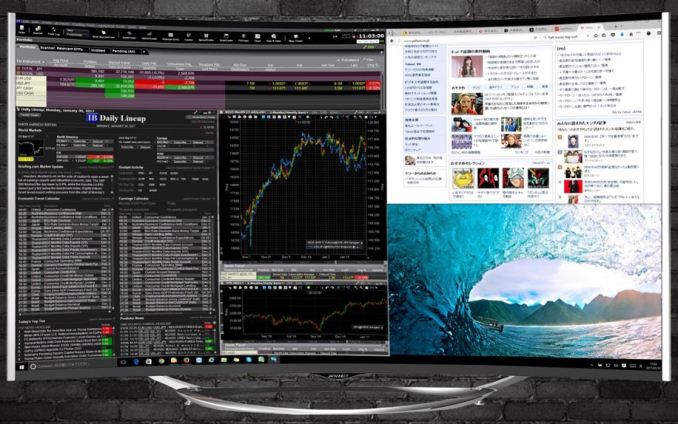
The JapanNext JN-VC490UHD (49”) and JN-VC550UHD (55”) displays are based on SVA panels (which may indicate that the manufacturer sources it from Samsung Display) with a 3840×2160 resolution, 250 nits brightness, a 6000:1 contrast ratio, a 60 Hz refresh rate and a 3-4 ms response time. The producer states that the display panels can reproduce 1.07 billion colors (listed online as 10-bit) and are rated to support 99% of the sRGB color gamut. The displays use ELED backlighting to ensure “flicker free” operation and JapanNext promote the panels as being 16mm thick.

JapanNext’s 49″ and 55″ Curved UHD Displays
  JN-VC490UHD JN-VC550UHD
Panel SVA
Native Resolution 3840×2160
Maximum Refresh Rate 60 Hz
Freesync Support, but unknown range
Response Time 3 ms 4 ms
Brightness 250 cd/m²
Contrast 6000:1
Viewing Angles 178°/178° horizontal/vertical
Curvature unknown
Pixel Pitch 0.2825 mm 0.3171 mm
Pixel Density 90 ppi 80 ppi
Color Gamut sRGB: 99%
1.07 billion
Inputs 1 × DisplayPort 1.2
1 × HDMI 2.0
2 × HDMI 1.4
1 × D-Sub
Outputs 3.5 mm headphone output
SPDIF
USB Hub USB hub (?)
1 × USB Type-A upstream port
Audio 6 W × 2
audio in/out ports
Power Consumption (idle/active) Idle: 0.5 W
Active: 100 W
Idle: 0.5 W
Active: 108 W
Modes Warm, Cool, Norma, Standard,
Game 1/2/3, Movie, Photo
Price at Amazon.co.jp ¥82,970 ($725) ¥99,970 ($873)

In a bid to make the JN-VC490UHD and JN-VC550UHD monitors more appealing to gamers, JapanNext equipped the display with AMD’s FreeSync dynamic refresh technology (and there is AMD’s official FreeSync badge on the manufacturer’s website). Unfortunately JapanNext does not declare what refresh range it supports for FreeSync, which may be limited (40/45Hz to 60Hz or similar). Moreover, the units both fully support HDCP 2.2 technology, which is not common for monitors, but which is more commonly found on UHDTVs (given the dimensions of the JN-VC490UHD and JN-VC550UHD, it makes sense to compare them to TVs). Therefore, the 49” and 55” curved UHD displays could be used for Ultra HD Blu-ray playback (but HDR support is not formally declared however).
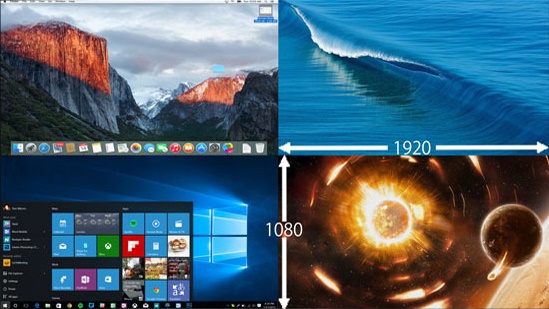
Connectivity is a yet another interesting peculiarity of the JapanNext displays. The monitors have two HDMI 1.4 inputs that support 3840×2160 resolution at 30 Hz, one DisplayPort 1.2 and one HDMI 2.0 that can both handle 4K at 60 Hz as well as one D-Sub connector (up to 2560×1440). The displays support PiP (picture-in-picture) and PBP (picture-by-picture) modes and some may use it to work with up to four different FHD PCs. As for audio, the displays are equipped with two 6 W stereo speakers, a 3.5-mm audio input, a headphone output and an SPDIF optical output for those who will use them with an audio decoder/receiver.

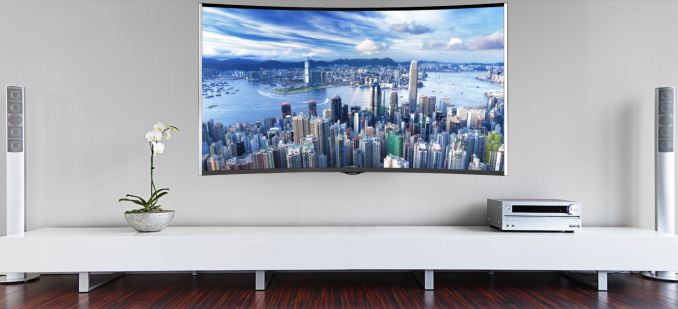
The ultra-large curved UHD displays for prosumers and gamers from JapanNext will attract attention from many people who primarily need large dimensions. While the pixel density of the JN-VC490UHD and JN-VC550UHD monitors is comparable to that of 24” and 28” FHD screens, it does mean that applications that lack high-PPI settings may not be disadvantaged on the new displays (it depends how close you sit). JapanNext makes no secret that many people will use its new products primarily to enjoy media content in their living rooms: because the TVs have so many inputs, users can attach multiple STBs to them. A bad news is that the devices only have one HDMI 2.0 header, so owners will have to choose whether to plug in one high-end HDMI 2.0 device.
The official price of the JapanNext JN-VC490UHD is ¥99,970 ($873), but Amazon.co.jp offers it for ¥82,970 ($725). The MSRP of the JapanNext JN-VC550UHD is unknown, but it is available for ¥99,970 ($873).

The manufacturer sells some of its displays in Europe via its own website, but the lineup there is not too wide. It is unknown whether JapanNext plans to make its JN-VC490UHD and JN-VC550UHD available outside of Japan.

{gallery: 5479}

Related Reading:

JapanNext JN-VC490UHD and JN-VC550UHD: 49-55 inch, Curved 4K, FreeSync, HDCP 2.2, Under $900

JapanNext JN-VC490UHD and JN-VC550UHD: 49-55 inch, Curved 4K, FreeSync, HDCP 2.2, Under $900

JapanNext has started to sell its new ultra-large 49” and 55” curved displays that feature an Ultra HD resolution, a low response time, AMD’s FreeSync dynamic refresh rate technology as well as HDCP 2.2 copyright protection. The monitors are not too expensive: they are currently available for less than $900.

Ultra-large displays are not so common but are not something extremely rare too. For example, companies like NEC offer displays with 40”+ diagonals for professional and industrial applications. Such monitors tend to be too expensive for personal use because they are built according to different standards asking for 24/7 operation and rated for maximum endurance. For many people displays larger than 40” are simply too big, but there are gamers as well as those need to keep a lot of information on their screens, who may want to have a huge monitor. Last year TPV (Philips) introduced two 40” and 43” UHD 4K monitors for prosumers that retail for less than $1000. This month a Japanese company called JapanNext introduced its JN-VC490UHD and JN-VC550UHD monitors that are even larger and support a dynamic refresh rate technology.

The JapanNext JN-VC490UHD (49”) and JN-VC550UHD (55”) displays are based on SVA panels (which may indicate that the manufacturer sources it from Samsung Display) with a 3840×2160 resolution, 250 nits brightness, a 6000:1 contrast ratio, a 60 Hz refresh rate and a 3-4 ms response time. The producer states that the display panels can reproduce 1.07 billion colors (listed online as 10-bit) and are rated to support 99% of the sRGB color gamut. The displays use ELED backlighting to ensure “flicker free” operation and JapanNext promote the panels as being 16mm thick.

JapanNext’s 49″ and 55″ Curved UHD Displays
  JN-VC490UHD JN-VC550UHD
Panel SVA
Native Resolution 3840×2160
Maximum Refresh Rate 60 Hz
Freesync Support, but unknown range
Response Time 3 ms 4 ms
Brightness 250 cd/m²
Contrast 6000:1
Viewing Angles 178°/178° horizontal/vertical
Curvature unknown
Pixel Pitch 0.2825 mm 0.3171 mm
Pixel Density 90 ppi 80 ppi
Color Gamut sRGB: 99%
1.07 billion
Inputs 1 × DisplayPort 1.2
1 × HDMI 2.0
2 × HDMI 1.4
1 × D-Sub
Outputs 3.5 mm headphone output
SPDIF
USB Hub USB hub (?)
1 × USB Type-A upstream port
Audio 6 W × 2
audio in/out ports
Power Consumption (idle/active) Idle: 0.5 W
Active: 100 W
Idle: 0.5 W
Active: 108 W
Modes Warm, Cool, Norma, Standard,
Game 1/2/3, Movie, Photo
Price at Amazon.co.jp ¥82,970 ($725) ¥99,970 ($873)

In a bid to make the JN-VC490UHD and JN-VC550UHD monitors more appealing to gamers, JapanNext equipped the display with AMD’s FreeSync dynamic refresh technology (and there is AMD’s official FreeSync badge on the manufacturer’s website). Unfortunately JapanNext does not declare what refresh range it supports for FreeSync, which may be limited (40/45Hz to 60Hz or similar). Moreover, the units both fully support HDCP 2.2 technology, which is not common for monitors, but which is more commonly found on UHDTVs (given the dimensions of the JN-VC490UHD and JN-VC550UHD, it makes sense to compare them to TVs). Therefore, the 49” and 55” curved UHD displays could be used for Ultra HD Blu-ray playback (but HDR support is not formally declared however).

Connectivity is a yet another interesting peculiarity of the JapanNext displays. The monitors have two HDMI 1.4 inputs that support 3840×2160 resolution at 30 Hz, one DisplayPort 1.2 and one HDMI 2.0 that can both handle 4K at 60 Hz as well as one D-Sub connector (up to 2560×1440). The displays support PiP (picture-in-picture) and PBP (picture-by-picture) modes and some may use it to work with up to four different FHD PCs. As for audio, the displays are equipped with two 6 W stereo speakers, a 3.5-mm audio input, a headphone output and an SPDIF optical output for those who will use them with an audio decoder/receiver.

The ultra-large curved UHD displays for prosumers and gamers from JapanNext will attract attention from many people who primarily need large dimensions. While the pixel density of the JN-VC490UHD and JN-VC550UHD monitors is comparable to that of 24” and 28” FHD screens, it does mean that applications that lack high-PPI settings may not be disadvantaged on the new displays (it depends how close you sit). JapanNext makes no secret that many people will use its new products primarily to enjoy media content in their living rooms: because the TVs have so many inputs, users can attach multiple STBs to them. A bad news is that the devices only have one HDMI 2.0 header, so owners will have to choose whether to plug in one high-end HDMI 2.0 device.

The official price of the JapanNext JN-VC490UHD is ¥99,970 ($873), but Amazon.co.jp offers it for ¥82,970 ($725). The MSRP of the JapanNext JN-VC550UHD is unknown, but it is available for ¥99,970 ($873).

The manufacturer sells some of its displays in Europe via its own website, but the lineup there is not too wide. It is unknown whether JapanNext plans to make its JN-VC490UHD and JN-VC550UHD available outside of Japan.

{gallery: 5479}

Related Reading:

EVGA's New iCX Range: NVIDIA GPUs with More Control for Cooling

EVGA’s New iCX Range: NVIDIA GPUs with More Control for Cooling

EVGA has introduced a new iCX cooling and tuning technology for its GPUs that promises higher efficiency and better control compared to predecessors. The video cards feature multiple onboard thermal sensors and microcontrollers (MCUs) designed that enable users to precisely tune settings of their cards and monitor their state for potentially better performance, stability, and endurance.

Modern high-end graphics adapters have three heat sources: the GPU silicon itself, the memory chips, and the VRM circuitry. To overclock a video card successfully, one needs to ensure that none of these components overheats under the higher voltage. While modern GPU silicon has built-in temperature sensors, memory chips do not (GDDR5X chips have integrated temperature sensors, rare GDDR5 ICs do too) and VRM temperature cannot be monitored without using special tools as well. Motherboard manufacturers usually add onboard sensors for monitoring, and here EVGA is doing the same. Squeezing all the overclocking headroom from a graphics card may be complicated since it is not easy to determine which component is overheating due to the high load, and a typical response is to increase cooling to the whole card (which means increasing the speed of all the fans creating excessive noise). EVGA’s new cooler design is meant to offer more control over what needs to be cooled.

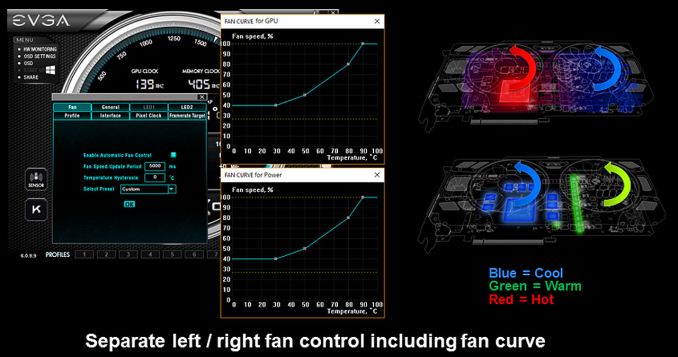
EVGA’s iCX technology uses nine thermal sensors on the graphics card to monitor GPU, VRM and memory temperatures and then its Precision XOC software can make decisions regarding cooling the components that actually require it. In a bid to cool-down VRM, the application increases the speed of the fan on the right-hand-side of the card, whereas when the GPU and memory need some extra cooling, the board speeds up the left fan. Fan speeds are regulated independently with their own temperature/power curves and therefore do not produce excessive noise unless needed. Alternatively, users can manually regulate GPU and memory frequencies as well as fan speeds using the Precision XOC software, and the fans will react accordingly. The app allows to set power and temperature targets and even create profiles for different occasions.

In addition to the new PCB design and the Precision XOC software, the iCX package includes a new cooling system with redesigned heatsinks (which EVGA calls “purposefully-directed airflow chambers”). The latter now have small holes in their fins to make it easier for the air to pass through them. The heatsink fins are L-shaped to increase surface contact, and some fins are half open to maximize airflow. Finally, the cooler has a special thermal LED display system that reflects a combination value of the temperature of the GPU, memory and VRM, and can act as a visual aid to warn users of overheating (if the software does not do it for some reason).

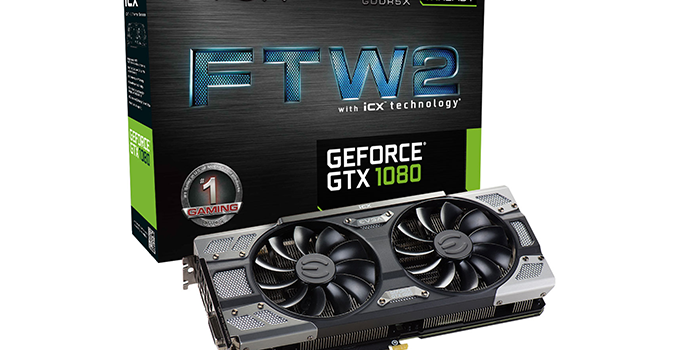
EVGA will use its iCX cooling initially on variants of NVIDIA cards that feature its proprietary PCBs (e.g., FTW2, SC2, etc.), just like it uses the ACX-series coolers today. The initial family (see the tables for details) of add-in-boards with iCX includes three GTX 1080 parts, three GTX 1070 parts, and four GTX 1060 6GB/3GB cards.

EVGA GeForce GTX 1080 with iCX Technology
  GTX 1080 GAMING iCX GTX 1080 SC2 GAMING iCX GTX 1080 FTW2 GAMING iCX
  08G-P4-6581-KR 08G-P4-6583-KR 08G-P4-6686-KR
Stream Processors 2560
Texture Units 160
ROPs 64
Core Clock (MHz) 1607 1708 1721
Boost Clock (MHz) 1733 1847 1860
Memory Capacity 8 GB
Type GDDR5X
Clock 10 Gbps
TDP 180 W 180 W 215 W
Launch Date Q1 2017
Launch Price $639.99 $649.99 $679.99

As usual, some of EVGA’s AIBs come factory overclocked and may have an increased TDP when compared to NVIDIA’s reference designs. Due to different frequencies and TDPs, all the cards have different PCB designs and different VRMs, but the key components of the iCX (sensors, MCUs, two fans, safety fuse, etc.) are present on all iCX cards.

EVGA currently sells two graphics cards with its iCX cooling and tuning technology: the EVGA GeForce GTX
1080 SC2 GAMING iCX
($649.99) and the EVGA GeForce GTX 1070 SC2 GAMING iCX ($449.99). Those interested in other members of the new lineup may sign up for notification about their availability. Given that EVGA has already announced all the cards, they should hit the market in the coming weeks, but we are not sure whether all the remaining SKUs are going to arrive at the same time.

EVGA GeForce GTX 1070 with iCX Technology
  GTX 1070 GAMING iCX GTX 1070 SC2 GAMING iCX GTX 1070 FTW2 GAMING iCX
  08G-P4-6571-KR 08G-P4-6573-KR 08G-P4-6676-KR
Stream Processors 1920
Texture Units 120
ROPs 64
Core Clock (MHz) 1506 1594 1607
Boost Clock (MHz) 1683 1784 1797
Memory Capacity 8 GB
Type GDDR5
Clock 8 Gbps
TDP 150 W 170 W 215 W
Launch Date Q1 2017
Launch Price $439.99 $449.99 $469.99

As for pricing, the addition EVGA’s iCX cooling will come at a small premium. The cheapest EVGA GeForce GTX 1080 with iCX will be priced at $639.99 ($40 above NVIDIA’s MSRP), whereas the lowest-cost EVGA GeForce GTX 1070 with iCX will be sold for $439.99 ($60 above MSRP). Prices for EVGA’s GeForce GTX 1060 boards with iCX were given at this time.

EVGA GeForce GTX 1060 with iCX Technology
  GTX 1060
6GB SSC2 GAMING iCX
GTX 1060
6GB FTW2+ GAMING iCX
GTX 1060
3GB SSC2 GAMING iCX
GTX 1060
3GB FTW2+ GAMING iCX
  06G-P4-6667-KR 06G-P4-6768-KR 03G-P4-6567-KR 03G-P4-6767-KR
Stream Processors 1280 1152
Texture Units 80 72
ROPs 48
Core Clock (MHz) 1607 1632 1607 1632
Boost Clock (MHz) 1835 1860 1835 1860
Memory Capacity 6 GB 3 GB
Type GDDR5
Clock 8 Gbps
TDP 120 W 150 W
Launch Date 1H 2017
Launch Price TBD TBD TBD TBD

Related Reading: