News


AOC Announces the AGON AG352UCG 21:9 Curved Display: 35", 3440×1440, 100Hz with G-Sync

AOC Announces the AGON AG352UCG 21:9 Curved Display: 35″, 3440×1440, 100Hz with G-Sync
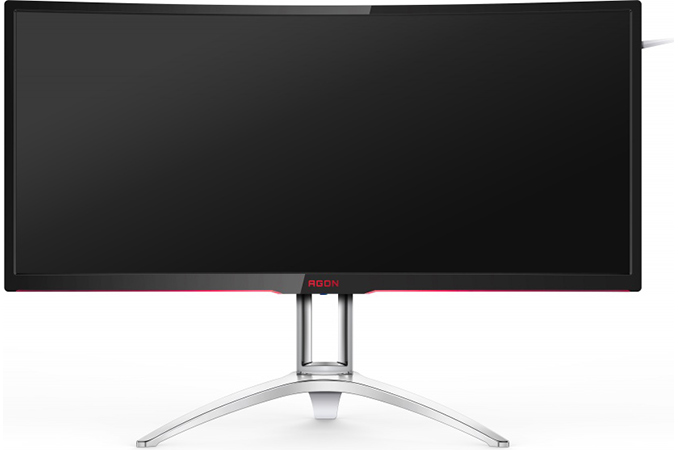
Last week AOC introduced its new high-end curved gaming display, the AGON AG352UCG. The new 35” monitor boasts a considerably higher resolution than AOC’s other large curved gaming display. The 3440×1440 resolution, size, curvature, a 100 Hz refresh rate and G-Sync support make the AG352UCG one of four curved displays with such combination of features. The other AGON AG352QCX 21:9 panel is a 2560×1080 resolution, but with a 200 Hz refresh rate.

The AOC AGON AG352UCG uses a 35” MVA panel with a 3440×1440 resolution, a 21:9 aspect ratio and a native 100 Hz refresh rate (which means that actual panel response times are perfectly aligned with its high refresh rate). We presume the panel is made by AUO (AU Optronics), which reportedly started volume production of such panels in September, 2016. General specifications  of the monitor are similar to many other gaming displays: 300 nits brightness, 2000:1 contrast ratio, 178°/178° viewing angles, 16.7 million colors, a 4 ms response time (grey-to-grey) and so on.
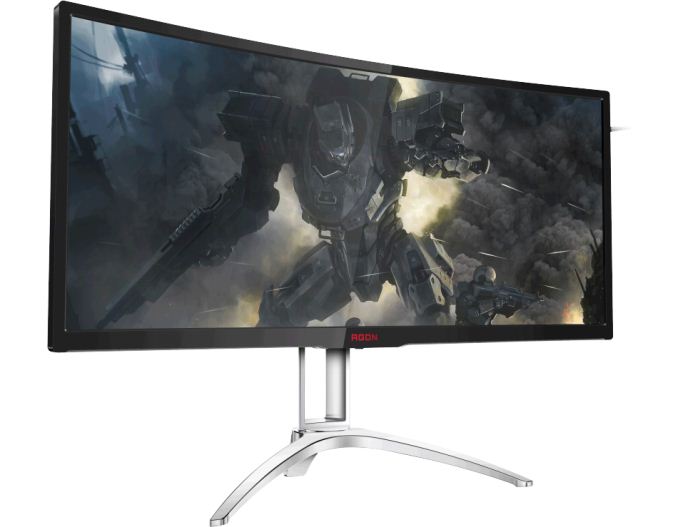
When it comes to connectivity, the AGON AG352UCG has a DisplayPort input and an HDMI input. To take advantage of NVIDIA’s G-Sync as well as the high refresh rate, the DP connector has to be used. The monitor is also equipped with a dual-port USB 3.0 Type-A hub and two integrated speakers.

AOC’s AGON Curved UWQHD Display with a 100 Hz Refresh Rate
  AGON AG352UCG
Panel 35″ MVA
Native Resolution 3440 × 1440
Refresh Rate Range 30-100 Hz (DP)
NVIDIA G-Sync
Response Time 4 ms
Brightness 300 cd/m²
Contrast 2000:1
Viewing Angles 178°/178° horizontal/vertical
Curvature 2000R
Pixel Pitch 0.23 mm
Inputs 1 × DP
1 × HDMI 1.4
USB Hub 2-port USB 3.0 hub,
one port supports fast charging
Audio 2 W × 2
audio in/out ports
Power Consumption Up to 70 W

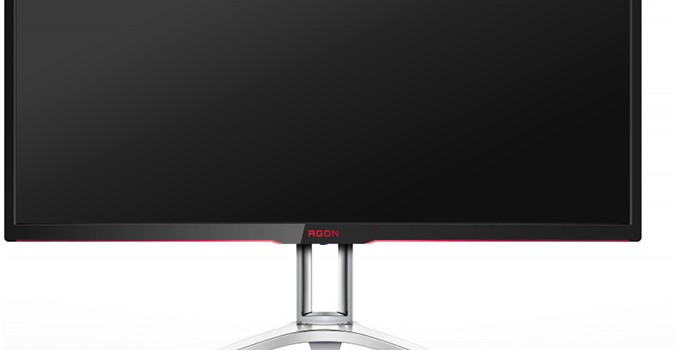
As for visual aesthetics, the curved AOC AGON has a rather aggressive yet minimalistic design that emphasizes its gaming nature through a combination of sharp lines and colors. To add further atmosphere, the AG352UCG has six large LEDs with adjustable colors (red, green, blue) located on the back and on the bottom edge of the display.
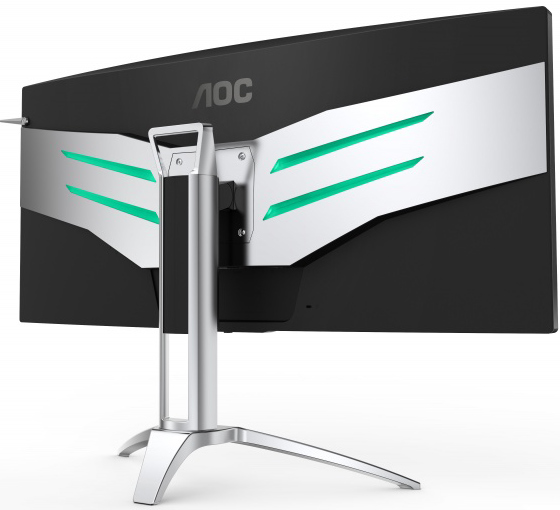
The key selling point of the AGON AG352UCG is the combination of its features: the resolution (3440×1440), size (35”), curvature (2000R), a native 100 Hz refresh rate and using NVIDIA’s G-Sync variable refresh tech make up for a very interesting gaming display. At present, only three monitors can offer a similar set of technologies: the ASUS ROG Swift PG348Q, the Acer Predator X34 (this one uses an IPS panel with 60 Hz, but it is overclockable to 100 Hz) as well as the upcoming HP Omen X 35”. By launching the AGON AG352UCG, AOC contends for the highest end of the gaming monitor market and that is clearly an important milestone for the company.

AOC has not formally announced the AGON AG352UCG in the U.S. yet, so we do not know its ETA and MSRP. Meanwhile, Hexus reports that the display will land in the U.K. this March for the price of £799 (that’s including 20% sales tax). Therefore expect the AG352UCG to cost around $1000 in the U.S. when it becomes available this spring. Considering the combination of its features (size, resolution, curvature, G-Sync support) and only three direct competitors that retail for $1100-$1300 today, it looks like AOC’s AG352UCG might be priced rather competitively.

Related Reading:

AOC Announces the AGON AG352UCG 21:9 Curved Display: 35", 3440×1440, 100Hz with G-Sync

AOC Announces the AGON AG352UCG 21:9 Curved Display: 35″, 3440×1440, 100Hz with G-Sync

Last week AOC introduced its new high-end curved gaming display, the AGON AG352UCG. The new 35” monitor boasts a considerably higher resolution than AOC’s other large curved gaming display. The 3440×1440 resolution, size, curvature, a 100 Hz refresh rate and G-Sync support make the AG352UCG one of four curved displays with such combination of features. The other AGON AG352QCX 21:9 panel is a 2560×1080 resolution, but with a 200 Hz refresh rate.

The AOC AGON AG352UCG uses a 35” MVA panel with a 3440×1440 resolution, a 21:9 aspect ratio and a native 100 Hz refresh rate (which means that actual panel response times are perfectly aligned with its high refresh rate). We presume the panel is made by AUO (AU Optronics), which reportedly started volume production of such panels in September, 2016. General specifications  of the monitor are similar to many other gaming displays: 300 nits brightness, 2000:1 contrast ratio, 178°/178° viewing angles, 16.7 million colors, a 4 ms response time (grey-to-grey) and so on.

When it comes to connectivity, the AGON AG352UCG has a DisplayPort input and an HDMI input. To take advantage of NVIDIA’s G-Sync as well as the high refresh rate, the DP connector has to be used. The monitor is also equipped with a dual-port USB 3.0 Type-A hub and two integrated speakers.

AOC’s AGON Curved UWQHD Display with a 100 Hz Refresh Rate
  AGON AG352UCG
Panel 35″ MVA
Native Resolution 3440 × 1440
Refresh Rate Range 30-100 Hz (DP)
NVIDIA G-Sync
Response Time 4 ms
Brightness 300 cd/m²
Contrast 2000:1
Viewing Angles 178°/178° horizontal/vertical
Curvature 2000R
Pixel Pitch 0.23 mm
Inputs 1 × DP
1 × HDMI 1.4
USB Hub 2-port USB 3.0 hub,
one port supports fast charging
Audio 2 W × 2
audio in/out ports
Power Consumption Up to 70 W

As for visual aesthetics, the curved AOC AGON has a rather aggressive yet minimalistic design that emphasizes its gaming nature through a combination of sharp lines and colors. To add further atmosphere, the AG352UCG has six large LEDs with adjustable colors (red, green, blue) located on the back and on the bottom edge of the display.

The key selling point of the AGON AG352UCG is the combination of its features: the resolution (3440×1440), size (35”), curvature (2000R), a native 100 Hz refresh rate and using NVIDIA’s G-Sync variable refresh tech make up for a very interesting gaming display. At present, only three monitors can offer a similar set of technologies: the ASUS ROG Swift PG348Q, the Acer Predator X34 (this one uses an IPS panel with 60 Hz, but it is overclockable to 100 Hz) as well as the upcoming HP Omen X 35”. By launching the AGON AG352UCG, AOC contends for the highest end of the gaming monitor market and that is clearly an important milestone for the company.

AOC has not formally announced the AGON AG352UCG in the U.S. yet, so we do not know its ETA and MSRP. Meanwhile, Hexus reports that the display will land in the U.K. this March for the price of £799 (that’s including 20% sales tax). Therefore expect the AG352UCG to cost around $1000 in the U.S. when it becomes available this spring. Considering the combination of its features (size, resolution, curvature, G-Sync support) and only three direct competitors that retail for $1100-$1300 today, it looks like AOC’s AG352UCG might be priced rather competitively.

Related Reading:

MSI Trident 3 Announced: A Core i7 Console

MSI Trident 3 Announced: A Core i7 Console

Over CES, MSI announced a new console-like PC called the Trident 3. The new unit packs the latest Intel’s Kaby Lake CPU, a NVIDIA GeForce GTX GPU, memory, an SSD and a hard drive. The system weighs just about three kilograms and its dimensions are smaller than dimensions of Microsoft’s Xbox One.

Current-generation game consoles, while closed systems ripe for optimization, can have difficulty providing performance sufficient for Full-HD gaming. Many console gamers prefer to play their games on HDTVs rather than on monitors, and so makers of boutique PCs were set on introducing console-like computers featuring gaming-grade hardware. Manufacturers of computer components were, for various reasons, reluctant to launch their own SFF gaming PCs for the living room until last year. However in the recent months we have seen a number of computers from motherboards/GPU vendors cards that are both small and powerful. MSI began to sell its Trident system in November-December timeframe without making any loud announcements, and this month the company upgraded its mini PC with Intel’s Kaby Lake processors but retained the chassis and the platform.

The MSI Trident 3 is based on a custom Intel H110 powered motherboard, along with a choice of Intel’s Core i7-7700 / i5-7400 processors and NVIDIA’s GeForce GTX 1060 / 1050 Ti graphics cards. By default the PC comes with 8 GB of single-channel DDR4-2400 memory (upgradeable to 32 GB), a 256 GB M.2 SATA SSD, one 1 TB hard drive and a 230 W external PSU. Despite the miniature size, the MSI Trident 3 is upgradeable: the CPU, the graphics adapter, the DRAM and storage devices may be changed. Due to lack of space inside, it is impossible to install a video card longer than 17 cm or additional drives, but such limitations are understandable. Moreover, keeping in mind that many SFF PCs use mobile components soldered to their motherboards, so using desktop-class components is a tradeoff between replaceability and size.

MSI Trident 3 Specifications
  Mainstream High-End
CPU Intel Core i5-7400
4C/4T
3 GHz/3.5 GHz
6 MB L3 Cache
HD Graphics 630
65 W
Intel Core i7-7700
4C/8T
3.6 GHz/4.2 GHz
8 MB L3 Cache
HD Graphics 630
65 W
PCH Intel H110
Graphics NVIDIA GeForce GTX 1050 Ti with 4 GB GDDR5 memory
NVIDIA GeForce GTX 1060 with 3 GB GDDR5 memory
NVIDIA GeForce GTX 1060 with 6 GB GDDR5 memory
Memory  8 GB of DDR4-2400 (one SO-DIMM installed)
Up to 32 GB is supported
Storage 256 GB SSD (SATA)
1 TB 2.5″ HDD
Wi-Fi Intel AC3168 IEEE 802.11ac Wi-Fi + BT 4.2
Ethernet Intel I219V GbE
Display Outputs 1 × HDMI Front
2 x HDMI Rear (1 x VR Link)
1 x HDMI (GPU)
1 × DisplayPort
1 × DVI-I
Audio 5.1-channel audio (Realtek ALC1150)
Audio Boost 3,
Nahimic 2.5
USB 1 × USB 3.0 Type-C (5 Gbps)
3 × USB 3.0 Type-A (5 Gbps)
4 × USB 2.0 Type-A
Other I/O
Dimensions Vertical with stand: 353.73 × 251.35 mm × 97.56 mm
Horizontal without stand: 346.25 × 71.83 × 232.47 mm
PSU 230 W
OS Windows 10 Home

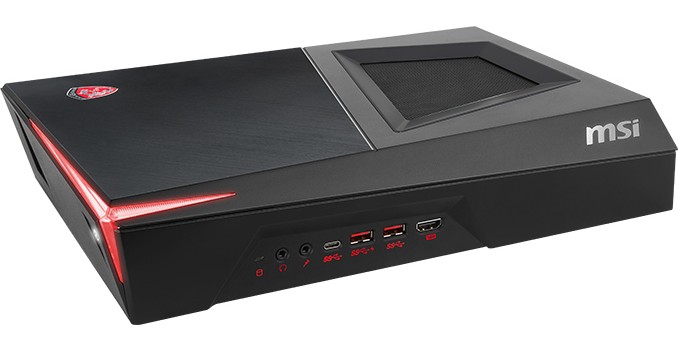
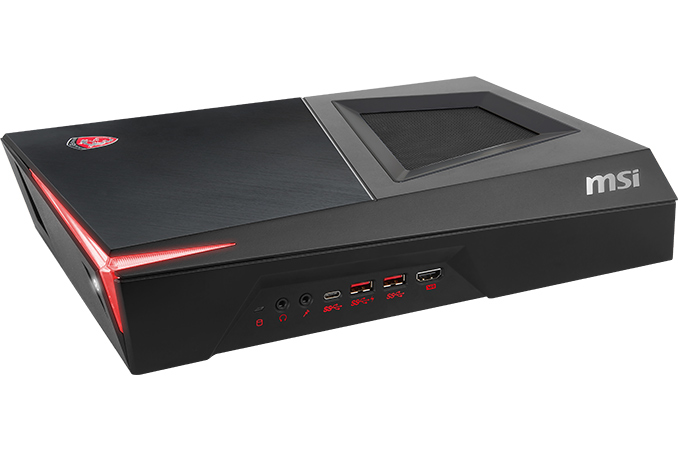
When it comes to connectivity, the MSI Trident 3 has a lot to offer: three USB 3.0 Type-A ports (two front, one rear), one USB 3.0 Type-C header (front), four USB 2.0 connectors (rear), Gigabit Ethernet, an IEEE 802.11ac Wi-Fi with BT 4.2 module, six display outputs (four HDMI, one DisplayPort, one DVI) to easily connect VR headsets and up to three monitors, 5.1-channel audio with Audio Boost 3 and Nahimic software enhancements and so on.

MSI’s Trident 3 can be installed both horizontally and vertically, depending on its owner’s tastes. Moreover, the system is equipped with RGB LEDs so to customize its look.

The MSI Trident 3 featuring Intel’s Kaby Lake CPUs will be available shortly with the basic configuration (Core i5-7400, GeForce GTX 1050 Ti 4 GB, etc.) starting at $899, while the more advanced builds will naturally cost more.

Related Reading:

MSI Trident 3 Announced: A Core i7 Console

MSI Trident 3 Announced: A Core i7 Console

Over CES, MSI announced a new console-like PC called the Trident 3. The new unit packs the latest Intel’s Kaby Lake CPU, a NVIDIA GeForce GTX GPU, memory, an SSD and a hard drive. The system weighs just about three kilograms and its dimensions are smaller than dimensions of Microsoft’s Xbox One.

Current-generation game consoles, while closed systems ripe for optimization, can have difficulty providing performance sufficient for Full-HD gaming. Many console gamers prefer to play their games on HDTVs rather than on monitors, and so makers of boutique PCs were set on introducing console-like computers featuring gaming-grade hardware. Manufacturers of computer components were, for various reasons, reluctant to launch their own SFF gaming PCs for the living room until last year. However in the recent months we have seen a number of computers from motherboards/GPU vendors cards that are both small and powerful. MSI began to sell its Trident system in November-December timeframe without making any loud announcements, and this month the company upgraded its mini PC with Intel’s Kaby Lake processors but retained the chassis and the platform.

The MSI Trident 3 is based on a custom Intel H110 powered motherboard, along with a choice of Intel’s Core i7-7700 / i5-7400 processors and NVIDIA’s GeForce GTX 1060 / 1050 Ti graphics cards. By default the PC comes with 8 GB of single-channel DDR4-2400 memory (upgradeable to 32 GB), a 256 GB M.2 SATA SSD, one 1 TB hard drive and a 230 W external PSU. Despite the miniature size, the MSI Trident 3 is upgradeable: the CPU, the graphics adapter, the DRAM and storage devices may be changed. Due to lack of space inside, it is impossible to install a video card longer than 17 cm or additional drives, but such limitations are understandable. Moreover, keeping in mind that many SFF PCs use mobile components soldered to their motherboards, so using desktop-class components is a tradeoff between replaceability and size.

MSI Trident 3 Specifications
  Mainstream High-End
CPU Intel Core i5-7400
4C/4T
3 GHz/3.5 GHz
6 MB L3 Cache
HD Graphics 630
65 W
Intel Core i7-7700
4C/8T
3.6 GHz/4.2 GHz
8 MB L3 Cache
HD Graphics 630
65 W
PCH Intel H110
Graphics NVIDIA GeForce GTX 1050 Ti with 4 GB GDDR5 memory
NVIDIA GeForce GTX 1060 with 3 GB GDDR5 memory
NVIDIA GeForce GTX 1060 with 6 GB GDDR5 memory
Memory  8 GB of DDR4-2400 (one SO-DIMM installed)
Up to 32 GB is supported
Storage 256 GB SSD (SATA)
1 TB 2.5″ HDD
Wi-Fi Intel AC3168 IEEE 802.11ac Wi-Fi + BT 4.2
Ethernet Intel I219V GbE
Display Outputs 1 × HDMI Front
2 x HDMI Rear (1 x VR Link)
1 x HDMI (GPU)
1 × DisplayPort
1 × DVI-I
Audio 5.1-channel audio (Realtek ALC1150)
Audio Boost 3,
Nahimic 2.5
USB 1 × USB 3.0 Type-C (5 Gbps)
3 × USB 3.0 Type-A (5 Gbps)
4 × USB 2.0 Type-A
Other I/O
Dimensions Vertical with stand: 353.73 × 251.35 mm × 97.56 mm
Horizontal without stand: 346.25 × 71.83 × 232.47 mm
PSU 230 W
OS Windows 10 Home

When it comes to connectivity, the MSI Trident 3 has a lot to offer: three USB 3.0 Type-A ports (two front, one rear), one USB 3.0 Type-C header (front), four USB 2.0 connectors (rear), Gigabit Ethernet, an IEEE 802.11ac Wi-Fi with BT 4.2 module, six display outputs (four HDMI, one DisplayPort, one DVI) to easily connect VR headsets and up to three monitors, 5.1-channel audio with Audio Boost 3 and Nahimic software enhancements and so on.

MSI’s Trident 3 can be installed both horizontally and vertically, depending on its owner’s tastes. Moreover, the system is equipped with RGB LEDs so to customize its look.

The MSI Trident 3 featuring Intel’s Kaby Lake CPUs will be available shortly with the basic configuration (Core i5-7400, GeForce GTX 1050 Ti 4 GB, etc.) starting at $899, while the more advanced builds will naturally cost more.

Related Reading:

BenQ PD2710QC Announced: 27" 2560x1440 with Integrated USB Type-C Dock

BenQ PD2710QC Announced: 27″ 2560×1440 with Integrated USB Type-C Dock

Last week BenQ introduced its new display with QHD resolution that has an integrated USB 3.0 Type-C dock. Aside from the dock, the 27” monitor’s big selling point is support for 100% sRGB. This goes in tandem with additional modes specifically aimed at CAD/CAM, Animation and Darkroom environments. The new display is among the first monitors with a USB-C connector as well as docking capabilities.

The manufacturer does not disclose too many details about the unit, but given that the monitor belongs to the PD-series from BenQ for designers and engineers, it is logical to expect it to use an IPS or a VA panel with 178° viewing angles and a 60 Hz refresh rate. Meanwhile, covering 100% sRGB should suggest that the display supports 1.07 billion colors (8-bit + FRC), which is enough for typical office and web design workloads. To further appeal to the target audience, the monitor features CAD/CAM, Animation, and Darkroom modes calibrated for particular types of applications, but BenQ does not disclose how this affects color accuracy.

BenQ Display with USB-C Dock
  PD2710QC
Panel 27″ IPS or VA
Native Resolution 2560 × 1440
Maximum Refresh Rate 60 Hz (?)
Response Time unknown
Brightness unknown
Contrast unknown
Viewing Angles 178°/178° horizontal/vertical (?)
Inputs 1 × USB Type-C (DisplayPort alt mode)
DP 1.2
HDMI 1.4
USB Hub USB 3.0 hub
‘multiple audio, video, network, and USB ports’ 
Audio Integrated speakers, audio in/out ports

The integrated USB-C docking station uses the same cable as the display, and BenQ’s press release states that the dock is designed to charge a laptop or a mobile device up to 61W (that is compatible with DisplayPort alternate mode for USB-C) as well as expand its I/O capabilities over USB 3.0. This includes, ‘multiple audio, video, network, USB ports and integrated speakers’. At present, the list of devices supporting DP alt mode for USB-C includes the Apple MacBook, the Dell XPS 12/13/15, the HP Elite X2 1012, the HP EliteBook Folio G1, the Microsoft Lumia 950/950 XL, the LG G5, the HTC 10 M10h and so on. In addition to the USB-C input, the display is also equipped with DisplayPort and HDMI input connectors.

BenQ did not announce exact pricing or availability timeframe for its PD2710QC. Currently BenQ sells the PD2700Q display for $359, which is not too much for a 27” QHD IPS monitor. While a USB-C hub is clearly a premium feature, it remains to be seen how much more BenQ will charge for it.

Related Reading: