LG CES 2017 Press Conference Live Blog
This looks to be a fairly general consumer electronics press conference from LG. Stay tuned.

This looks to be a fairly general consumer electronics press conference from LG. Stay tuned.
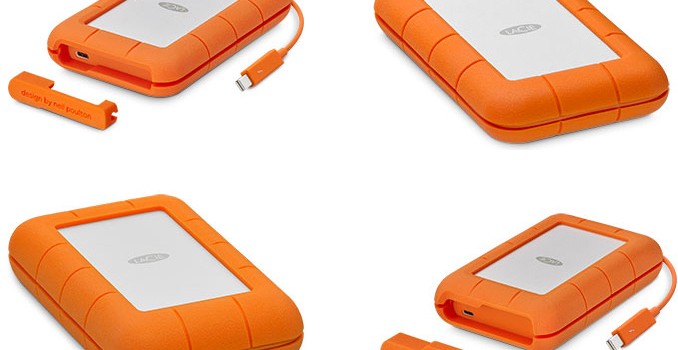
LaCie at CES introduced its new storage devices with Thunderbolt 3 interface. The new LaCie Rugged Thunderbolt USB-C and the LaCie d2 Thunderbolt 3 support 2.5” and 3.5” storage devices, use Intel’s DSL6540 Thunderbolt 3 chips and can expand storage capacities of contemporary PCs up to 10 TB.

The LaCie Rugged Thunderbolt USB-C drives can be connected to almost any modern computer with a USB 3.0 Type-A, USB 3.0 Type-C and Thunderbolt 3 ports using a USB or a TB cable. Furthermore, the drives feature previous-generation Thunderbolt connectors to maintain compatibility and offer high performance with systems like Apple’s Mac Pro. The LaCie Rugged Thunderbolt USB-C will be available in two versions: the thinner one will support SSDs and HDDs up to 1 TB and 2 TB respectively, another is for 2.5″/15 mm HDDs and will use Seagate BarraCuda HDDs with 4 or 5 TB capacity. When it comes to performance, the SSD-based Rugged Thunderbolt USB-C will offer a maximum read speed of up to 510 MB/s, whereas HDD-based drives will offer up to 130 MB/s transfer rates.
| LaCie Rugged Thunderbolt USB-C | |||||||
| Capacity | Model Number | Thickness | Width | Depth | Weight | ||
| 500 GB | STFS500400 | 0.984in 25mm |
3.5in 88.9mm |
5.516in 140.1mm |
0.882lb 0.4kg |
||
| 1 TB | STFS1000401 | ||||||
| 2 TB Apple | STFS2000800 | ||||||
| 2 TB | STFS2000400 | ||||||
| 4 TB Apple | STFS4000800 | 1.339in 34mm |
3.579in 90.9mm |
5.843in 148.4mm |
1.323lb 0.6kg |
||
| 4 TB | STFS4000400 | ||||||
| 5 TB Apple | STFS5000800 | ||||||
| 5 TB | STFS5000400 | ||||||
Traditionally, the LaCie Rugged drives come in IP54-rated white and orange enclosure that protects against shocks, dust and water. In addition, the drives support AES-256 software encryption.
The new LaCie Rugged Thunderbolt USB-C drives will be available this quarter starting at $249.99.

The LaCie d2 are a bit less flexible storage devices compared to their rugged brethren when it comes to compatibility (they do not feature older Thunderbolt connectors), but they offer higher capacities and higher performance compared to HDD-based versions of the Rugged Thunderbolt USB-C.
| LaCie Rugged Thunderbolt USB-C | |||||||
| Capacity | Model Number | Thickness | Height | Depth | Weight | ||
| 6 TB | STFY6000400 | 2.362in 60mm |
8.543in 217mm |
5.118in 130mm |
4.85lb 2.2kg |
||
| 8 TB | STFY8000400 | ||||||
| 10 TB | STFY10000400 | ||||||
The LaCie d2 drives pack Seagate’s BarraCuda 3.5” HDDs with 6, 8 and 10 TB capacities (so, the top-of-the-range model is helium-filled), come with a Thunderbolt 3 interface only and are compatible with systems featuring TB3, USB 3.1/3.0 Type-C and USB 3.0 Type-A ports (with an appropriate adapter). The LaCie d2 feature two TB3 headers and can be daisy-chained with other TB3-supporting devices. When it comes to performance, the high-end model offers up to 240 MB/s data rate, the more affordable devices will be a little slower.
Since the d2 drives use premium BarraCuda HDDs, they are backed by a five-year warranty. As for the pricing, it starts at $429.99 for a 6 TB model.
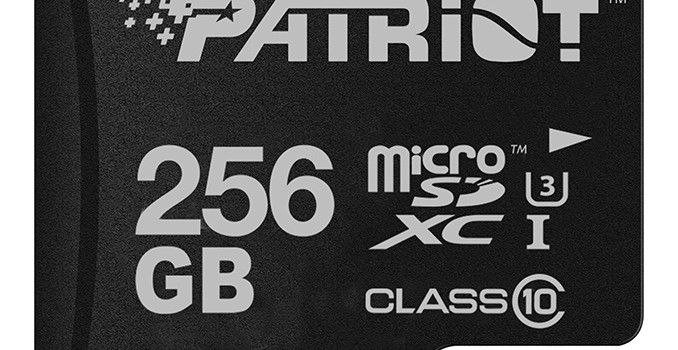
Patriot has announced its new high-capacity microSDXC card that can store 256 GB of data. The cards not only feature leading-edge capacity, but also support up to 80 MB/s write speed, which is believed to be enough for shooting videos in UHD resolutio…
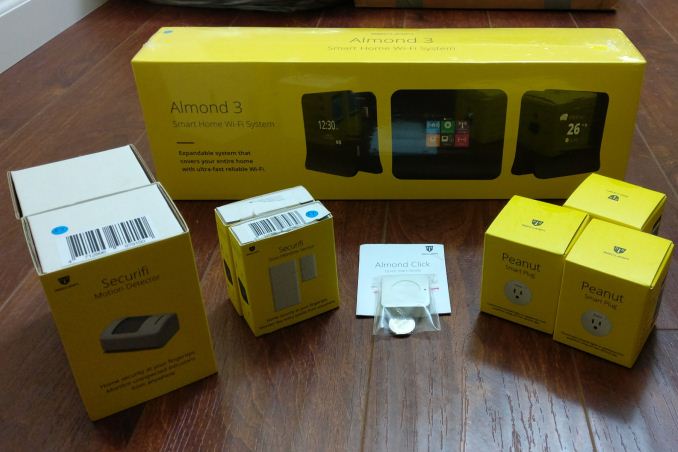
We have been following Securifi’s offerings in the home networking space over the last few years. They have stood out in the crowded consumer Wi-Fi market by being one of the pioneers in using the network router to support both IP as well as home automation devices.
The consumer Wi-Fi market is a crowded one, and it is difficult to stand out. While established vendors like Netgear, Linksys etc. can make do with revenue on the hardware alone, companies that don’t have the reach or resources to have a comprehensive product line need to be creative in finding ways to drive up revenue. The services / subscription model is widely adopted in the SMB / SME area, but, has typically not found much traction in the consumer market (except for services like TV / Internet / home alarm systems and the like). Securifi is hoping to tap the services market with a new category – subscription-based cybersecurity for the connected home.
Today’s smart home has a large number of IoT devices, almost all of which communicate with cloud servers. I would personally avoid anything that requires the cloud to provide its basic functionality, but, given the success enjoyed by IoT devices like the Nest Thermostat and Amazon Echo / Alexa, it is clear that I am in a minority. Digression aside, it is clear that the average consumer has no idea about the servers that are being communicated with by the IoT devices in the household. Often, compromised devices can lead to IoT devices becoming part of botnets (as evident from the recent Mirai DDoS attacks). Securifi’s solution to this issue involves a multi-pronged approach:
It must be noted that some of the above captured data is stored in Securifi’s servers because they need to send push notifications to the user’s smartphone even if it is away from the primary network. Securifi is utilizing machine learning to provide part of this functionality (based on the behavior of IoT devices with multiple consumers over time). Users are offered fine grained control over the data stored for this purpose.

Securifi plans to roll out the service to the public starting on January 23, 2017 with a free 30-day trial. Subscription rates start at $4/month, with plans to increase to $10/month after the roll-out of additional features. The service will initially be open only for Almond 3 users. The eventual plan is to roll it out for the Almond and Almond+ users also. Given that this is a cloud-based subscription service, it is not a surprise.
As the number of IoT devices in the household increase, Securifi’s subscription-based approach to driving up revenue might serve them well. I can definitely see the average consumer signing up for these types of services. That said, I do want to see more value being provided even with just a $4/month fee. If Securifi can get in some UTM functionality to provide firewall, anti-virus, anti-spam and other services, this type of subscription offering can tempt power users also.
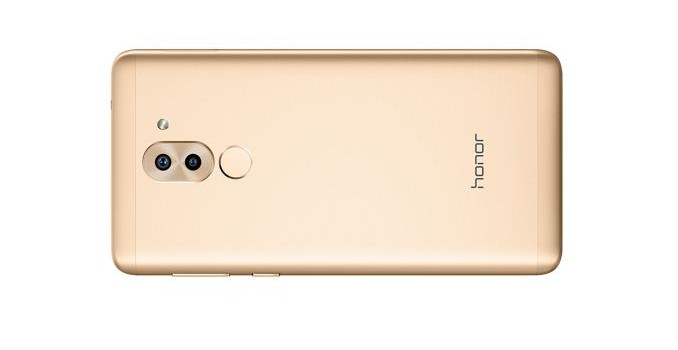
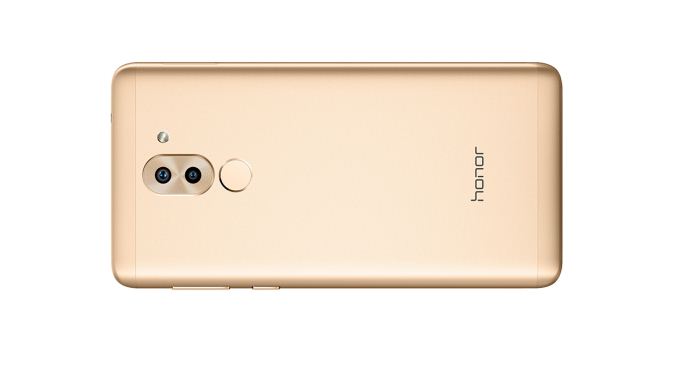
Last year at CES, Honor announced a new mid-range smartphone, the Honor 5X, for the US market that aimed to bring premium smartphone features to a lower price point. The SoC and display were in line with expectations given the price, but it also had an aluminum unibody design, a fairly good camera, and a fingerprint scanner that, at the time, were mostly seen in high-end designs costing ~600 USD rather than ~250 USD.

This year at CES 2017, Huawei announced that it’s bringing the Honor 6X to the US, which includes several improvements over its predecessor. It still uses an aluminum unibody construction, but it feels much more sturdy than the Honor 5X, giving it a more premium feel. The rounded corners and sides make it comfortable to hold, but also a little slippery when combined with the sandblasted finish.

The Honor 6X still uses plastic RF windows along the top and bottom on the back, like so many other Huawei designs. The plastic has a similar texture to the metal back, but the color is a little off, interrupting the smooth lines and otherwise attractive design.
The capacitive fingerprint sensor on the back supports EMUI’s “touch and hold” and slide gestures, which allow you to optionally snap a photo, answer a call, or stop an alarm by holding a finger to the sensor. Sliding a finger vertically across the sensor lowers and raises the notification shade.

There’s a single-piece volume rocker and power button on the right edge that give a decent click when pressed, and there’s a 3.5mm headphone jack and noise cancelling microphone on the top edge. It’s a bit puzzling to see a microUSB port on the bottom as USB Type-C is pretty ubiquitous at this point. To its right is the single downward firing speaker.

The entire front is covered in glass, which is slightly bevelled along the edges. A plastic screen protector comes pre-applied, although it does not reach all the way to the edges. The 5.5-inch 1080p IPS LCD display has a standard sRGB color gamut and a rather cool white point that gives the screen a blue tint. Huawei lists the peak brightness at 450 nits.
| Huawei Honor 6X | Huawei Honor 5X | |
| SoC | HiSilicon Kirin 655
4x Cortex-A53 @ 2.1GHz |
Qualcomm Snapdragon 616
4x Cortex-A53 @ 1.5GHz |
| RAM | 3GB / 4GB LPDDR3-1866 | 2GB LPDDR3-1600 |
| NAND | 32GB / 64GB (eMMC 5.1) + microSD |
16GB (eMMC 4.51) + microSD |
| Display | 5.5-inch 1920×1080 IPS LCD | 5.5-inch 1920×1080 IPS LCD |
| Dimensions | 150.9 x 76.2 x 8.2 mm 162 grams |
151.3 x 76.3 x 8.15 mm 158 grams |
| Modem | HiSilicon Balong (Integrated) 2G / 3G / 4G LTE |
Qualcomm X5 (Integrated) 2G / 3G / 4G LTE (Category 4) |
| SIM Size | 2x NanoSIM | 1x NanoSIM, 1x MicroSIM (dual standby) |
| Front Camera | 8MP, 1/4″ Sony IMX219 Exmor R, f/2.0 | 5MP, 1/4″ OmniVision OV5648, 1.4 µm pixels, f/2.4 |
| Rear Camera | Primary: 12MP, 1/2.9” Sony IMX386 Exmor RS, 1.25µm pixels, f/2.2, PDAF, HDR, LED flash Depth: |
13MP, 1/3.06” Sony IMX214 Exmor RS, 1.12µm pixels, f/2.0, AF, HDR, LED flash |
| Battery | 3340 mAh non-replaceable |
3000 mAh (11.4Wh) non-replaceable |
| Connectivity | 802.11b/g/n (2.4GHz), BT 4.1, GPS/GNSS, microUSB 2.0 | 802.11b/g/n (2.4GHz), BT 4.1, GPS/GNSS, microUSB 2.0 |
| Launch OS | Android 6.0 with EMUI 4.1 | Android 5.1.1 with EMUI 3.1 |
Inside is a Kirin 655 SoC paired with either 3GB or 4GB of LPDDR3 RAM. It’s interesting to note how Huawei is becoming more vertically integrated, using its Kirin SoCs in more of its products. With eight Cortex-A53 CPU cores and a 16nm FinFET process, the Kirin 655 should provide good power efficiency.
Internal storage gets a boost from 16GB in the Honor 5X to either 32GB or 64GB, which can be expanded with a microSD card. The 6X also gets an 11% larger battery, but unfortunately the wireless connectivity remains the same, only supporting up to 2.4GHz 802.11n Wi-Fi.
On the camera side of things, the 12MP rear camera has slightly larger pixels than most phones in this segment, and also adds some neat features like PDAF that are generally only seen in higher-end devices. The depth camera is nothing particularly special here and as a result the setup looks a lot like the HTC One M8 from previous generations, especially when it comes to background defocus performance as the accuracy with which it does the background blur and how it handles progressive defocus is not particularly clean. Thankfully unlike the Honor 5X which had a fairly low frame rate preview the Honor 6X does a lot better here and has much better focus thanks to the addition of PDAF. It’s also fairly obvious that the luminance noise reduction is fairly aggressive here but we’ll have to see just how much of a problem it really is with a full review.
The Honor 6X will be available in gold, gray, and silver with a few different memory and storage configurations. The 3GB version, which starts at $249.99, will be available for pre-order in the US on January 4 and will begin shipping January 15. It will also be available in France, Germany, Italy, Spain, United Kingdom, the Netherlands, Russia, Malaysia, the United Arab Emirates, and Saudi Arabia starting January 4 for 249 EUR. The 4GB version won’t be available until later in the first quarter and will cost $299.99 or 299 EUR.


