News


GIGABYTE's New Console: The 'Gaming GT' PC Launched with Core i7-K, GTX1080, TB3

GIGABYTE’s New Console: The ‘Gaming GT’ PC Launched with Core i7-K, GTX1080, TB3
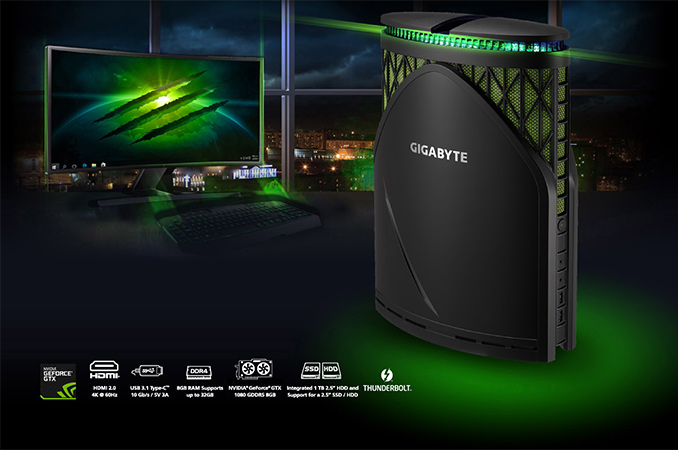
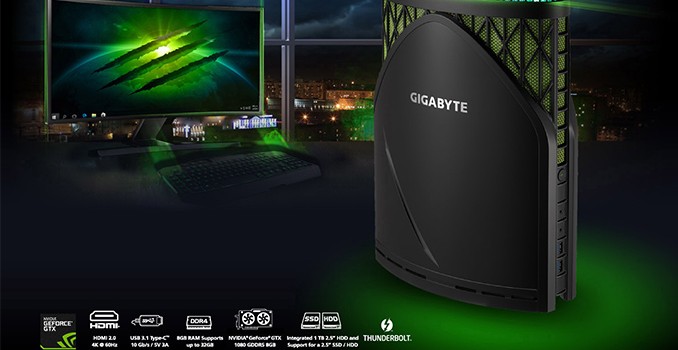
GIGABYTE has quietly announced its new small form-factor computer designed for performance-minded gamers. The new SFF PC not only packs high-performance components, such as the latest-generation CPU and GPU, but it uses desktop-class components and could be upgradeable.

High-performance PCs in small form-factor are not rare nowadays: various PC makers use mobile CPUs and GPUs to build such systems. Such computers demonstrate high-performance out-of-the-box, but their upgrade strategy is tricky because it is not easy to get MXM GPUs or mobile CPUs in retail. When developing the GIGABYTE Gaming GT desktop (GB-GZ1DTi7-1080-OK-GW and technically this PC belongs to the Brix family), engineers from GIGABYTE wanted to create a product that could use widely available processors and graphics cards and thus potentially offer an upgrade path to the owners.

The GIGABYTE Gaming GT desktop is not really a miniature system: it measures 276×384×128 mm and is approximately 10 liters in volume, which makes it just larger than Sony’s first-generation PlayStation 3. The PC is based on a custom motherboard (210×205 mm) that is a bit larger than Mini-ITX, but is still smaller when compared to microATX or FlexATX. The system uses a dual-chamber design (CPU, DRAM, SSD are located on  one side of the PC, graphics card and other 2.5” storage devices are on the other side), but the chambers are not isolated completely because they use the same airflows generated by two system fans (we do not know how large they are, but theoretically they may be of 90 mm in diameter). It is noteworthy that the PC has an automated exhaust system that opens up exhaust flippers at the top of the computer when it needs to cool down the components.

The chassis can accommodate any double wide graphics card with a maximum size of 280 mm in length and 41 mm in depth, but nothing too custom with regards heatpipes and backplates because the space is constrained. GIGABYTE will ship the Gaming GT desktop with its own GeForce GTX 1080 G1 Gaming 8 GB card, but they say the key thing is that it can be updated later. Since the card faces downwards, it has to use custom cables (bundled) to connect to displays. Audio and Ethernet cables also have to be angled, but at least it is not a big problem to find such cables in retail. On the bright side of things, the Gaming GT desktop uses a 400 W FlexATX PSU, which could be upgraded if needed.

GIGABYTE Gaming GT Spefications
  GB-GZ1DTi7-1080-OK-GW
CPU Intel Core i7-6700K
Quad Core with HT
4.0 GHz/4.2 GHz
91 W
PCH Intel Z170
Graphics GIGABYTE GeForce GTX 1080 G1 Gaming
8 GB GDDR5X
2560 stream processors
160 texture units
64 raster operations pipelines
Memory  32 GB of DDR4 (2×16 GB DDR4)
Storage 240 GB SSD (PCIe/SATA?)
1 TB 2.5″ HDD (7200 RPM)
1×2.5″ bay for HDD/SSD (SATA)
Wi-Fi Intel 1×1 Dual Band Wireless-AC 3165NGW 802.11ac + BT
Ethernet Rivet Networks Killer E2400 Gigabit LAN
Display Outputs 1 × DVI-D DL
1 × HDMI 2.0b
1 × HDMI 1.4 (uses iGPU)
3 × DisplayPort 1.4
Audio 5.1-channel audio
Realtek ALC1150 codec
TI Burr Brown OPA2134 operational amplifier
USB 5 × USB 3.0 Type-A (5 Gbps)
1 × USB 3.1 Type-A (10 Gbps)
1 × Thunderbolt 3/USB 3.1 Type-C (10 Gbps)
Other I/O
Dimensions 276 mm × 384 mm × 128 mm
10.86 × 15.11 × 5 inches
PSU FlexATX 400 W
OS Windows 10 Home

The custom motherboard of the GIGABYTE Gaming GT PC is based on the Intel Z170 PCH and thus supports all LGA1151 processors, including the upcoming Kaby Lake chips. The manufacturer will ship the system with the Intel Core i7-6700K CPU (so, overlocking seems to be possible, but keep in mind temperatures and noise), but eventually the chip might be switched to something more powerful.

The GIGABYTE Gaming GT PC will come with 32 GB of dual-channel DDR4 memory, a 240 GB SSD (M.2 form-factor, but no word on performance), a 1 TB HDD with a 7200 RPM spindle speed and an additional 2.5” bay for an extra drive. For those, who are not satisfied with an M.2 SSD and two 2.5” HDDs/SSDs, GIGABYTE even installed one Thunderbolt 3 port to connect external high-performance storage devices or special-purpose hardware. When it comes to other I/O, then the Gaming GT desktop offers a dual-band 1×1 802.11ac + BT 4.2 wireless module, Gigabit Ethernet (Killer E2400), five USB 3.0 Type-A ports, one USB 3.1 Type-A (10 Gbps) port, 5.1-channel audio (the Realtek ALC1150 with the TI Burr Brown OPA2134 amplifier) and so on.

Finally, to give its Gaming GT system a distinctive look, GIGABYTE installed a series of RGB LEDs on top of it. The LEDs can work in different modes and can be controlled using the company’s Ambient LED application.  

Pricing and availability dates for the GIGABYTE Gaming GT SFF PCs were not available at press time. Keep in mind that actual configuration of the PC will differ based on the regions, which means that their prices will vary as well. Chances are we’ll see it at CES next week.

Related Reading:

GIGABYTE's New Console: The 'Gaming GT' PC Launched with Core i7-K, GTX1080, TB3

GIGABYTE’s New Console: The ‘Gaming GT’ PC Launched with Core i7-K, GTX1080, TB3

GIGABYTE has quietly announced its new small form-factor computer designed for performance-minded gamers. The new SFF PC not only packs high-performance components, such as the latest-generation CPU and GPU, but it uses desktop-class components and could be upgradeable.

High-performance PCs in small form-factor are not rare nowadays: various PC makers use mobile CPUs and GPUs to build such systems. Such computers demonstrate high-performance out-of-the-box, but their upgrade strategy is tricky because it is not easy to get MXM GPUs or mobile CPUs in retail. When developing the GIGABYTE Gaming GT desktop (GB-GZ1DTi7-1080-OK-GW and technically this PC belongs to the Brix family), engineers from GIGABYTE wanted to create a product that could use widely available processors and graphics cards and thus potentially offer an upgrade path to the owners.

The GIGABYTE Gaming GT desktop is not really a miniature system: it measures 276×384×128 mm and is approximately 10 liters in volume, which makes it just larger than Sony’s first-generation PlayStation 3. The PC is based on a custom motherboard (210×205 mm) that is a bit larger than Mini-ITX, but is still smaller when compared to microATX or FlexATX. The system uses a dual-chamber design (CPU, DRAM, SSD are located on  one side of the PC, graphics card and other 2.5” storage devices are on the other side), but the chambers are not isolated completely because they use the same airflows generated by two system fans (we do not know how large they are, but theoretically they may be of 90 mm in diameter). It is noteworthy that the PC has an automated exhaust system that opens up exhaust flippers at the top of the computer when it needs to cool down the components.

The chassis can accommodate any double wide graphics card with a maximum size of 280 mm in length and 41 mm in depth, but nothing too custom with regards heatpipes and backplates because the space is constrained. GIGABYTE will ship the Gaming GT desktop with its own GeForce GTX 1080 G1 Gaming 8 GB card, but they say the key thing is that it can be updated later. Since the card faces downwards, it has to use custom cables (bundled) to connect to displays. Audio and Ethernet cables also have to be angled, but at least it is not a big problem to find such cables in retail. On the bright side of things, the Gaming GT desktop uses a 400 W FlexATX PSU, which could be upgraded if needed.

GIGABYTE Gaming GT Spefications
  GB-GZ1DTi7-1080-OK-GW
CPU Intel Core i7-6700K
Quad Core with HT
4.0 GHz/4.2 GHz
91 W
PCH Intel Z170
Graphics GIGABYTE GeForce GTX 1080 G1 Gaming
8 GB GDDR5X
2560 stream processors
160 texture units
64 raster operations pipelines
Memory  32 GB of DDR4 (2×16 GB DDR4)
Storage 240 GB SSD (PCIe/SATA?)
1 TB 2.5″ HDD (7200 RPM)
1×2.5″ bay for HDD/SSD (SATA)
Wi-Fi Intel 1×1 Dual Band Wireless-AC 3165NGW 802.11ac + BT
Ethernet Rivet Networks Killer E2400 Gigabit LAN
Display Outputs 1 × DVI-D DL
1 × HDMI 2.0b
1 × HDMI 1.4 (uses iGPU)
3 × DisplayPort 1.4
Audio 5.1-channel audio
Realtek ALC1150 codec
TI Burr Brown OPA2134 operational amplifier
USB 5 × USB 3.0 Type-A (5 Gbps)
1 × USB 3.1 Type-A (10 Gbps)
1 × Thunderbolt 3/USB 3.1 Type-C (10 Gbps)
Other I/O
Dimensions 276 mm × 384 mm × 128 mm
10.86 × 15.11 × 5 inches
PSU FlexATX 400 W
OS Windows 10 Home

The custom motherboard of the GIGABYTE Gaming GT PC is based on the Intel Z170 PCH and thus supports all LGA1151 processors, including the upcoming Kaby Lake chips. The manufacturer will ship the system with the Intel Core i7-6700K CPU (so, overlocking seems to be possible, but keep in mind temperatures and noise), but eventually the chip might be switched to something more powerful.

The GIGABYTE Gaming GT PC will come with 32 GB of dual-channel DDR4 memory, a 240 GB SSD (M.2 form-factor, but no word on performance), a 1 TB HDD with a 7200 RPM spindle speed and an additional 2.5” bay for an extra drive. For those, who are not satisfied with an M.2 SSD and two 2.5” HDDs/SSDs, GIGABYTE even installed one Thunderbolt 3 port to connect external high-performance storage devices or special-purpose hardware. When it comes to other I/O, then the Gaming GT desktop offers a dual-band 1×1 802.11ac + BT 4.2 wireless module, Gigabit Ethernet (Killer E2400), five USB 3.0 Type-A ports, one USB 3.1 Type-A (10 Gbps) port, 5.1-channel audio (the Realtek ALC1150 with the TI Burr Brown OPA2134 amplifier) and so on.

Finally, to give its Gaming GT system a distinctive look, GIGABYTE installed a series of RGB LEDs on top of it. The LEDs can work in different modes and can be controlled using the company’s Ambient LED application.  

Pricing and availability dates for the GIGABYTE Gaming GT SFF PCs were not available at press time. Keep in mind that actual configuration of the PC will differ based on the regions, which means that their prices will vary as well. Chances are we’ll see it at CES next week.

Related Reading:

MSI Cubi 2 Kaby Lake UCFF PC Review

The Kaby Lake-U (KBL-U) series with 15W TDP CPUs was introduced along with the 4.5W Kaby Lake-Y ones in Q3 2016. The first set of products with Kaby Lake-U were ultrabooks. However, ultra-compact form-factor (UCFF) PCs were not long behind. There are …

MSI Cubi 2 Kaby Lake UCFF PC Review

The Kaby Lake-U (KBL-U) series with 15W TDP CPUs was introduced along with the 4.5W Kaby Lake-Y ones in Q3 2016. The first set of products with Kaby Lake-U were ultrabooks. However, ultra-compact form-factor (UCFF) PCs were not long behind. There are …

ZOTAC Announces GeForce GTX 1080 for Mini-ITX PCs

ZOTAC Announces GeForce GTX 1080 for Mini-ITX PCs

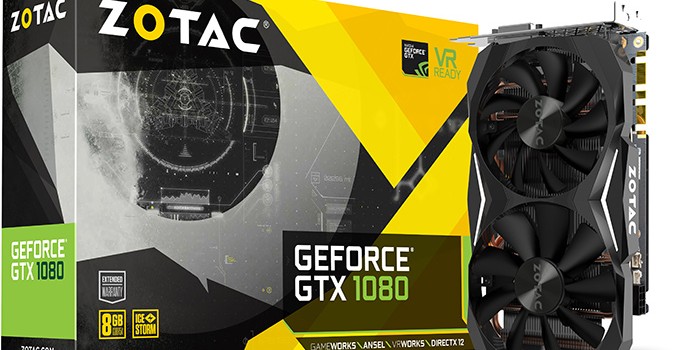
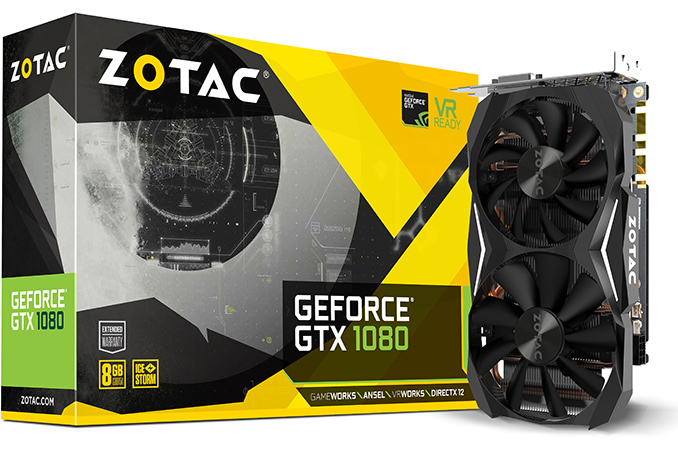
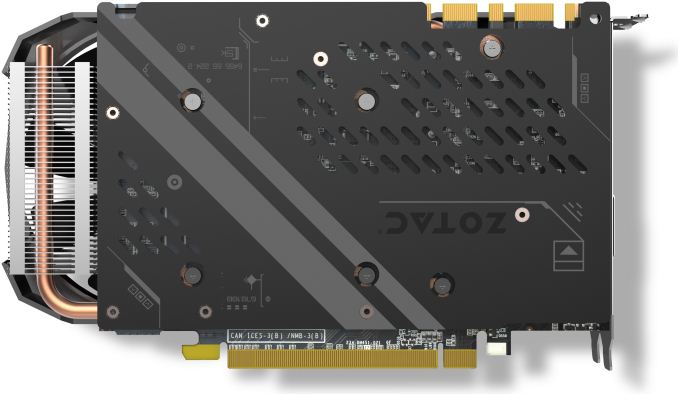
ZOTAC has introduced its GeForce GTX 1080 Mini, the industry’s first video card for Mini-ITX systems running the GP104 GPU in its full configuration. The new graphics adapter will be compatible with miniature computers with proper cooling and will be the most powerful card for SFF PCs until something better emerges.

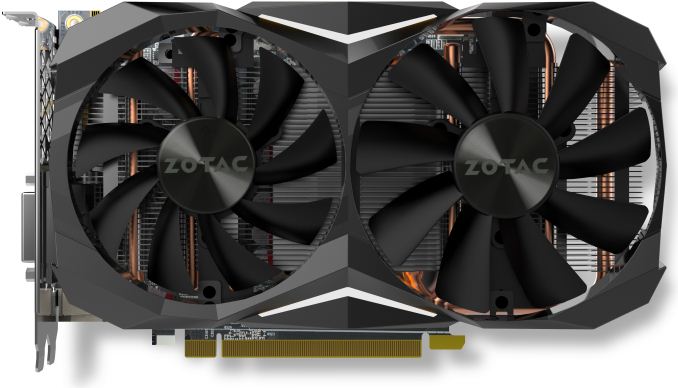
The ZOTAC GeForce GTX 1080 Mini (ZT-P10800H-10P) offers the same performance and connectivity as its larger brethren: it is based on the fully-fledged GP104 graphics processor (with 2560 stream processors, 160 texture units and 64 raster operations pipes) that works at 1620/1759 MHz (base/boost) frequencies and is equipped with 8 GB of GDDR5X memory featuring 10 Gbps and 320 GB/s of bandwidth. In fact, the GPU frequencies of ZOTAC’s GeForce GTX 1080 Mini are slightly higher when compared to those of NVIDIA’s reference cards which is worth mentioning. The board alo features three DisplayPort 1.4 connectors, an HDMI 2.0b port as well as one dual-link DVI header, which is exactly what NVIDIA’s reference cards carry.

To squeeze a GeForce GTX 1080 GPU into Mini-ITX form-factor, ZOTAC had to develop a brand-new PCB with compatible with GDDR5X memory (so, the PCB is different from ZOTAC’s GeForce GTX 1070 Mini launched earlier this year). It is unknown whether the manufacturer decided to go with NVIDIA’s 5+1-phase VRM for the GTX 1080, or altered the VRM design somehow, but the card has one 8-pin PCIe power plug as well as two SLI-HB connectors, just like other boards in its class.

Since the GeForce GTX 1080 consumes up to 180 W of power, ZOTAC also had to design a relatively small cooling system for the ZT-P10800H-10P board. The company came up with a cooler that uses an aluminum radiator with at least three thick (and long) copper heatpipes as well as two fans. In addition, the GeForce GTX 1080 Mini card has a backplate, which has positive and sometimes negative effects. The cooling system seems to be a little longer than the one used on the ZOTAC GeForce GTX 1070 Mini, but the whole graphics adapter is barely longer than 17 cm (6.7”) specified by the Mini-ITX spec. In any case, the majority of builds designed for gamers have a few cm of extra space inside and the length is not going to become a problem.

Specifications of GeForce GTX 1070/1080 for Mini-ITX PCs
  ZOTAC
GeForce GTX 1080 Mini
ZOTAC GeForce GTX 1070 Mini GIGABYTE GeForce GTX 1070 Mini ITX OC (OC Mode) GIGABYTE GeForce GTX 1070 Mini ITX (Gaming Mode)   NVIDIA
GeForce GTX 1080
Founders Edition
NVIDIA
GeForce GTX 1070
Founders Edition
Stream Processors 2560 1920   2560 1920
Texture Units 160 120   160 120
ROPs 64   64
Core Clock (MHz) 1620 1518 1556 1531   1607 1506
Boost Clock (MHz) 1759 1708 1746 1721   1733 1683
Memory Capacity 8 GB   8 GB
Type GDDR5X GDDR5   GDDR5X GDDR5
Clock 10 Gbps 8 Gbps   10 Gbps 8 Gbps
TDP 180 W 150 W   180 W 150 W
Launch Date Q1-2017 12/2016 7/2016   5/2016 6/2016
Launch Price ? $395 ?   $699 $449

ZOTAC plans to display its GeForce GTX 1080 Mini at CES and start its sales in 2017. The company did not announce exact pricing and ETA, but since this is a unique custom-designed product, it will likely be priced higher than NVIDIA’s reference designs.

Related Reading: