News


PNY Launches CS2030 SSDs: Phison PS5007-E7, MLC NAND, 2.8 GB/s
PNY Launches CS2030 SSDs: Phison PS5007-E7, MLC NAND, 2.8 GB/s

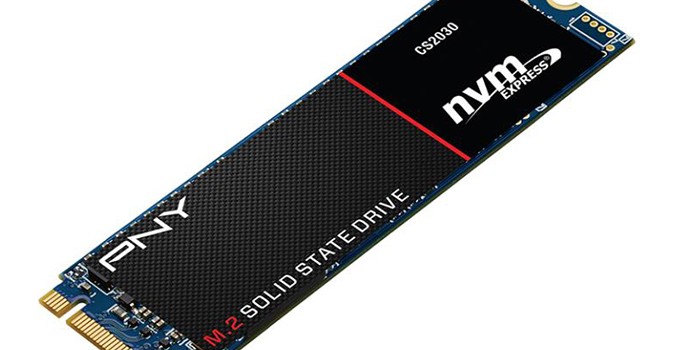
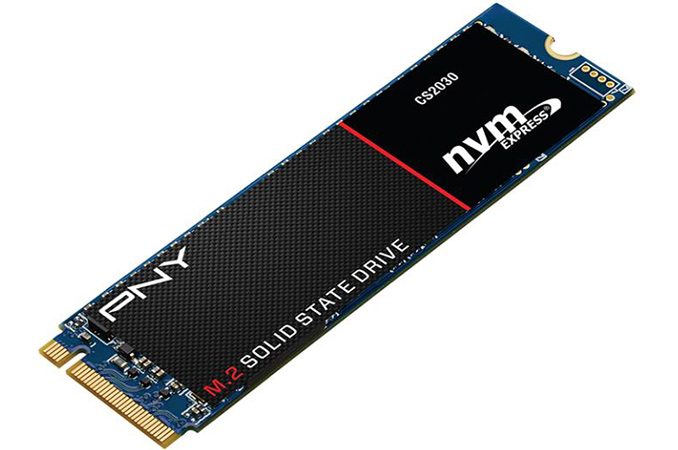
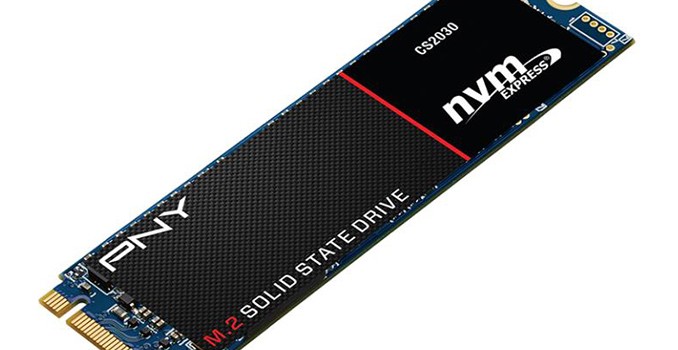
PNY has introduced its new CS2030 lineup of higher-end SSDs designed for desktops and laptops with M.2-2280 slots. The new drives are based on Phison’s PS5007-E7 controller for PCIe 3.0 x4 SSDs as well as Toshiba’s MLC NAND memory made using 15 nm process technology. The PNY CS2030 are already available in 240 GB and 480 GB configurations.

Like many other companies, PNY does not develop SSDs from the ground up, but uses Phison’s turnkey platforms featuring Toshiba’s NAND flash memory to build its drives, which is why it is not surprising that the PNY CS2030 has a lot in common with other products powered by the PS5007-E7 controller in terms of capabilities (NVMe L1.2 power saving mode, 120-bit/2KB BCH code, end-to-end data path protection, advanced global wear-leveling, etc.). Meanwhile, this does not mean that PNY cannot differentiate from the others by tweaking firmware (or just buying an appropriate firmware from Phison). Apparently, the company opted to lower sequential reads and writes compared to some of the direct rivals (2800 MB/s vs 3000 MB/s, 1550 MB/s vs 2400 MB/s) in a bid to improve random write performance of the PNY CS2030 (up to a rated 300K IOPS).

PNY’s CS2030 family currently consists of 240 GB and 480 GB drives because such capacities are the most popular among customers today. Nonetheless, the company has demonstrated pictures of boxes for 120 GB versions of the CS2030 SSDs, which may indicate that the company is either finalizing the specs of the drives, or plans to sell them exclusively to OEM customers (and/or in certain regions only). As for performance, the PNY CS2030 480 GB has rated sequential read speed of up to 2800 MB/s and sequential write performance of up to 1500 MB/s. The same model of the drive can perform up to 300K random read IOPS (input/output operations per second) as well as 270K random write IOPS. Meanwhile the 240 GB version is rated slightly slower than the top-of-the-range model (see the table for details).

PNY CS2030 Series Specifications
  M280CS2030-120-RB M280CS2030-240-RB M280CS2030-480-RB
Capacities 120 GB 240 GB 480 GB
Form Factor M.2-2280
Interface PCIe 3.0 x4 (NVMe 1.2)
Controller Phison PS5007-E7
NAND Toshiba’s 128 Gb MLC
15 nm process technology
DRAM 128 MB (?) 256 MB (?) 512 MB (?)
Sequential Read unknown 2750 MB/s 2800 MB/s
Sequential Write unknown 1500 MB/s 1550 MB/s
Random Read (4 KB) IOPS unknown 201K 300K
Random Write (4 KB) IOPS unknown 215K 270K
Power DEVSLP 4 mW (?)
Operating 5 ~ 7 W (?)
MTBG 2 million hours
Encryption AES-256 is supported by the controller.
Current status of support by the PNY CS2030 is unknown.
Warranty Three years
Price unknown $179.99 $329.99

At present, PNY sells its CS2030 in 240 GB and 480 GB configurations for $179.99 and $329.99, respectively, which is in line with prices of some other Phison E7-based SSDs. All PNY’s SSDs come with a three-year warranty.

Related Reading:

PNY Launches CS2030 SSDs: Phison PS5007-E7, MLC NAND, 2.8 GB/s

PNY Launches CS2030 SSDs: Phison PS5007-E7, MLC NAND, 2.8 GB/s

PNY has introduced its new CS2030 lineup of higher-end SSDs designed for desktops and laptops with M.2-2280 slots. The new drives are based on Phison’s PS5007-E7 controller for PCIe 3.0 x4 SSDs as well as Toshiba’s MLC NAND memory made using 15 nm process technology. The PNY CS2030 are already available in 240 GB and 480 GB configurations.

Like many other companies, PNY does not develop SSDs from the ground up, but uses Phison’s turnkey platforms featuring Toshiba’s NAND flash memory to build its drives, which is why it is not surprising that the PNY CS2030 has a lot in common with other products powered by the PS5007-E7 controller in terms of capabilities (NVMe L1.2 power saving mode, 120-bit/2KB BCH code, end-to-end data path protection, advanced global wear-leveling, etc.). Meanwhile, this does not mean that PNY cannot differentiate from the others by tweaking firmware (or just buying an appropriate firmware from Phison). Apparently, the company opted to lower sequential reads and writes compared to some of the direct rivals (2800 MB/s vs 3000 MB/s, 1550 MB/s vs 2400 MB/s) in a bid to improve random write performance of the PNY CS2030 (up to a rated 300K IOPS).

PNY’s CS2030 family currently consists of 240 GB and 480 GB drives because such capacities are the most popular among customers today. Nonetheless, the company has demonstrated pictures of boxes for 120 GB versions of the CS2030 SSDs, which may indicate that the company is either finalizing the specs of the drives, or plans to sell them exclusively to OEM customers (and/or in certain regions only). As for performance, the PNY CS2030 480 GB has rated sequential read speed of up to 2800 MB/s and sequential write performance of up to 1500 MB/s. The same model of the drive can perform up to 300K random read IOPS (input/output operations per second) as well as 270K random write IOPS. Meanwhile the 240 GB version is rated slightly slower than the top-of-the-range model (see the table for details).

PNY CS2030 Series Specifications
  M280CS2030-120-RB M280CS2030-240-RB M280CS2030-480-RB
Capacities 120 GB 240 GB 480 GB
Form Factor M.2-2280
Interface PCIe 3.0 x4 (NVMe 1.2)
Controller Phison PS5007-E7
NAND Toshiba’s 128 Gb MLC
15 nm process technology
DRAM 128 MB (?) 256 MB (?) 512 MB (?)
Sequential Read unknown 2750 MB/s 2800 MB/s
Sequential Write unknown 1500 MB/s 1550 MB/s
Random Read (4 KB) IOPS unknown 201K 300K
Random Write (4 KB) IOPS unknown 215K 270K
Power DEVSLP 4 mW (?)
Operating 5 ~ 7 W (?)
MTBG 2 million hours
Encryption AES-256 is supported by the controller.
Current status of support by the PNY CS2030 is unknown.
Warranty Three years
Price unknown $179.99 $329.99

At present, PNY sells its CS2030 in 240 GB and 480 GB configurations for $179.99 and $329.99, respectively, which is in line with prices of some other Phison E7-based SSDs. All PNY’s SSDs come with a three-year warranty.

Related Reading:
Sharkoon Launches Rapid-Case USB 3.1 Type-C Storage Device DIY Kit

Sharkoon Launches Rapid-Case USB 3.1 Type-C Storage Device DIY Kit

Sharkoon has introduced a DIY kit that lets users build their own external storage devices with the USB 3.1 Type-C interface. The kit is not expensive and resembles similar devices from other makers: it contains an enclosure for a drive as well as a USB 3.1 Type-C cable. The key element here is Type-C, although as with many devices of a similar nature, the 10 Gbps is limited by the chipset to 8 Gbps, and then further by the SATA protocol.

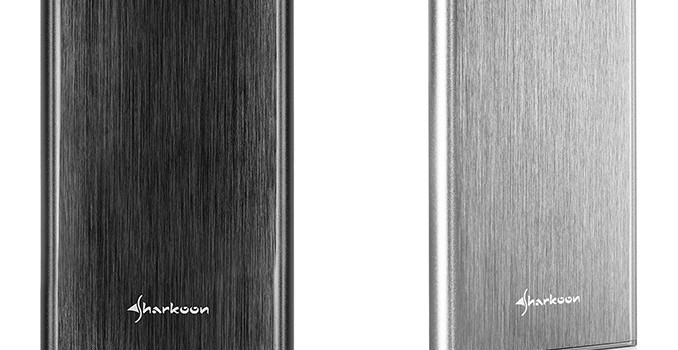
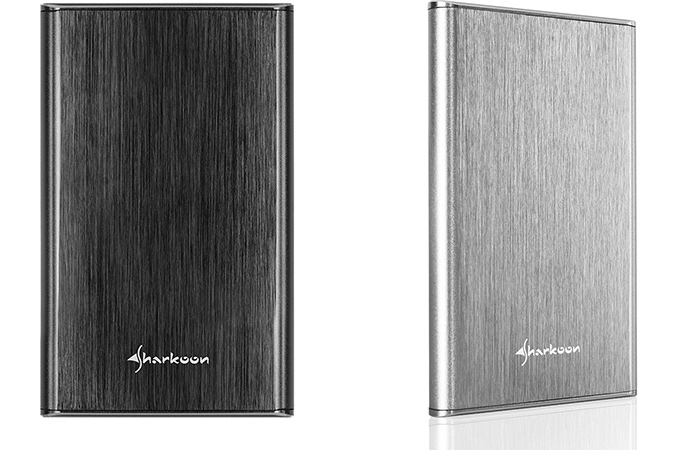
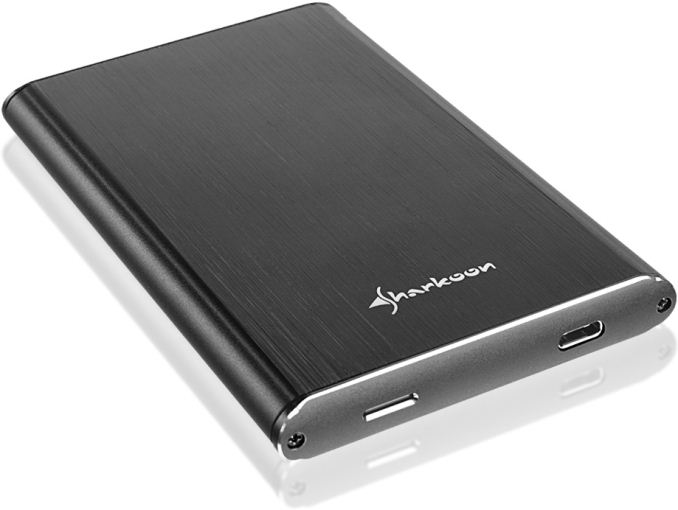
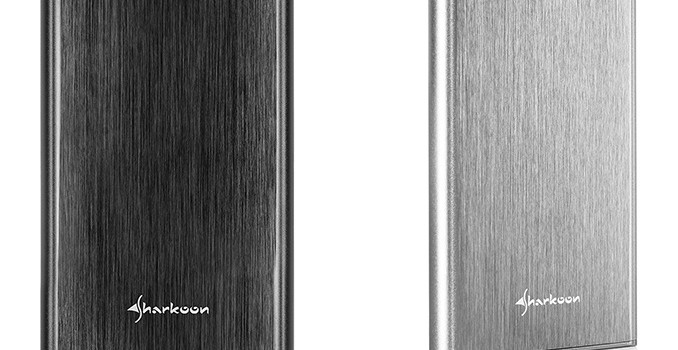
The Sharkoon Rapid-Case 2.5” USB 3.1 Type-C is a sleek enclosure (132×80×14 mm) made of black or silver brushed aluminum that can house a 2.5”/9.5 mm storage device and has a USB 3.1 Type-C header. The chassis weighs 83 grams and when populated with an HDD, its weight will increase to something like 170 ~ 230 grams depending on the drive used. The only thing that owners need to do to use the device is to install an appropriate pre-formatted HDD or SSD inside. 

The chassis contains ASMedia’s ASM1142 PCIe-to-USB 3.1 Gen 2 bridge as well as ASMedia’s ASM1351 USB-to-SATA bridge. The ASM1142 is a PCIe 3.0 x1 chip supporting a maximum bandwidth of up to 8 Gbps, which is below 10 Gbps specified by the USB 3.1 Gen 2 standard, but since this chip is used on loads of USB 3.1 Gen 2-supporting motherboards, this is not really a limitation for the Sharkoon Rapid-Case. Meanwhile, the USB-to-SATA bridge not only downs physical bandwidth to 6 Gbps, but it further reduces it by the overhead introduced by SATAS’s 8b/10b encoding. In the end, even if the Sharkoon Rapid-Case is populated by a high-end SSD, performance of the latter will be limited by SATA, not USB 3.1 Gen 2. In fact, this is the case with a lot of USB 3.1 Type-C storage devices: while they formally support 10 Gbps data rate, they use SATA drives inside with a maximum throughput of 6 Gbps (which is still higher than what you get from USB 3.0-supporting devices at 5 Gbps).

Despite the fact that right now not a lot of external storage devices (factory-made or DIY) can take advantage of USB 3.1 Gen 2’s 10 Gbps data rate, it is important that such devices make it to the market in general. Nowadays many new PCs feature USB Type-C ports and it is important to build up an ecosystem of devices with this interface. Furthermore, if you need a lot of storage space, you are going to use a 2.5″ HDD that has a maximum media to host transfer rate of less than ~200 MB/s and thus not requiring even 5 Gbps of USB 3.0.

The Sharkoon Rapid-Case 2.5″ USB 3.1 Type-C is available from select retailers in Europe for the suggested retail price of €24.99.

Related Reading:

Sharkoon Launches Rapid-Case USB 3.1 Type-C Storage Device DIY Kit

Sharkoon Launches Rapid-Case USB 3.1 Type-C Storage Device DIY Kit

Sharkoon has introduced a DIY kit that lets users build their own external storage devices with the USB 3.1 Type-C interface. The kit is not expensive and resembles similar devices from other makers: it contains an enclosure for a drive as well as a USB 3.1 Type-C cable. The key element here is Type-C, although as with many devices of a similar nature, the 10 Gbps is limited by the chipset to 8 Gbps, and then further by the SATA protocol.

The Sharkoon Rapid-Case 2.5” USB 3.1 Type-C is a sleek enclosure (132×80×14 mm) made of black or silver brushed aluminum that can house a 2.5”/9.5 mm storage device and has a USB 3.1 Type-C header. The chassis weighs 83 grams and when populated with an HDD, its weight will increase to something like 170 ~ 230 grams depending on the drive used. The only thing that owners need to do to use the device is to install an appropriate pre-formatted HDD or SSD inside. 

The chassis contains ASMedia’s ASM1142 PCIe-to-USB 3.1 Gen 2 bridge as well as ASMedia’s ASM1351 USB-to-SATA bridge. The ASM1142 is a PCIe 3.0 x1 chip supporting a maximum bandwidth of up to 8 Gbps, which is below 10 Gbps specified by the USB 3.1 Gen 2 standard, but since this chip is used on loads of USB 3.1 Gen 2-supporting motherboards, this is not really a limitation for the Sharkoon Rapid-Case. Meanwhile, the USB-to-SATA bridge not only downs physical bandwidth to 6 Gbps, but it further reduces it by the overhead introduced by SATAS’s 8b/10b encoding. In the end, even if the Sharkoon Rapid-Case is populated by a high-end SSD, performance of the latter will be limited by SATA, not USB 3.1 Gen 2. In fact, this is the case with a lot of USB 3.1 Type-C storage devices: while they formally support 10 Gbps data rate, they use SATA drives inside with a maximum throughput of 6 Gbps (which is still higher than what you get from USB 3.0-supporting devices at 5 Gbps).

Despite the fact that right now not a lot of external storage devices (factory-made or DIY) can take advantage of USB 3.1 Gen 2’s 10 Gbps data rate, it is important that such devices make it to the market in general. Nowadays many new PCs feature USB Type-C ports and it is important to build up an ecosystem of devices with this interface. Furthermore, if you need a lot of storage space, you are going to use a 2.5″ HDD that has a maximum media to host transfer rate of less than ~200 MB/s and thus not requiring even 5 Gbps of USB 3.0.

The Sharkoon Rapid-Case 2.5″ USB 3.1 Type-C is available from select retailers in Europe for the suggested retail price of €24.99.

Related Reading: