News


ASRock Upgrades Beebox-S SFF PCs with Kaby Lake CPUs
ASRock Upgrades Beebox-S SFF PCs with Kaby Lake CPUs

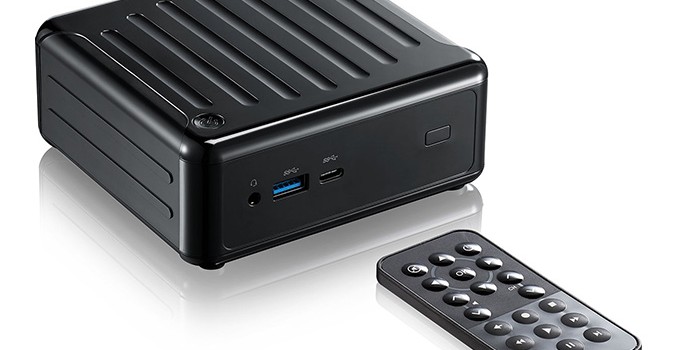
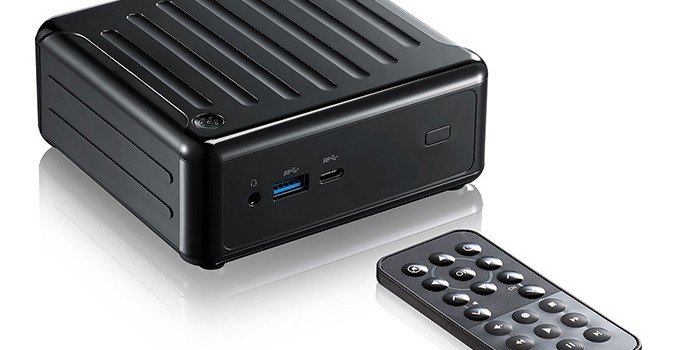
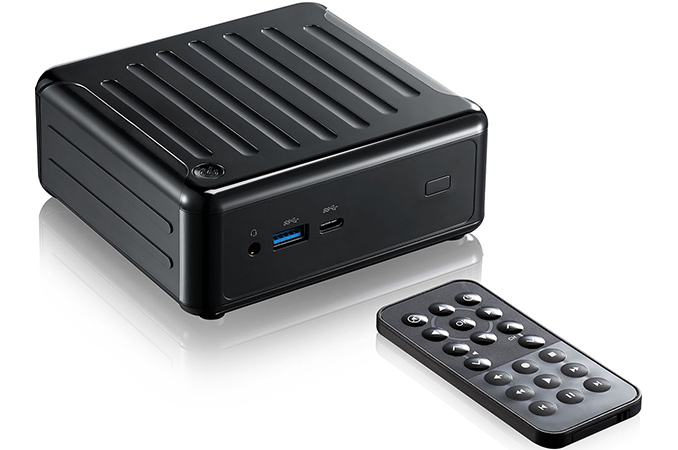
ASRock has introduced updated versions of its Beebox-S small form-factor PCs. The new NUC-like systems are powered by Intel’s Core i5-7100U/i3-7200U CPUs featuring the Kaby Lake microarchitecture, but apart from that the computers are identical to their predecessors running the Skylake chips. ASRock positions its Beebox-S both for general-purpose computing as well as for multimedia playback.

Just like their predecessors, the Asrock Beebox-S comes in a small black enclosure (110×118.5×46 mm, 0.6 L) that is akin to other Intel NUC-like systems. Since the PC is based on Intel’s Kaby Lake processor, it has rather advanced video playback capabilities, which make it a good candidate for an HTPC. Moreover, ASRock specifically mentions HDMI 2.0 and support for 4Kp60 with 10-bit HDR output as one of the key features of the new Beebox systems. The manufacturer also installed an IR receiver compatible with a bundled remote controller, further emphasizing a possible positioning of the Beebox-S.
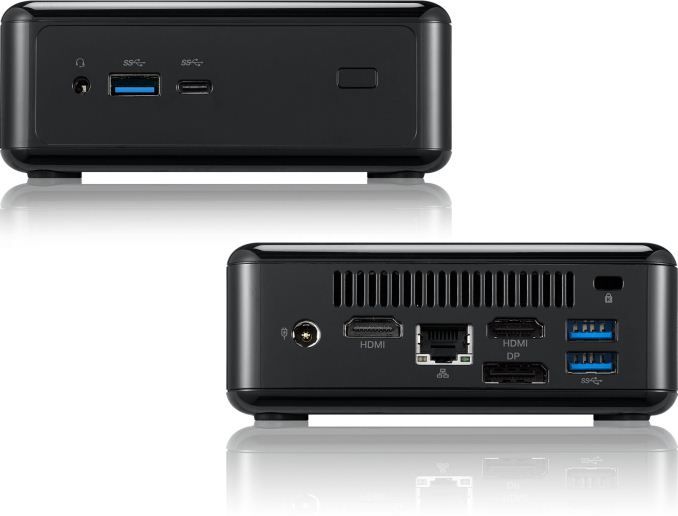
When it comes to connectivity, the SFF PC seems to be good for both office and the living room. The system is equipped with an HDMI 2.0 output (implemented using an LSPCon controller, most likely a MegaChips MCDP2000, and supporting 4096×2160 pixels at 60 Hz as well as HDR10) to connect to modern 4Kp60 UHDTVs (not sure about HDCP 2.2 support, but it should logically be there), an HDMI 1.4 as well as a DisplayPort 1.2. The Beebox-S also has one USB 3.0 Type-A and one USB 3.0 Type-C headers as well as a 3.5 mm TRRS connector for headsets on the front panel. Tthe back panel features two more USB 3.0 ports and one GbE connector.

The heart of the ASRock Beebox-S is either Intel’s Core i3-7100U or Core i5-7200U microprocessor in BGA packaging with integrated HD Graphics 620. The system can also be equipped with up to 32 GB of DDR4-2133 memory (two SO-DIMM slots), an M.2-2280 NVMe SSD and a 2.5” SSD/HDD depending on demands of exact customer. Meanwhile, Intel’s 802.11ac Wi-Fi + BT 4.0 wireless module is pre-installed.

ASRock Beebox-S SFF PCs Based on Intel’s Kaby Lake CPUs
  Beebox-S 7200U Beebox-S 7100U
CPU i5-7200U
2C/4T
2.5 GHz
3.1 GHz
i3-7100U
2C/4T
2.4 GHz
GPU HD Graphics 620
24 EUs
up to 1050 MHz
RAM 2×DDR4-2133 SO-DIMMs (up to 32 GBs)
SSD Up to M.2-2280 SSDs
HDD 2.5″/9.5 mm
GbE Intel i219-V (?)
Wi-Fi Intel Dual Band Wireless-AC 3160 (?)
1×1 802.11ac + BT 4.0
(via M.2 2230 card)
I/O USB 3.1 (10 Gbps) via ASMedia ASM1142
1×USB 3.1 Type-C
3×USB 3.0 Type-A
Video 1×HDMI 2.0 (HDCP2.2) via LSPCon
1×DisplayPort 1.2
Audio Realtek ALC283
TRRS and HDMI connectors
Size H: 46 mm
W: 118.5 mm
L: 110 mm
Full
Specs
Beebox-S 7200U Beebox-S 7100U

This week Newegg started to sell the Beebox-S 7100U and Beebox-S 7200U SFF PCs for $291 and $349, respectively. As it appears that retail pricing of the new Kaby Lake-based ASRock Beebox-S SFF PCs is higher that of the Skylake-powered Beebox-S, which are available for $264 to $320. One more thing to note about the new Beebox-S systems is that they only come in black enclosures, whereas their predecessors feature black, white, silver and golden finishes. We haven’t heard of other colors coming, although that may change in the future.

Related Reading:

ASRock Upgrades Beebox-S SFF PCs with Kaby Lake CPUs

ASRock Upgrades Beebox-S SFF PCs with Kaby Lake CPUs

ASRock has introduced updated versions of its Beebox-S small form-factor PCs. The new NUC-like systems are powered by Intel’s Core i5-7100U/i3-7200U CPUs featuring the Kaby Lake microarchitecture, but apart from that the computers are identical to their predecessors running the Skylake chips. ASRock positions its Beebox-S both for general-purpose computing as well as for multimedia playback.

Just like their predecessors, the Asrock Beebox-S comes in a small black enclosure (110×118.5×46 mm, 0.6 L) that is akin to other Intel NUC-like systems. Since the PC is based on Intel’s Kaby Lake processor, it has rather advanced video playback capabilities, which make it a good candidate for an HTPC. Moreover, ASRock specifically mentions HDMI 2.0 and support for 4Kp60 with 10-bit HDR output as one of the key features of the new Beebox systems. The manufacturer also installed an IR receiver compatible with a bundled remote controller, further emphasizing a possible positioning of the Beebox-S.

When it comes to connectivity, the SFF PC seems to be good for both office and the living room. The system is equipped with an HDMI 2.0 output (implemented using an LSPCon controller, most likely a MegaChips MCDP2000, and supporting 4096×2160 pixels at 60 Hz as well as HDR10) to connect to modern 4Kp60 UHDTVs (not sure about HDCP 2.2 support, but it should logically be there), an HDMI 1.4 as well as a DisplayPort 1.2. The Beebox-S also has one USB 3.0 Type-A and one USB 3.0 Type-C headers as well as a 3.5 mm TRRS connector for headsets on the front panel. Tthe back panel features two more USB 3.0 ports and one GbE connector.

The heart of the ASRock Beebox-S is either Intel’s Core i3-7100U or Core i5-7200U microprocessor in BGA packaging with integrated HD Graphics 620. The system can also be equipped with up to 32 GB of DDR4-2133 memory (two SO-DIMM slots), an M.2-2280 NVMe SSD and a 2.5” SSD/HDD depending on demands of exact customer. Meanwhile, Intel’s 802.11ac Wi-Fi + BT 4.0 wireless module is pre-installed.

ASRock Beebox-S SFF PCs Based on Intel’s Kaby Lake CPUs
  Beebox-S 7200U Beebox-S 7100U
CPU i5-7200U
2C/4T
2.5 GHz
3.1 GHz
i3-7100U
2C/4T
2.4 GHz
GPU HD Graphics 620
24 EUs
up to 1050 MHz
RAM 2×DDR4-2133 SO-DIMMs (up to 32 GBs)
SSD Up to M.2-2280 SSDs
HDD 2.5″/9.5 mm
GbE Intel i219-V (?)
Wi-Fi Intel Dual Band Wireless-AC 3160 (?)
1×1 802.11ac + BT 4.0
(via M.2 2230 card)
I/O USB 3.1 (10 Gbps) via ASMedia ASM1142
1×USB 3.1 Type-C
3×USB 3.0 Type-A
Video 1×HDMI 2.0 (HDCP2.2) via LSPCon
1×DisplayPort 1.2
Audio Realtek ALC283
TRRS and HDMI connectors
Size H: 46 mm
W: 118.5 mm
L: 110 mm
Full
Specs
Beebox-S 7200U Beebox-S 7100U

This week Newegg started to sell the Beebox-S 7100U and Beebox-S 7200U SFF PCs for $291 and $349, respectively. As it appears that retail pricing of the new Kaby Lake-based ASRock Beebox-S SFF PCs is higher that of the Skylake-powered Beebox-S, which are available for $264 to $320. One more thing to note about the new Beebox-S systems is that they only come in black enclosures, whereas their predecessors feature black, white, silver and golden finishes. We haven’t heard of other colors coming, although that may change in the future.

Related Reading:

Panasonic Develops IPS Panel with 1,000,000:1 Contrast Ratio, 1000 Nits Brightness

Panasonic Develops IPS Panel with 1,000,000:1 Contrast Ratio, 1000 Nits Brightness

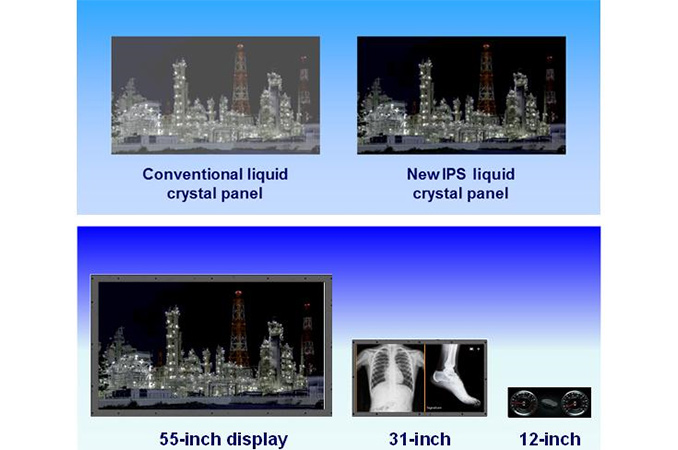
Panasonic has developed a new type of IPS liquid crystal panel that has a 1,000,000:1 contrast ratio, as well as a peak brightness of up to 1000 nits. Many LCD displays often advertise such contrast ratios which are measured against a dynamic backlight and are essentially meaningless, but in this case Panasonic is talking about the static contrast ratio of the display, which only reaches as high as 2000:1 on a typical IPS display. Little information is available about the technology at this point, but Panasonic claims that it is achieved by implementing pixel-by-pixel control of backlight intensity and that panels featuring the tech can be produced using contemporary LCD manufacturing facilities.

One of the key advantages that OLED displays have over LCD displays is extremely high contrast ratio that results in superior blacks. The reason why OLEDs can display deeper blacks is simple: such panels do not use backlighting and can completely switch pixels off when they need to display blacks. By contrast, LCDs use backlighting that cannot be turned off on a pixel-by-pixel basis, which is why in many cases blacks look like dark greys.

In the most optimal case, an LCD display will use full-array backlighting, where there are several LEDs placed directly behind the liquid crystal layer. This allows for a degree of control by performing local dimming of certain areas, which is how LCD televisions have managed to meet the standards required for HDR certification. However, the precision of the backlight control is not close to that of an OLED display which works at the pixel level. Even more common, especially in monitors and less expensive televisions, is the use of edge lighting where LEDs are placed along the edges of the display and the light is distributed across the panel using a guiding plate, which means you can really only control the overall brightness across the entire display.

As it appears, Panasonic has found a way to substantially increase contrast ratio of IPS LCDs using a high-brightness backlight and a special layer of light-modulating cells that enable pixel-by-pixel control of backlight intensity. These cells are made of light-tolerant liquid crystal material that has different light-transmission properties compared to those used in the display cells. The layer of light-modulating cells is placed between the backlight and the LCD cells and thus can control light leakage. At a high level, one could think of them like gates placed behind each pixel on the display.

Panasonic does not reveal many details about its light-modulating cells, but since it uses the term “cells”, it clearly indicates that we are dealing with a relatively thick layer of liquid crystals, not a thin layer of quantum dots (you can see an illustration from Nanosys (a company that produces quantum dot films that are currently used on Samsung TVs and displays) to compare “cells” versus “quantum dots”).

Usage of a high-brightness backlight and a layer of light-modulating cells enable Panasonic to build display panels with up to 1000 nits brightness as well as a static contrast ratio of 1,000,000:1. These figures mean that a black level of 0.001 nits should be possible, which is well beyond what even the best full-array backlit LCD displays can offer today.

Panasonic claims that the addition of the layer can be done using the existing equipment for LCD manufacturing, but it’s not clear how costly the technology will be to implement or if it requires further components to be added to the LCD stack. The company plans to offer displays featuring the new technology for various professional applications, such as video production, medical, automotive, engineering and so on. Given the positioning, it is obvious that the price of IPS displays with enhanced contrast will be well above that of mainstream monitors.

Panasonic intends to start sample shipments of its new monitors in January, 2017, so the commercialization of the technology will not be too far off.

Related Reading: