News


ASRock Rack Launches the 2U4N-F/X200: Four 72-core Knights Landing Xeon Phi CPUs in 2U
ASRock Rack Launches the 2U4N-F/X200: Four 72-core Knights Landing Xeon Phi CPUs in 2U

This week is Intel’s Developer Forum in San Francisco, the annual event where Intel and Intel’s partners show their latest products and discuss a number of core topics to Intel’s business. Last year the focus was on the new Skylake microarchitecture, and this year we have down on our list a number of 3D XPoint and Xeon Phi discussions and announcements. One of the first to contact us with their IDF news was ASRock Rack, the server arm of ASRock, about their high-density Xeon Phi solution.
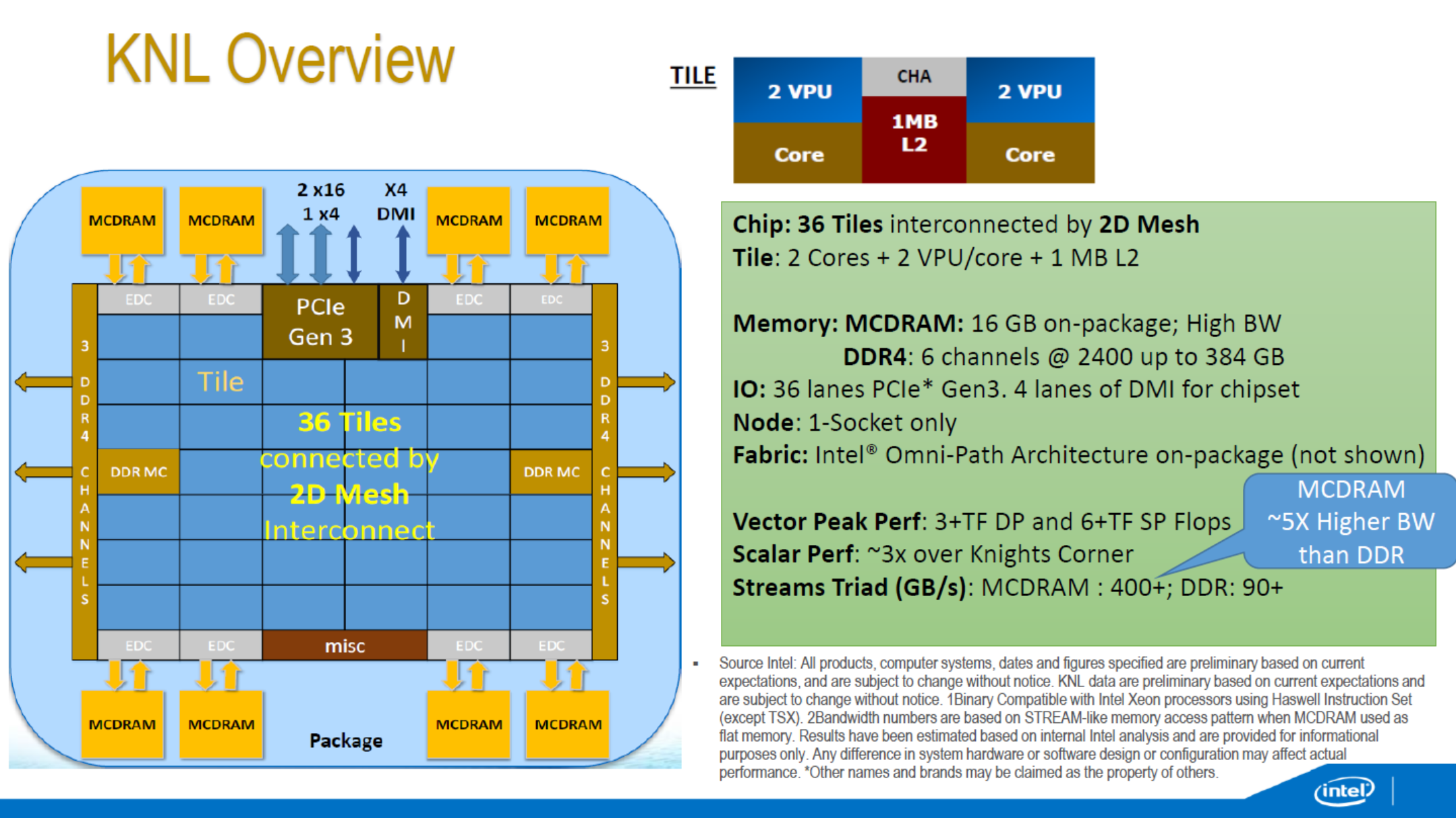

Overview of Xeon Phi X200, Knights Landing

The Xeon Phi many-core platform is transitioning from an add-in card to stand-alone processor, with the latest Knights Landing generation offering up to 72 high performance cores (now a couple of generations away from a pure Atom core) with combined high-bandwidth MCDRAM and the potential for Intel Omnipath support directly on the package. We covered the discussion and launch of Knights Landing last year at Supercomputing15, and saw some preview customer systems at Computex a couple of months ago, however the mix of ISC16 and IDF16 has most of the enterprise consumer-focused system releases surrounding Knights Landing.
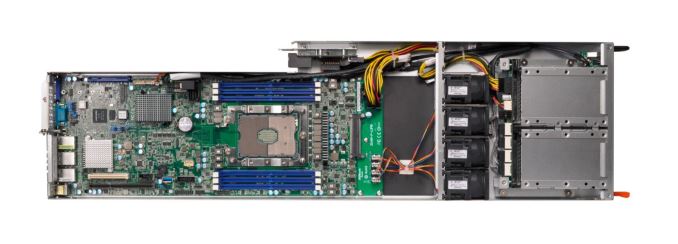
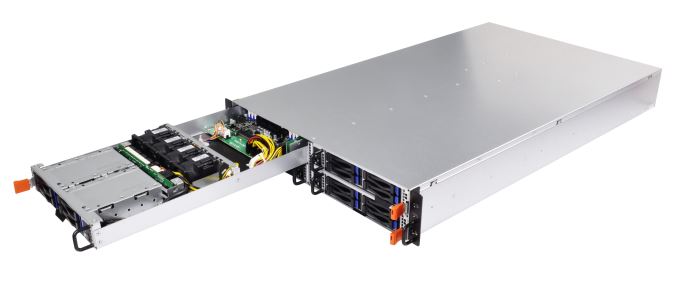
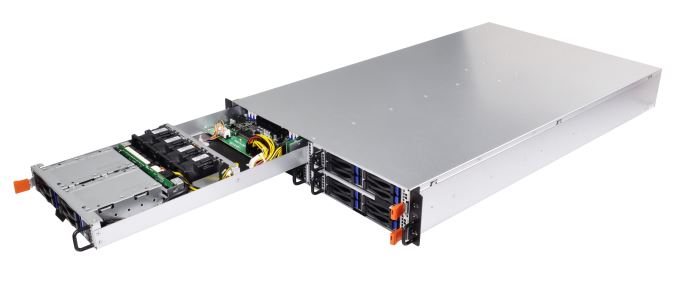
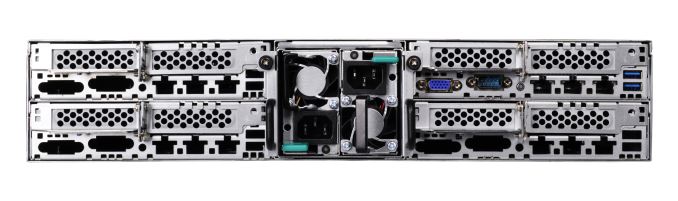
For a segment of Xeon Phi customers, density is important. Pack ‘em, rack ‘em and stack ‘em is the end goal, and the 2U4N-F/X200 aims to do just that. The 2U server uses half-width modules to fit in four separate systems in the chassis, each with an X200 Xeon Phi CPU, six DIMM slots with support for DDR4 2400/2133 RDIMM/LRDIMM, four 2.5-inch storage slots (either 4xSATA/SAS or 2xNVMe+2xSATA/SAS), two PCIe 3. X2 slots, one M.2 slot, a combination 1600W 80 PLUS Platinum redundant (1+1) power supply for the four nodes, two GbE Intel i350 network ports and integrated IPMI 2.0 (via AST2400) with KVM and a dedicated LAN port.


P1 Socket for Xeon Phi, seen at Supercomputing15

Xeon Phi uses Intel’s P1 socket, which we saw back at Supercomputing15 and has been characterised in recent media as the LGA-3647 socket. At this point in time, Intel has only confirmed this socket for Xeon Phi use, and other use cases are not yet verified. ASRock Rack states that their platform on show at IDF16 this week will support all the main Xeon Phi X200 CPUs, and they have support in the works for Omni-path associated SKUs. Professional users interested in ASRock’s high-density platform will have to get in contact with their regional branch for more information and pricing.
Source: ASRock

Related Reading:

The Motorola Moto G4 and G4 Plus Review

At this point in time, I don’t think the Moto G line needs any introduction. With the original Moto G in 2013 Motorola really went beyond what was thought to be possible in a mid-range smartphone. At that point in time, buying a $200 smartphone usually meant buying some Samsung or LG phone with a name nobody had ever heard of, and specs that left much to be desired. The Moto G showed that you could create an Android phone with an HD display, good performance, a good build, and good battery life at a price under $200. This year marks the fourth version of Motorola’s mid-range smartphone. Read on for the full AnandTech review of the Moto G4 and G4 Plus.

The Motorola Moto G4 and G4 Plus Review

At this point in time, I don’t think the Moto G line needs any introduction. With the original Moto G in 2013 Motorola really went beyond what was thought to be possible in a mid-range smartphone. At that point in time, buying a $200 smartphone usually meant buying some Samsung or LG phone with a name nobody had ever heard of, and specs that left much to be desired. The Moto G showed that you could create an Android phone with an HD display, good performance, a good build, and good battery life at a price under $200. This year marks the fourth version of Motorola’s mid-range smartphone. Read on for the full AnandTech review of the Moto G4 and G4 Plus.

Toshiba Begins to Sample eMLC-Based ZD6300 7.68 TB SSDs to Customers

Toshiba Begins to Sample eMLC-Based ZD6300 7.68 TB SSDs to Customers

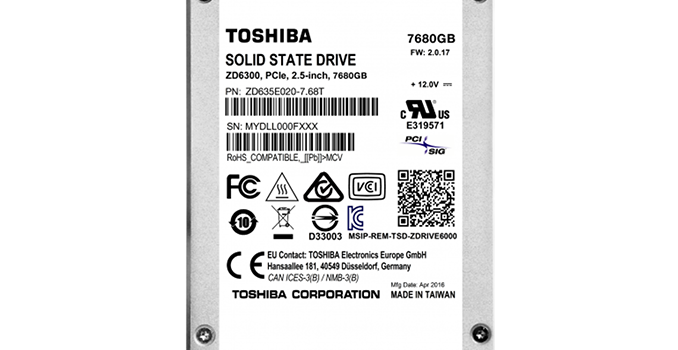
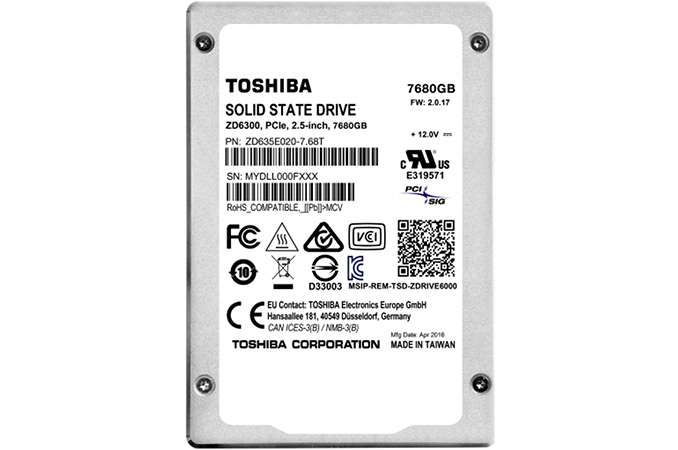
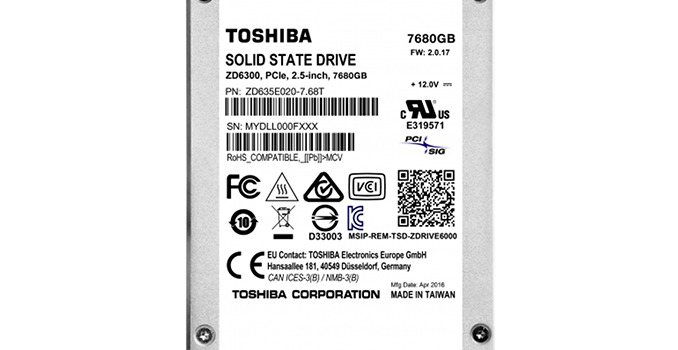
Toshiba has quietly expanded its ZD6300 family of SSDs with a 7.68 TB model, its most capacious storage device announced to date. The new drive was designed for mixed workloads and uses Toshiba’s time-proven A19 eMLC NAND flash memory. Due to enhanced endurance and a lot of NAND used for overprovisioning, the SSD can be pre-ordered for approximately $12,000, depending on the seller, though its official MSRP is still unknown.

The Toshiba ZD6300 7.68 TB (ZD635E020-7.68T) SSD uses PMC-Sierra’s “Princeton” controller (which is now called Flashtec NVMe PM8604 1032) with PCIe 3.0 x8 interface (which Toshiba splits into two x4 interfaces), 16 NAND flash channels and NVMe 1.1b protocol. The drive will be available in 2.5”/15 mm form-factor with U.2 connector (SFF-8639) in a bid to enable compatibility with different server chassis (specifically for those, which support multiple SSDs). The new 7.68 TB drive from Toshiba support the same functionality as other ZD-series drives from the company (which were originally introduced under OCZ brand), such as dual-port capability, AES-256 encryption, full power loss protection, end-to-end data protection and so on.

OCZ Z-Drive 6000 Series Specifications
  6000 6300 6300 Max Capacity
Capacities 800 GB, 1,600 GB, 3,200 GB, 6,400 GB 960 GB, 1920 GB, 3840 GB, 7680 GB
Form Factors 2.5″/15mm U.2 2.5″ 15mm & HHHL AIC 2.5″/15mm U.2
Interface PCIe 3.0 x4 (NVMe 1.1b)
Controller PMC-Sierra “Princeton” aka Flashtec NVMe PM8604 1032
NAND Toshiba A19nm 128Gbit MLC Toshiba A19nm 128Gbit eMLC
Endurance 1 DWPD 3 DWPD 1 DWPD
Encryption AES-256
Power Loss Protection Yes
Warranty Five Years

The ZD6300 7.68 TB SSD uses higher durability eMLC memory to guarantee better endurance, which is why it supports maximum sequential write speed of up to 2.9 GB/s (in line with the ZD6000-series drives). However its maximum sequential write speed is 1.4 GB/s (or actually lower) due to higher program latencies of eMLC (which is in line with other ZD6300-series products).

Typically, the key differences between the ZD6000 and the ZD6300 SSDs (which were officially announced) were usage of eMLC by the latter in order to enable three drive writes per day (DWPD) over a five-year period, which was more suitable for mixed workloads (something that the ZD6300 were designed for). What is important is that the Toshiba ZD6300 7.68 TB SSD belongs to the less-known Max Capacity sub-family from the Z-Drive 6300 product stack that uses eMLC, but not in order to enable 3 DWPDs, but to maximize capacity using more durable ICs. The ZD6300 Max Capacity family has not been announced officially, but such SSDs are available for purchase (as pointed out by Ilya Gavrichenkov, my former colleague from another web-site). The ZD6300 Max Capacity drives do not reserve vast amounts of eMLC NAND flash for overprovisioning, unlike the regular ZD6300-series products, to enhance endurance, but this allows it to increase capacities by 20%, albeit at a relatively high per-gigabyte cost.

Consequently, from a raw NAND capacity configuration point of view, Toshiba’s ZD6300 7.68 TB SSD is the same drive as the ZD6300 6.4 TB product: it has 8128 GB of memory, but it makes 7680 GB available to the user rather than 6400 GB. Just like the ZD6300 6.4 TB drives, the 7.68 TB model uses 32 of 16-die packages featuring 128 Gb eMLC NAND flash memory devices produced using Toshiba’s second-generation 19 nm process technology.

It should be noted that apart from the ZD6000/ZD6300 SSDs with one or three DWPD, Toshiba also offers high-endurance SSDs with 10 or 25 DWPDs in their ZD-series product lineup. Such drives are naturally more expensive, but those, who need very high endurance, are usually willing to invest in such storage solutions. Still, since requirements of such customers are very diverse, Toshiba does not publish specs of such drives because virtually all of them are built to order and are not available from usual resellers.

Speaking of availability, Toshiba tells us that it is sampling the ZD6300 7.68 TB product with customers. Meanwhile, there are several resellers, who are offering to pre-order the SSD for $12,563, $12,090 or even $11,252. Since the product is still in the sampling stage and is not yet officially shipping, Toshiba naturally keeps its actual price under wraps.

Toshiba Begins to Sample eMLC-Based ZD6300 7.68 TB SSDs to Customers

Toshiba Begins to Sample eMLC-Based ZD6300 7.68 TB SSDs to Customers

Toshiba has quietly expanded its ZD6300 family of SSDs with a 7.68 TB model, its most capacious storage device announced to date. The new drive was designed for mixed workloads and uses Toshiba’s time-proven A19 eMLC NAND flash memory. Due to enhanced endurance and a lot of NAND used for overprovisioning, the SSD can be pre-ordered for approximately $12,000, depending on the seller, though its official MSRP is still unknown.

The Toshiba ZD6300 7.68 TB (ZD635E020-7.68T) SSD uses PMC-Sierra’s “Princeton” controller (which is now called Flashtec NVMe PM8604 1032) with PCIe 3.0 x8 interface (which Toshiba splits into two x4 interfaces), 16 NAND flash channels and NVMe 1.1b protocol. The drive will be available in 2.5”/15 mm form-factor with U.2 connector (SFF-8639) in a bid to enable compatibility with different server chassis (specifically for those, which support multiple SSDs). The new 7.68 TB drive from Toshiba support the same functionality as other ZD-series drives from the company (which were originally introduced under OCZ brand), such as dual-port capability, AES-256 encryption, full power loss protection, end-to-end data protection and so on.

OCZ Z-Drive 6000 Series Specifications
  6000 6300 6300 Max Capacity
Capacities 800 GB, 1,600 GB, 3,200 GB, 6,400 GB 960 GB, 1920 GB, 3840 GB, 7680 GB
Form Factors 2.5″/15mm U.2 2.5″ 15mm & HHHL AIC 2.5″/15mm U.2
Interface PCIe 3.0 x4 (NVMe 1.1b)
Controller PMC-Sierra “Princeton” aka Flashtec NVMe PM8604 1032
NAND Toshiba A19nm 128Gbit MLC Toshiba A19nm 128Gbit eMLC
Endurance 1 DWPD 3 DWPD 1 DWPD
Encryption AES-256
Power Loss Protection Yes
Warranty Five Years

The ZD6300 7.68 TB SSD uses higher durability eMLC memory to guarantee better endurance, which is why it supports maximum sequential write speed of up to 2.9 GB/s (in line with the ZD6000-series drives). However its maximum sequential write speed is 1.4 GB/s (or actually lower) due to higher program latencies of eMLC (which is in line with other ZD6300-series products).

Typically, the key differences between the ZD6000 and the ZD6300 SSDs (which were officially announced) were usage of eMLC by the latter in order to enable three drive writes per day (DWPD) over a five-year period, which was more suitable for mixed workloads (something that the ZD6300 were designed for). What is important is that the Toshiba ZD6300 7.68 TB SSD belongs to the less-known Max Capacity sub-family from the Z-Drive 6300 product stack that uses eMLC, but not in order to enable 3 DWPDs, but to maximize capacity using more durable ICs. The ZD6300 Max Capacity family has not been announced officially, but such SSDs are available for purchase (as pointed out by Ilya Gavrichenkov, my former colleague from another web-site). The ZD6300 Max Capacity drives do not reserve vast amounts of eMLC NAND flash for overprovisioning, unlike the regular ZD6300-series products, to enhance endurance, but this allows it to increase capacities by 20%, albeit at a relatively high per-gigabyte cost.

Consequently, from a raw NAND capacity configuration point of view, Toshiba’s ZD6300 7.68 TB SSD is the same drive as the ZD6300 6.4 TB product: it has 8128 GB of memory, but it makes 7680 GB available to the user rather than 6400 GB. Just like the ZD6300 6.4 TB drives, the 7.68 TB model uses 32 of 16-die packages featuring 128 Gb eMLC NAND flash memory devices produced using Toshiba’s second-generation 19 nm process technology.

It should be noted that apart from the ZD6000/ZD6300 SSDs with one or three DWPD, Toshiba also offers high-endurance SSDs with 10 or 25 DWPDs in their ZD-series product lineup. Such drives are naturally more expensive, but those, who need very high endurance, are usually willing to invest in such storage solutions. Still, since requirements of such customers are very diverse, Toshiba does not publish specs of such drives because virtually all of them are built to order and are not available from usual resellers.

Speaking of availability, Toshiba tells us that it is sampling the ZD6300 7.68 TB product with customers. Meanwhile, there are several resellers, who are offering to pre-order the SSD for $12,563, $12,090 or even $11,252. Since the product is still in the sampling stage and is not yet officially shipping, Toshiba naturally keeps its actual price under wraps.