News


Samsung at Flash Memory Summit: 64-layer V-NAND, Bigger SSDs, Z-SSD
Samsung at Flash Memory Summit: 64-layer V-NAND, Bigger SSDs, Z-SSD

At Flash Memory Summit, Samsung announced their fourth generation of 3D NAND and several of the more obvious SSD upgrades it enables. Taking a page from Intel and Micron’s strategy book, they also announced a new memory type and corresponding SSD product while saying essentially nothing about what the new memory actually is.

The fourth generation 3D NAND bumps the layer count up to 64, compared to the 48-layer design used by the third generation V-NAND that was announced last fall and has been slowly rolling out to their SSD products over the course of this year. So far Samsung has talked about a 512Gb TLC part, and at least initially the MLC parts will probably be made from the same die and thus have two thirds the capacity. (Samsung’s second generation 3D NAND was initially available as 128Gb TLC or 86Gb MLC, with 128Gb MLC parts introduced later.) The new NAND also supports an increased interface speed of 800Mbps, which is key to reducing the performance penalty that comes from consolidating more flash onto fewer independent chips.

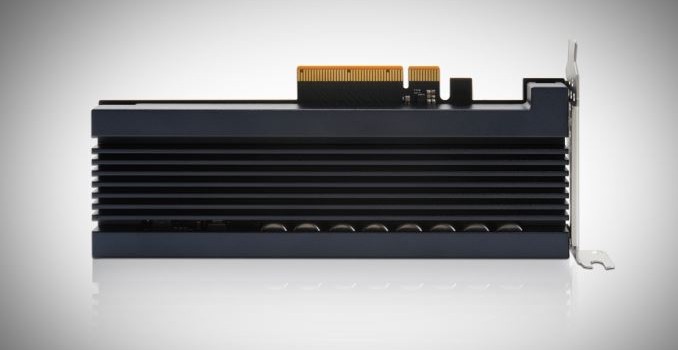
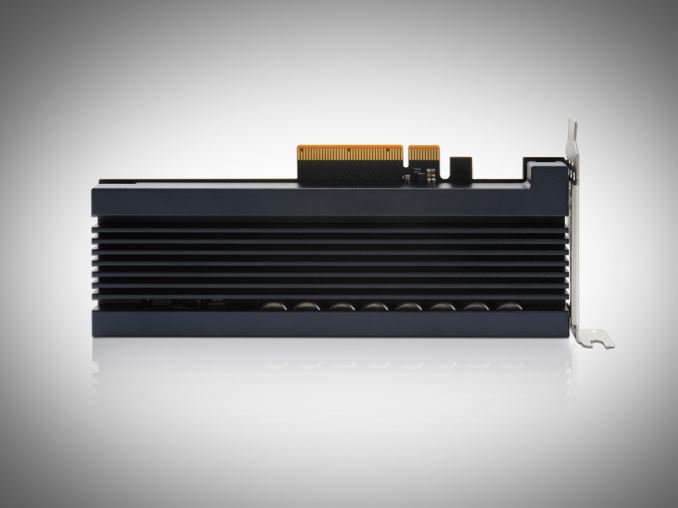
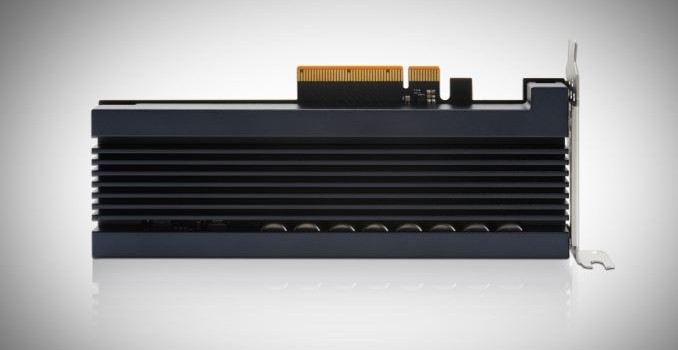
With a per-die capacity of 512Gb (64GB), Samsung can now put 1TB of TLC flash in a single package. This means most product lines will be seeing an increase in capacity at the high end of the range. Their BGA SSD products will be offering 1TB capacity even in the 11.5mm by 13mm form factor. The 16TB PM1633a SAS SSD will be eclipsed by the new 32TB PM1643. Likely to be further out, the PM1725 PCIe add-in card SSD will be succeeded by the PM1735 with a PCIe 4 x8 host interface.

Complementing the NAND update will be a new non-standard oversized M.2 form factor 32mm wide and 114mm long, compared to the typical enterprise M.2 size of 22mm by 110mm. A little extra room can go a long way, and Samsung will be using it to produce 8TB drives. These will be enterprise SSDs and Samsung showed a diagram of these enabling 256TB of flash in a 1U server. Samsung will also be producing 4TB drives in standard M.2 sizing.

In what is likely a bid to steal some thunder from 3D XPoint memory before it can ship, Samsung announced Z-NAND memory technology and a Z-SSD product based around Z-NAND and a new SSD controller. They said nothing about the operating principles of Z-NAND, but they did talk about their plans for the Z-SSD products.

Samsung Z-SSD is being marketed as addressing the performance gap between DRAM and SSDs. Samsung’s slides during their keynote showed some performance comparisons against the PM963 NVMe TLC SSD and against an unnamed “PRAM based” solution. The logical point of comparison would be against 3D XPoint NVMe drives, but Samsung can’t have real performance and power numbers on those when they’re still under development by Intel and Micron. Thus the PRAM based solution Samsung refers to is probably one of their own earlier R&D efforts that didn’t make it to market. The Z-SSD ties or comes out ahead on every benchmark Samsung showed, but NVMe NAND flash SSDs were missing from the power consumption comparison.

The slides stated that there will be a 1TB Z-SSD this year and 2TB and 4TB Z-SSDs next year, while the press release issued later states that more generally that the Z-SSD is expected to be released next year. The press release also states that Z-NAND “shares the fundamental structure of V-NAND and has a unique circuit design and controller that can maximize performance”. Given that, the launch timeframe and capacities that are only a little lower than NAND flash SSDs, it seems that Z-NAND isn’t drastically different from existing memory technologies and it may even be little more than SLC flash in disguise, trying for a comeback.

Samsung at Flash Memory Summit: 64-layer V-NAND, Bigger SSDs, Z-SSD

Samsung at Flash Memory Summit: 64-layer V-NAND, Bigger SSDs, Z-SSD

At Flash Memory Summit, Samsung announced their fourth generation of 3D NAND and several of the more obvious SSD upgrades it enables. Taking a page from Intel and Micron’s strategy book, they also announced a new memory type and corresponding SSD product while saying essentially nothing about what the new memory actually is.

The fourth generation 3D NAND bumps the layer count up to 64, compared to the 48-layer design used by the third generation V-NAND that was announced last fall and has been slowly rolling out to their SSD products over the course of this year. So far Samsung has talked about a 512Gb TLC part, and at least initially the MLC parts will probably be made from the same die and thus have two thirds the capacity. (Samsung’s second generation 3D NAND was initially available as 128Gb TLC or 86Gb MLC, with 128Gb MLC parts introduced later.) The new NAND also supports an increased interface speed of 800Mbps, which is key to reducing the performance penalty that comes from consolidating more flash onto fewer independent chips.

With a per-die capacity of 512Gb (64GB), Samsung can now put 1TB of TLC flash in a single package. This means most product lines will be seeing an increase in capacity at the high end of the range. Their BGA SSD products will be offering 1TB capacity even in the 11.5mm by 13mm form factor. The 16TB PM1633a SAS SSD will be eclipsed by the new 32TB PM1643. Likely to be further out, the PM1725 PCIe add-in card SSD will be succeeded by the PM1735 with a PCIe 4 x8 host interface.

Complementing the NAND update will be a new non-standard oversized M.2 form factor 32mm wide and 114mm long, compared to the typical enterprise M.2 size of 22mm by 110mm. A little extra room can go a long way, and Samsung will be using it to produce 8TB drives. These will be enterprise SSDs and Samsung showed a diagram of these enabling 256TB of flash in a 1U server. Samsung will also be producing 4TB drives in standard M.2 sizing.

In what is likely a bid to steal some thunder from 3D XPoint memory before it can ship, Samsung announced Z-NAND memory technology and a Z-SSD product based around Z-NAND and a new SSD controller. They said nothing about the operating principles of Z-NAND, but they did talk about their plans for the Z-SSD products.

Samsung Z-SSD is being marketed as addressing the performance gap between DRAM and SSDs. Samsung’s slides during their keynote showed some performance comparisons against the PM963 NVMe TLC SSD and against an unnamed “PRAM based” solution. The logical point of comparison would be against 3D XPoint NVMe drives, but Samsung can’t have real performance and power numbers on those when they’re still under development by Intel and Micron. Thus the PRAM based solution Samsung refers to is probably one of their own earlier R&D efforts that didn’t make it to market. The Z-SSD ties or comes out ahead on every benchmark Samsung showed, but NVMe NAND flash SSDs were missing from the power consumption comparison.

The slides stated that there will be a 1TB Z-SSD this year and 2TB and 4TB Z-SSDs next year, while the press release issued later states that more generally that the Z-SSD is expected to be released next year. The press release also states that Z-NAND “shares the fundamental structure of V-NAND and has a unique circuit design and controller that can maximize performance”. Given that, the launch timeframe and capacities that are only a little lower than NAND flash SSDs, it seems that Z-NAND isn’t drastically different from existing memory technologies and it may even be little more than SLC flash in disguise, trying for a comeback.
Meizu M3E Launched: Helio P10, 5.5-inch Full HD, ¥1299

Meizu M3E Launched: Helio P10, 5.5-inch Full HD, ¥1299

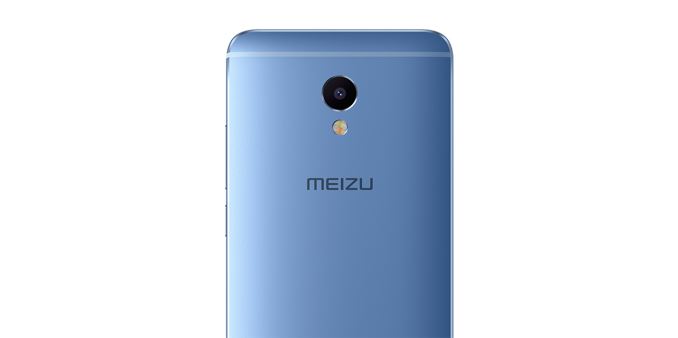
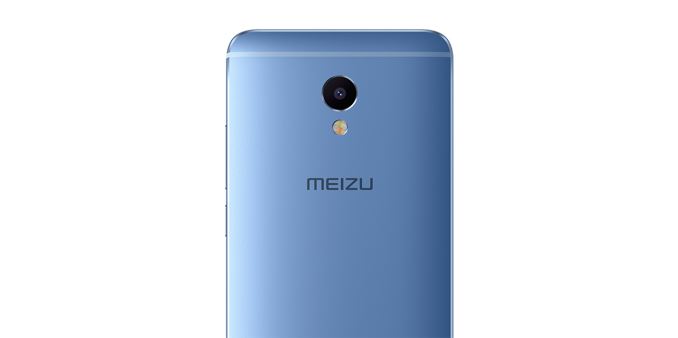
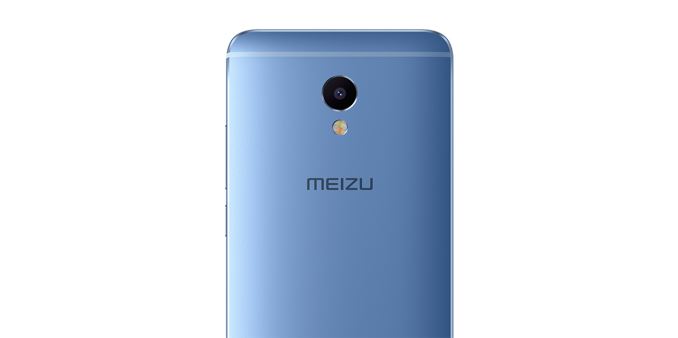
Today at a launch event in Beijing, Meizu announced the latest edition to its lower-cost M-series of smartphones. The M3E adheres to Meizu’s established design and construction methods, with an all-aluminum chassis topped with 2.5D edge-to-edge cover glass. The single-piece volume rocker and power button sit within a polished groove that matches the polished, chamfered edges around the sides as well as the recessed rear camera and flash modules. The M3E comes in five colors: silver, gray, blue, gold, and rose gold.

Like Meizu’s M3 note, the M3E comes with a fully laminated, 5.5-inch 1080p IPS LCD display with a peak brightness of 450 nits, according to Meizu. There’s a touch-based, capacitive fingerprint sensor below the screen that also works as a capacitive back button when tapped and a home button when pressed. Swiping up from the lower bezel opens the recent apps menu, which eliminates the need for additional capacitive or onscreen navigation buttons.

Technical Specifications
  Meizu M3E Meizu M3 note
SoC MediaTek Helio P10
(MT6755M)

4x Cortex-A53 @ 1.8GHz
4x Cortex-A53 @ 1.0GHz
Mali-T860MP2

MediaTek Helio P10
(MT6755M)

4x Cortex-A53 @ 1.8GHz
4x Cortex-A53 @ 1.0GHz
Mali-T860MP2 @ 546MHz

RAM 3GB LPDDR3 2GB / 3GB LPDDR3
NAND 32GB (eMMC 5.1)
+ microSD
16GB / 32GB (eMMC 5.1)
+ microSD
Display 5.5-inch 1920×1080 IPS LCD 5.5-inch 1920×1080 IPS LCD
Dimensions 153.6 x 75.8 x 7.9 mm
172 grams
153.6 x 75.5 x 8.2 mm
163 grams
Modem MediaTek (Integrated)
2G / 3G / 4G LTE (Category 6)

FDD-LTE / TD-LTE / TD-SCDMA / WCDMA / CDMA / GSM

MediaTek (Integrated)
2G / 3G / 4G LTE (Category 6)

FDD-LTE / TD-LTE / TD-SCDMA / WCDMA / CDMA / GSM

SIM Size 2x NanoSIM (dual standby) 2x NanoSIM (dual standby)
Front Camera 5MP, f/2.0 5MP, f/2.0
Rear Camera 13MP, 1/3.06″ Sony IMX258 Exmor RS, 1.12µm pixels, f/2.2, PDAF, HDR, dual-tone LED flash 13MP, 1/3.06″ OmniVision OV13853, 1.12µm pixels, f/2.2, PDAF, HDR, dual-tone LED flash
Battery 3100 mAh
non-replaceable
4100 mAh (15.79 Wh)
non-replaceable
Connectivity 802.11b/g/n/ac, BT 4.1 LE, GPS/GNSS, USB Type-C 802.11b/g/n/ac, BT 4.0 LE, GPS/GNSS, microUSB 2.0
Launch OS Yun OS 5.1 with Meizu Flyme OS 5 Android 5.1 with Meizu Flyme OS 5.1
Launch Price
(No Contract)
¥1299
$196 USD
¥799 / ¥999
$120 / $150 USD

The table above shows significant overlap between the new M3E and the M3 note. They both use the same MediaTek Helio P10 SoC with four ARM Cortex-A53 CPUs at up to 1.8GHz and another four at up to 1.0GHz in a big.LITTLE arrangement. There’s also an ARM Mali-T860MP2 GPU, which features two ALUs per core instead of three ALUs per core like the high-end Mali-T880.

In our M3 note review, the Helio P10 delivered adequate performance for light workloads, but could not match the speed and user experience of Qualcomm’s Snapdragon 650 SoC in the similarly priced Xiaomi Redmi Note 3. The Helio P10’s low-power GPU is also unsuitable for serious gaming, but is sufficient for playing casual titles.

The M3E comes with 3GB of LPDDR3-1866 RAM and 32GB of eMMC 5.1 NAND, also like the M3 note. Both phones also support microSD cards for storage expansion and 802.11ac Wi-Fi, which is nice to see at this price point, but neither phone includes NFC. The M3E at least ditches microUSB in favor of the newer Type-C port.

MediaTek’s Category 6 LTE modem comes integrated with the Helio P10 SoC, offering up to 300 Mb/s down and 50 Mb/s up with 2×20 MHz carrier aggregation and 64-QAM on the downlink. Both the M3E and M3 note accept dual NanoSIM cards and support Dual SIM Dual Standby (DSDS) operation. Meizu says the M3E supports 18 frequency bands, which is the same number as the mainland China version of the M3 note. Based on the hardware similarities, it’s likely the M3E supports the same frequency bands as the M3 note, which means no support for North American LTE frequencies.

The M3E comes with a 5MP front-facing camera and 13MP rear camera with phase detect autofocus (PDAF); however, the M3E is using a Sony IMX258 image sensor for the rear camera. The M3 note’s camera performed poorly in our testing, so hopefully this change improves image quality.

Overall, the M3E appears to be a minor revision of the M3 note. It’s updated design, USB Type-C port, and new rear camera are offset by a significantly smaller battery. It’s also disappointing to see Meizu stick with the Helio P10 SoC. The Redmi Note 3’s Snapdragon 650, which includes two Cortex-A72 CPUs and an Adreno 510 GPU, provides a substantially better user experience at a similar price.

Meizu M3E Launched: Helio P10, 5.5-inch Full HD, ¥1299

Meizu M3E Launched: Helio P10, 5.5-inch Full HD, ¥1299

Today at a launch event in Beijing, Meizu announced the latest edition to its lower-cost M-series of smartphones. The M3E adheres to Meizu’s established design and construction methods, with an all-aluminum chassis topped with 2.5D edge-to-edge cover glass. The single-piece volume rocker and power button sit within a polished groove that matches the polished, chamfered edges around the sides as well as the recessed rear camera and flash modules. The M3E comes in five colors: silver, gray, blue, gold, and rose gold.

Like Meizu’s M3 note, the M3E comes with a fully laminated, 5.5-inch 1080p IPS LCD display with a peak brightness of 450 nits, according to Meizu. There’s a touch-based, capacitive fingerprint sensor below the screen that also works as a capacitive back button when tapped and a home button when pressed. Swiping up from the lower bezel opens the recent apps menu, which eliminates the need for additional capacitive or onscreen navigation buttons.

Technical Specifications
  Meizu M3E Meizu M3 note
SoC MediaTek Helio P10
(MT6755M)

4x Cortex-A53 @ 1.8GHz
4x Cortex-A53 @ 1.0GHz
Mali-T860MP2

MediaTek Helio P10
(MT6755M)

4x Cortex-A53 @ 1.8GHz
4x Cortex-A53 @ 1.0GHz
Mali-T860MP2 @ 546MHz

RAM 3GB LPDDR3 2GB / 3GB LPDDR3
NAND 32GB (eMMC 5.1)
+ microSD
16GB / 32GB (eMMC 5.1)
+ microSD
Display 5.5-inch 1920×1080 IPS LCD 5.5-inch 1920×1080 IPS LCD
Dimensions 153.6 x 75.8 x 7.9 mm
172 grams
153.6 x 75.5 x 8.2 mm
163 grams
Modem MediaTek (Integrated)
2G / 3G / 4G LTE (Category 6)

FDD-LTE / TD-LTE / TD-SCDMA / WCDMA / CDMA / GSM

MediaTek (Integrated)
2G / 3G / 4G LTE (Category 6)

FDD-LTE / TD-LTE / TD-SCDMA / WCDMA / CDMA / GSM

SIM Size 2x NanoSIM (dual standby) 2x NanoSIM (dual standby)
Front Camera 5MP, f/2.0 5MP, f/2.0
Rear Camera 13MP, 1/3.06″ Sony IMX258 Exmor RS, 1.12µm pixels, f/2.2, PDAF, HDR, dual-tone LED flash 13MP, 1/3.06″ OmniVision OV13853, 1.12µm pixels, f/2.2, PDAF, HDR, dual-tone LED flash
Battery 3100 mAh
non-replaceable
4100 mAh (15.79 Wh)
non-replaceable
Connectivity 802.11b/g/n/ac, BT 4.1 LE, GPS/GNSS, USB Type-C 802.11b/g/n/ac, BT 4.0 LE, GPS/GNSS, microUSB 2.0
Launch OS Yun OS 5.1 with Meizu Flyme OS 5 Android 5.1 with Meizu Flyme OS 5.1
Launch Price
(No Contract)
¥1299
$196 USD
¥799 / ¥999
$120 / $150 USD

The table above shows significant overlap between the new M3E and the M3 note. They both use the same MediaTek Helio P10 SoC with four ARM Cortex-A53 CPUs at up to 1.8GHz and another four at up to 1.0GHz in a big.LITTLE arrangement. There’s also an ARM Mali-T860MP2 GPU, which features two ALUs per core instead of three ALUs per core like the high-end Mali-T880.

In our M3 note review, the Helio P10 delivered adequate performance for light workloads, but could not match the speed and user experience of Qualcomm’s Snapdragon 650 SoC in the similarly priced Xiaomi Redmi Note 3. The Helio P10’s low-power GPU is also unsuitable for serious gaming, but is sufficient for playing casual titles.

The M3E comes with 3GB of LPDDR3-1866 RAM and 32GB of eMMC 5.1 NAND, also like the M3 note. Both phones also support microSD cards for storage expansion and 802.11ac Wi-Fi, which is nice to see at this price point, but neither phone includes NFC. The M3E at least ditches microUSB in favor of the newer Type-C port.

MediaTek’s Category 6 LTE modem comes integrated with the Helio P10 SoC, offering up to 300 Mb/s down and 50 Mb/s up with 2×20 MHz carrier aggregation and 64-QAM on the downlink. Both the M3E and M3 note accept dual NanoSIM cards and support Dual SIM Dual Standby (DSDS) operation. Meizu says the M3E supports 18 frequency bands, which is the same number as the mainland China version of the M3 note. Based on the hardware similarities, it’s likely the M3E supports the same frequency bands as the M3 note, which means no support for North American LTE frequencies.

The M3E comes with a 5MP front-facing camera and 13MP rear camera with phase detect autofocus (PDAF); however, the M3E is using a Sony IMX258 image sensor for the rear camera. The M3 note’s camera performed poorly in our testing, so hopefully this change improves image quality.

Overall, the M3E appears to be a minor revision of the M3 note. It’s updated design, USB Type-C port, and new rear camera are offset by a significantly smaller battery. It’s also disappointing to see Meizu stick with the Helio P10 SoC. The Redmi Note 3’s Snapdragon 650, which includes two Cortex-A72 CPUs and an Adreno 510 GPU, provides a substantially better user experience at a similar price.

ASRock Beebox-S 6200U Review – An Alternative to the Skylake NUC

The Skylake-U platform for mini-PCs has turned out to be an interesting one. Numerous challenges were faced by the first one in the market – the Intel Skylake NUC. Eventual BIOS fixes made the platform realize its full potential. All these aspects made Intel’s partners take it a bit slow when it came to promoting their Skylake-U mini-PCs. Today, we will be taking a look at the ASRock Beebox-S 6200U, which integrates a Core i5-6200U into ASRock’s version of a NUC motherboard.