News


Andrew S. Grove, Former CEO and Chairman of Intel, Passes Away Aged 79

Andrew S. Grove, Former CEO and Chairman of Intel, Passes Away Aged 79

It is our sad news today to extend a report that Andy Grove, a Silicon Valley pioneer and the former CEO and chairman of Intel, passed away aged 79. Mr. Grove joined Intel the day it was incorporated in 1968 and left active roles at the company in late 2004. Andy Grove played a critical role in Intel’s decision to refocus from computer memory to microprocessors in the eighties. He was also behind Intel’s transformation into a widely recognized consumer brand.

Born to a middle-class Jewish family in Budapest, Hungary, his family immigrated to the U.S. when he was 21, having survived Nazi occupation and escaping Soviet repressions. In the U.S. he studied chemical engineering at the City College of New York and then completed his Ph.D. at the University of California at Berkeley in 1963. Andy started his industry career at Fairchild Semiconductor, a pioneer in the manufacturing of integrated circuits, where Gordon Moore hired him as a researcher. By 1967, he became assistant head of R&D. At Fairchild, Mr. Grove developed a variety of integrated circuits and worked with such legendary engineers as Robert Noyce, Jerry Sanders and many others.

When Intel was founded in 1968, Andy was Intel’s third employee and started as the director of engineering, getting Intel’s manufacturing operations off the ground. Over the course of his career at Intel, Andy wrote several textbooks on the topics of semiconductors and management, some being used at a university level, as well as over forty technical papers and holds several patents. In 1979 Andy was Intel’s President, being made CEO in 1987, overseeing a growth in revenue to $20.8 billion at the time. In 1997 he became Intel’s Chairman, relinquishing his role as CEO in 1998 and continuing on the board until 2004 while working as a senior advisor to Intel and a lecturer at Stanford. He was Time magazine’s Man of the Year in 1997.

During his tenure as the chief executive, he made two important business decisions for the history of Intel. Firstly, he started to withdraw from the market of DRAM in the eighties because of heavy competition from Japanese makers. While Intel was larger than its rivals, it could not compete against all of them and instead of trying to pick an important market segment, it was decided that this was a moment for the company to refocus its business in general. Eventually, he described the process and decisions behind it in his book “Only the Paranoid Survive.” Secondly, he initiated massive CPU-related ad campaigns for consumers, which led to the Intel Inside brand to make the importance of microprocessor technology evident to the mainstream public. The decision to advertise CPUs beyond the pre-installed systems led to transformations of the semiconductor industry and to a degree helped expand the DIY PC market we know today. This led to Intel responsible for everything related to its CPUs. Thus when in 1994 it was discovered that the original Pentium processor had a fundamental bug in its FPU, the company replaced processors and organized the whole replacement scheme itself, which cost millions of dollars. Nonetheless, the company solved all the issues with the original Pentium chip under Mr. Grove’s tenure.

During Andy’s time at Intel, being a staunch advocate of open and honest debate and direct lines of communication to senior management, he oversaw a large portion of the super-fast growth in personal computing through the 1980s, 1990s and into the new century. It’s clear how much his work has had an effect on the computing industry and here at AnandTech. Anand started the website as a hobby back in 1997, the same year Andy became Chairman, and since then we’ve always been enthusiastic about the progression of personal computing as well as the enterprise segment, areas which Andy and Intel have steered into something completely unimaginable over 40 years ago.

We stand on the shoulders of giants in our work–none bigger than Andy Grove (1936-2016). You’ll be greatly missed. https://t.co/5cxDY92Ah5

— Brian Krzanich (@bkrunner) March 22, 2016

RIP Andy Grove. The best company builder Silicon Valley has ever seen, and likely will ever see.

— Marc Andreessen (@pmarca) March 22, 2016

Andy Grove was one of the giants of the technology world. He loved our country and epitomized America at its best. Rest in peace.

— Tim Cook (@tim_cook) March 22, 2016

The legacy of Mr. Grove will carry on, both as a brilliant pioneer of the semiconductor age but also in the components and devices we use. While not a household name like Moore, Jobs or Gates, Grove stands among them (with Dennis Richie) in the annals of computing.
NVIDIA Announces 24GB Quadro M6000

NVIDIA Announces 24GB Quadro M6000

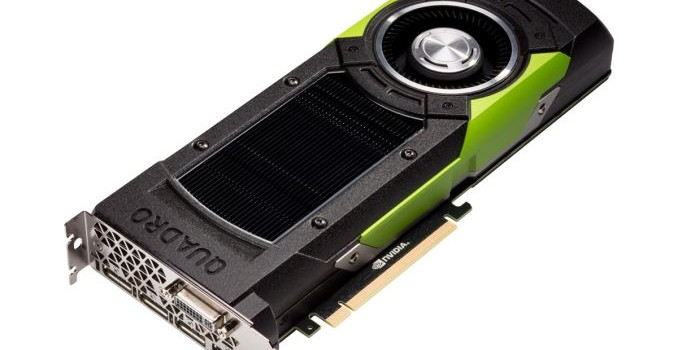
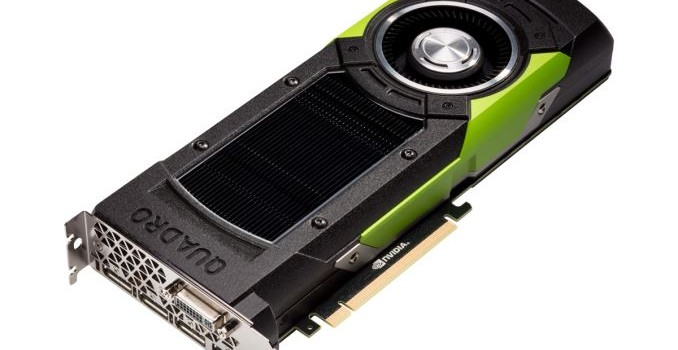
With NVIDIA currently between GPU generations, things have been relatively quiet on the professional graphics front for the company. On the high-end NVIDIA released the Quadro M6000 back in 2015, bringing their fully enabled GM200 GPU into the professional market. Now just over a year later, they are giving the Quadro a refresh with a newer, higher capacity model.

NVIDIA Quadro Specification Comparison
  M6000 (24GB) M6000 (12GB) K6000 6000
CUDA Cores 3072 3072 2880 448
Texture Units 192 192 240 56
ROPs 96 96 48 48
Core Clock N/A N/A 900MHz 574MHz
Boost Clock ~1140MHz ~1140MHz N/A N/A
Memory Clock 6.6Gbps GDDR5 6.6Gbps GDDR5 6Gbps GDDR5 3Gbps GDDR5
Memory Bus Width 384-bit 384-bit 384-bit 384-bit
VRAM 24GB 12GB 12GB 6GB
FP64 1/32 FP32 1/32 FP32 1/3 FP32 1/2 FP32
TDP 250W 250W 225W 204W
GPU GM200 GM200 GK110 GF110
Architecture Maxwell 2 Maxwell 2 Kepler Fermi
Transistor Count 8B 8B 7.1B 3B
Manufacturing Process TSMC 28nm TSMC 28nm TSMC 28nm TSMC 40nm
Launch Date 03/22/2016 03/19/2015 07/23/2013 N/A
Launch Price (MSRP) $5000 $5000 $5000 $5000

When the original Quadro M6000 was launched, NVIDIA outfitted it with 12GB of VRAM in a 24x4Gb configuration, a large amount of memory for the time but not the full amount a GM200 card could be equipped with. Now this week the company is giving the card mid-cycle upgrade by increasing its VRAM capacity, replacing the 12GB model with a 24GB model utilizing higher density 8GB GDDR5 memory chips.

The target market for the 24GB M6000 is relatively straightforward: certain segments of the professional visualization market need all of the VRAM they can get, so for NVIDIA ecosystem users this should be a welcome upgrade. At the same time since 8Gb GDDR5 has been on the market for some time now, I’m surprised it has taken NVIDIA this long to bring GM200 to its maximum 24GB capacity. None the less this does give NVIDIA bragging rights as the highest capacity professional graphics card – surpassing the 16GB FirePro W9100 – though it’s worth noting that AMD should have the capability to push that to 32GB if they want final bragging rights.

Meanwhile NVIDIA’s press materials also briefly note that the updated Quadro M6000 ships with some new temperature & clockspeed management options – presumably via a newer firmware – though details are limited. The new M6000 features “More discrete GPU clock options for a better customer experience when running their application” and “Greater software temperature control to keep the GPU temperature below the hardware slowdown threshold for the best user experience.” NVIDIA’s professional cards (Quadro & Tesla) feature more performance controls than we see on consumer cards (which just run as fast as they can) and from the description I expect that NVIDIA has put in some new, finer grained options to better control automatic throttling behavior by manually setting both the maximum clockspeed and temperature. For single card workstations this is rarely an issue, but for large arrays of cards (e.g. Quadro VCA), keeping all of the cards in lockstep with regards to performance is a desired feature.

Finally, since this is a mid-cycle refresh, the new 24GB Quadro M6000 will be launching this week. It will be a drop-in replacement in NVIDIA’s product stack, and will occupy the previous M6000’s spot at $5000.

NVIDIA Announces 24GB Quadro M6000

NVIDIA Announces 24GB Quadro M6000

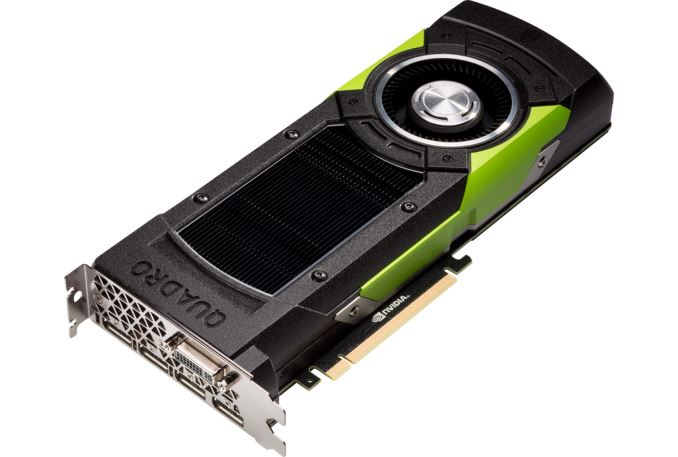
With NVIDIA currently between GPU generations, things have been relatively quiet on the professional graphics front for the company. On the high-end NVIDIA released the Quadro M6000 back in 2015, bringing their fully enabled GM200 GPU into the professional market. Now just over a year later, they are giving the Quadro a refresh with a newer, higher capacity model.

NVIDIA Quadro Specification Comparison
  M6000 (24GB) M6000 (12GB) K6000 6000
CUDA Cores 3072 3072 2880 448
Texture Units 192 192 240 56
ROPs 96 96 48 48
Core Clock N/A N/A 900MHz 574MHz
Boost Clock ~1140MHz ~1140MHz N/A N/A
Memory Clock 6.6Gbps GDDR5 6.6Gbps GDDR5 6Gbps GDDR5 3Gbps GDDR5
Memory Bus Width 384-bit 384-bit 384-bit 384-bit
VRAM 24GB 12GB 12GB 6GB
FP64 1/32 FP32 1/32 FP32 1/3 FP32 1/2 FP32
TDP 250W 250W 225W 204W
GPU GM200 GM200 GK110 GF110
Architecture Maxwell 2 Maxwell 2 Kepler Fermi
Transistor Count 8B 8B 7.1B 3B
Manufacturing Process TSMC 28nm TSMC 28nm TSMC 28nm TSMC 40nm
Launch Date 03/22/2016 03/19/2015 07/23/2013 N/A
Launch Price (MSRP) $5000 $5000 $5000 $5000

When the original Quadro M6000 was launched, NVIDIA outfitted it with 12GB of VRAM in a 24x4Gb configuration, a large amount of memory for the time but not the full amount a GM200 card could be equipped with. Now this week the company is giving the card mid-cycle upgrade by increasing its VRAM capacity, replacing the 12GB model with a 24GB model utilizing higher density 8GB GDDR5 memory chips.

The target market for the 24GB M6000 is relatively straightforward: certain segments of the professional visualization market need all of the VRAM they can get, so for NVIDIA ecosystem users this should be a welcome upgrade. At the same time since 8Gb GDDR5 has been on the market for some time now, I’m surprised it has taken NVIDIA this long to bring GM200 to its maximum 24GB capacity. None the less this does give NVIDIA bragging rights as the highest capacity professional graphics card – surpassing the 16GB FirePro W9100 – though it’s worth noting that AMD should have the capability to push that to 32GB if they want final bragging rights.

Meanwhile NVIDIA’s press materials also briefly note that the updated Quadro M6000 ships with some new temperature & clockspeed management options – presumably via a newer firmware – though details are limited. The new M6000 features “More discrete GPU clock options for a better customer experience when running their application” and “Greater software temperature control to keep the GPU temperature below the hardware slowdown threshold for the best user experience.” NVIDIA’s professional cards (Quadro & Tesla) feature more performance controls than we see on consumer cards (which just run as fast as they can) and from the description I expect that NVIDIA has put in some new, finer grained options to better control automatic throttling behavior by manually setting both the maximum clockspeed and temperature. For single card workstations this is rarely an issue, but for large arrays of cards (e.g. Quadro VCA), keeping all of the cards in lockstep with regards to performance is a desired feature.

Finally, since this is a mid-cycle refresh, the new 24GB Quadro M6000 will be launching this week. It will be a drop-in replacement in NVIDIA’s product stack, and will occupy the previous M6000’s spot at $5000.

Samsung Demos Its First BGA SSD: 1500 MB/s Read Speed and Tiny Package

Samsung Demos Its First BGA SSD: 1500 MB/s Read Speed and Tiny Package

In the recent years SSDs in M.2 form-factor have greatly reduced the amount of space required for storage sub-systems inside modern PCs. However, as computers get even smaller, there is pressure for SSDs to further shrink as well. Solid-state drives in BGA packaging are considerably smaller than SSDs in M.2 form-factor and for a couple of years platform developers like Intel have been promoting such drives among PC makers. Intel said in 2014 that an M.2-2260 SSD could take 15% of space inside a 2-in-1 hybrid PC, whereas usage of a BGA SSD could save a great amount of space and could allow to increase battery size by around 10%. Moreover, in many cases usage of BGA storage can shrink Z-height of devices as well as improve thermal performance compared to M.2 modules, according to Intel.

As a result, the market for BGA form factor SSDs has been growing in size and importance at a quick pace. To that end, at the 2016 Samsung SSD Forum Japan, Samsung demonstrated its first SSD in a BGA (ball-grid array) packaging. Despite of tiny form-factor, Samsung’s PM971 SSD offers rather high performance thanks to PCIe interface and a special controller. Meanwhile the little drive will be targetted for use inside PCs, tablets, 2-in-1s and other types of small computers or embedded applications.

First BGA SSD From Samsung

Samsung’s PM971 SSD is based on Samsung’s new Photon controller as well as MLC V-NAND flash memory. It is impossible to say at this time whether the Photon controller of the PM971 SSD has anything to do with the controller used inside the 750 EVO drives (the controller is smaller than usual as it has only two processing cores), but it looks very likely.

Samsung plans to offer three versions of the SSD, featuring 128 GB, 256 GB, and 512 GB capacities. The PM971 SSD supports sequential read speed of up to 1500 MB/s as well as sequential write speed of up to 600 MB/s, suggesting that it relies on PCIe 3.0 interface. The PM971 SSD can perform 190K random read IOPS as well as up to 150K random write IOPS, according to information disclosed by Samsung.


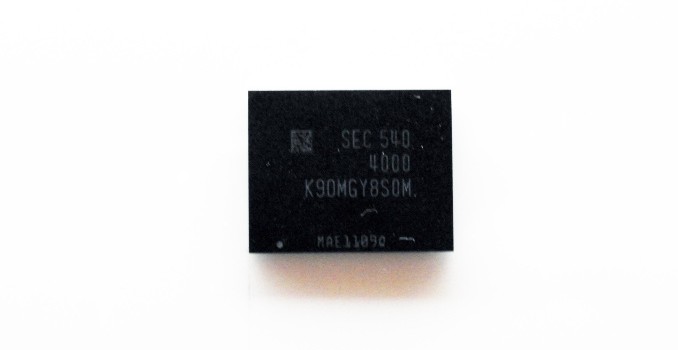
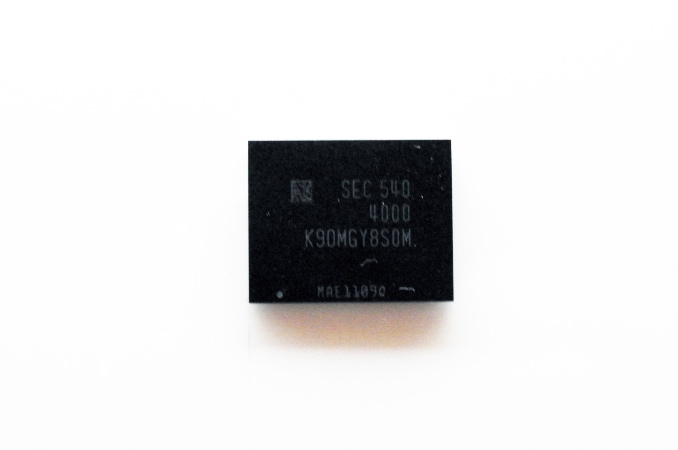
Samsung PM971 SSD. Image by PC Watch.

At the event, Samsung did not reveal anything about internal architecture of its BGA SSD, which is rather interesting because the NAND controller has to extract maximum performance out of a limited number of NAND devices over a limited number of channels (provided, of course, that internal architecture relies on industry standards). Moreover, it is unknown whether the drive is compatible with the proposed M.2 specification for BGA SSDs. The only thing that is known about the SSD right now is that it is smaller than an SD card, according to PC Watch web-site.

Samsung is aiming for tablets and 2-in-1 hybrid PCs with its BGA SSDs, The company expects device manufacturers to adopt the product in the second half of 2016 or in the first half of 2017.

Standards for BGA SSDs Proposed

While we’re on the subject of BGA SSDs, this is a good time to touch upon the recent developments in the standardization of SSDs in this format. Even with the recent growth of the market, SSDs in BGA packaging are not something completely new. Intel, Toshiba, SanDisk, Microsemi, Silicon Motion and some others have all offered SSDs in BGA form-factors for years to various makers of embedded applications, whom in turn needed to save space or run their storage sub-systems in harsh environments. Early last year Toshiba rolled-out its first BGA SSDs with PCIe interface, and in September several members of PCI SIG (the organization, which develops PCIe interface, its derivatives and standards for PCIe-based devices) proposed a set of mechanical standards for BGA SSDs, which could open the doors for many manufacturers to enter the emerging market.

BGA SSDs with PCIe 3.0 or SATA interfaces will be a part of the PCI SIG’s M.2 specifications. At present select members of the organization (HP, Intel, Lenovo, Micron, SanDisk, Seagate and Toshiba) propose four types of soldered-down solid-state storage solutions: Type 1620, Type 2024, Type 2228 and Type 2828. M.2 types traditionally define width and length of the package in millimeters, so, the smallest BGA SSD will have measurements of 16 × 20 mm, whereas the largest BGA SSD will feature 28 × 28 mm packaging. SSDs in a BGA package may have Z-height up to 2 mm (measured with solder balls collapsed), but may be slimmer.

BGA SSDs that comply with the proposed M.2 types use the same signals as the M.2 socket 3 (so, they are compliant with both PCIe 3.0 and SATA 3.2 protocols and can utilize up to four PCIe lanes), but use 1.2V, 1.8V and 3.3V power rails. All the BGA SSDs contain the common core ball map of Type 1620 (which look pretty much the same as the core ball map of Toshiba’s BG-series SSDs) for data and power, but the larger drives also feature additional mechanical retention balls. Some BGA SSDs can be placed on M.2 modules in a bid to enable design flexibility for device makers (and upgradeability option for end-users), but only on the condition that the modules have voltage conversion circuitry to provide 1.8V or 1.2V as required.

A BGA SSD not only integrates NAND flash memory, but also a NAND controller, DRAM and all the things that could be needed for a fully-functional solid-state storage solution. From the software perspective, M.2 spec BGA SSDs are just solid-state drives with PCIe or SATA interfaces. And unlike MCPs (multi-chip packages) consisting of DRAM and NAND that companies like Micron and Samsung offer to makers of mobile devices, BGA SSDs are complete storage systems that can be attached directly to appropriate host interfaces.

The proposed BGA M.2 form-factors intend to unify packaging of single-chip SSDs and make such SSDs industry-standard devices available from various makers. It is unknown at this time whether Samsung’s PM971 will be compliant with the proposed specs, but it’s worth noting that the company is a member of PCI SIG and typically makes products in standard packages and form factors.

Samsung Demos Its First BGA SSD: 1500 MB/s Read Speed and Tiny Package

Samsung Demos Its First BGA SSD: 1500 MB/s Read Speed and Tiny Package

In the recent years SSDs in M.2 form-factor have greatly reduced the amount of space required for storage sub-systems inside modern PCs. However, as computers get even smaller, there is pressure for SSDs to further shrink as well. Solid-state drives in BGA packaging are considerably smaller than SSDs in M.2 form-factor and for a couple of years platform developers like Intel have been promoting such drives among PC makers. Intel said in 2014 that an M.2-2260 SSD could take 15% of space inside a 2-in-1 hybrid PC, whereas usage of a BGA SSD could save a great amount of space and could allow to increase battery size by around 10%. Moreover, in many cases usage of BGA storage can shrink Z-height of devices as well as improve thermal performance compared to M.2 modules, according to Intel.

As a result, the market for BGA form factor SSDs has been growing in size and importance at a quick pace. To that end, at the 2016 Samsung SSD Forum Japan, Samsung demonstrated its first SSD in a BGA (ball-grid array) packaging. Despite of tiny form-factor, Samsung’s PM971 SSD offers rather high performance thanks to PCIe interface and a special controller. Meanwhile the little drive will be targetted for use inside PCs, tablets, 2-in-1s and other types of small computers or embedded applications.

First BGA SSD From Samsung

Samsung’s PM971 SSD is based on Samsung’s new Photon controller as well as MLC V-NAND flash memory. It is impossible to say at this time whether the Photon controller of the PM971 SSD has anything to do with the controller used inside the 750 EVO drives (the controller is smaller than usual as it has only two processing cores), but it looks very likely.

Samsung plans to offer three versions of the SSD, featuring 128 GB, 256 GB, and 512 GB capacities. The PM971 SSD supports sequential read speed of up to 1500 MB/s as well as sequential write speed of up to 600 MB/s, suggesting that it relies on PCIe 3.0 interface. The PM971 SSD can perform 190K random read IOPS as well as up to 150K random write IOPS, according to information disclosed by Samsung.


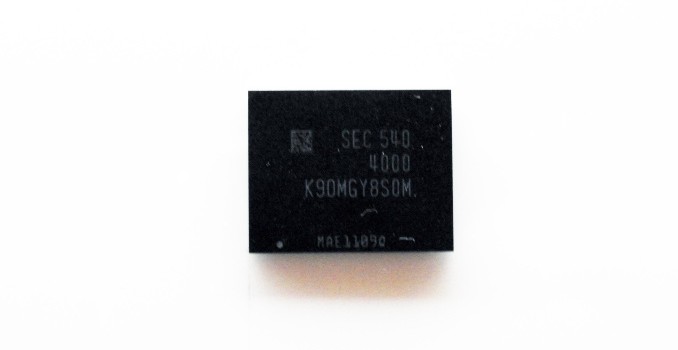
Samsung PM971 SSD. Image by PC Watch.

At the event, Samsung did not reveal anything about internal architecture of its BGA SSD, which is rather interesting because the NAND controller has to extract maximum performance out of a limited number of NAND devices over a limited number of channels (provided, of course, that internal architecture relies on industry standards). Moreover, it is unknown whether the drive is compatible with the proposed M.2 specification for BGA SSDs. The only thing that is known about the SSD right now is that it is smaller than an SD card, according to PC Watch web-site.

Samsung is aiming for tablets and 2-in-1 hybrid PCs with its BGA SSDs, The company expects device manufacturers to adopt the product in the second half of 2016 or in the first half of 2017.

Standards for BGA SSDs Proposed

While we’re on the subject of BGA SSDs, this is a good time to touch upon the recent developments in the standardization of SSDs in this format. Even with the recent growth of the market, SSDs in BGA packaging are not something completely new. Intel, Toshiba, SanDisk, Microsemi, Silicon Motion and some others have all offered SSDs in BGA form-factors for years to various makers of embedded applications, whom in turn needed to save space or run their storage sub-systems in harsh environments. Early last year Toshiba rolled-out its first BGA SSDs with PCIe interface, and in September several members of PCI SIG (the organization, which develops PCIe interface, its derivatives and standards for PCIe-based devices) proposed a set of mechanical standards for BGA SSDs, which could open the doors for many manufacturers to enter the emerging market.

BGA SSDs with PCIe 3.0 or SATA interfaces will be a part of the PCI SIG’s M.2 specifications. At present select members of the organization (HP, Intel, Lenovo, Micron, SanDisk, Seagate and Toshiba) propose four types of soldered-down solid-state storage solutions: Type 1620, Type 2024, Type 2228 and Type 2828. M.2 types traditionally define width and length of the package in millimeters, so, the smallest BGA SSD will have measurements of 16 × 20 mm, whereas the largest BGA SSD will feature 28 × 28 mm packaging. SSDs in a BGA package may have Z-height up to 2 mm (measured with solder balls collapsed), but may be slimmer.

BGA SSDs that comply with the proposed M.2 types use the same signals as the M.2 socket 3 (so, they are compliant with both PCIe 3.0 and SATA 3.2 protocols and can utilize up to four PCIe lanes), but use 1.2V, 1.8V and 3.3V power rails. All the BGA SSDs contain the common core ball map of Type 1620 (which look pretty much the same as the core ball map of Toshiba’s BG-series SSDs) for data and power, but the larger drives also feature additional mechanical retention balls. Some BGA SSDs can be placed on M.2 modules in a bid to enable design flexibility for device makers (and upgradeability option for end-users), but only on the condition that the modules have voltage conversion circuitry to provide 1.8V or 1.2V as required.

A BGA SSD not only integrates NAND flash memory, but also a NAND controller, DRAM and all the things that could be needed for a fully-functional solid-state storage solution. From the software perspective, M.2 spec BGA SSDs are just solid-state drives with PCIe or SATA interfaces. And unlike MCPs (multi-chip packages) consisting of DRAM and NAND that companies like Micron and Samsung offer to makers of mobile devices, BGA SSDs are complete storage systems that can be attached directly to appropriate host interfaces.

The proposed BGA M.2 form-factors intend to unify packaging of single-chip SSDs and make such SSDs industry-standard devices available from various makers. It is unknown at this time whether Samsung’s PM971 will be compliant with the proposed specs, but it’s worth noting that the company is a member of PCI SIG and typically makes products in standard packages and form factors.