Vik


XFX Starts to Sell Single-Slot Mini-ITX Radeon RX 460 Slim Graphics Cards
XFX Starts to Sell Single-Slot Mini-ITX Radeon RX 460 Slim Graphics Cards

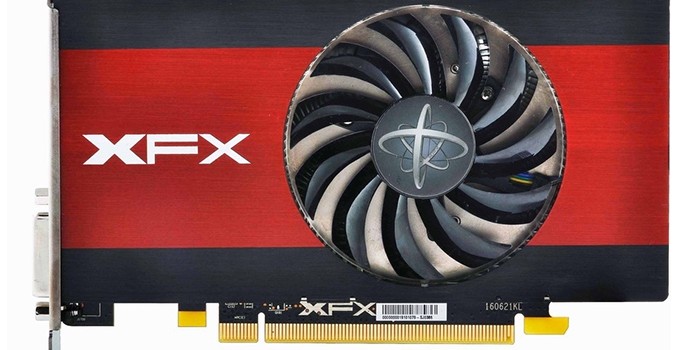
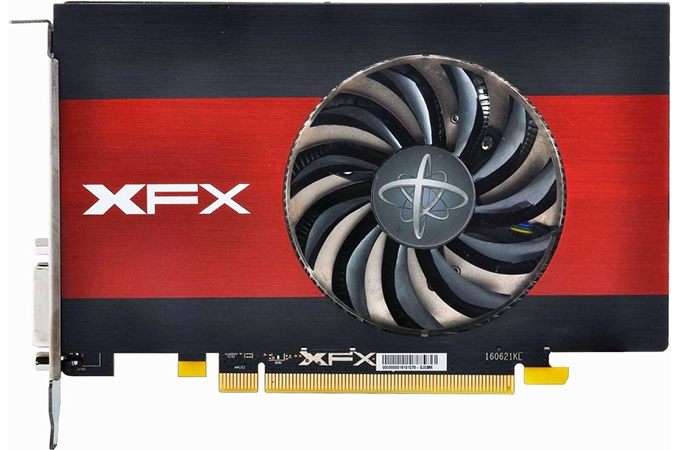
XFX has quietly started to sell its slim Radeon RX 460 video cards, which use a single-slot cooling system and can fit into a Mini-ITX computer. The cards features 2 or 4 GB of memory depend on SKU, as well as three display connectors, making them suitable for SFF and HTPC builds. Pricing of the cards is in line with AMD’s recommendations at around $140.

The XFX Radeon RX 460 Slim Single Slot Design lineup consists of two graphics adapters carrying 2 or 4 GB of GDDR5 memory (operating at up 7 GT/s). The card ships with a 1220 MHz GPU boost clock – so XFX hasn’t needed to make any sacrifices when it comes to top clockspeeds – and like every other RX 460 on the market we’re looking at a cut-down version of the afformentioned Polaris 11 GPU (896 stream processors). The GPU is cooled by a relatively large cooling system featuring an aluminum heatsink with an 80- or a 90-mm fan at its center. When it comes to connectivity, the cards have one DL-DVI-D port, one DisplayPort 1.4, and one HDMI 2.0b port.

The AMD Polaris 11 GPU supports a contemporary feature-set via the DirectX 12 and Vulkan APIs. What’s more, the graphics chip features hardware-accelerated decoding and encoding of HEVC (H.265) and VP9 video at 4Kp60, as well as HDR10 video output and HDCP 2.2 — all important capabilities for HTPCs. Last, but not least, performance of the GPU in graphics applications is considerably higher compared to most of today’s iGPUs and thus the new boards can be used to upgrade various OEM PCs.
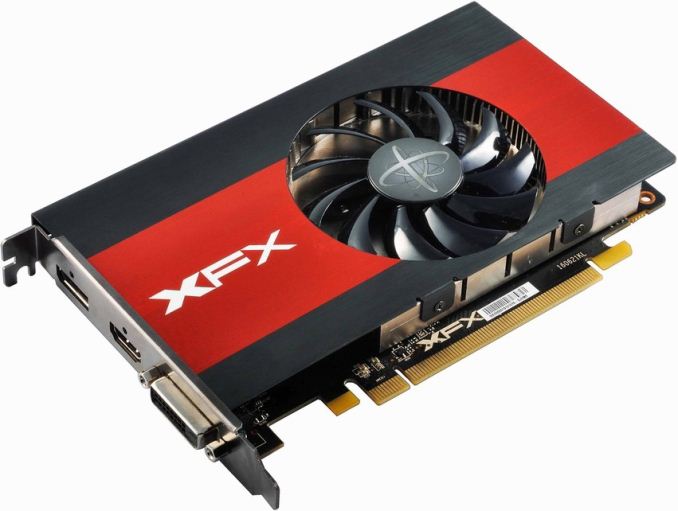
The key selling points of the XFX Radeon RX 460 Slim Single Slot Design graphics cards are their short length and uncommon single-slot width. The cards are just 170 mm long and thus are fully compatible with Mini-ITX builds. In addition, they can fit into densely packed systems that do not have a lot of spare space inside for a more traditional double-wide card. Furthermore the cards as sub-75W, and consequently do not require any auxiliary power connectors, which means they can be used to upgrade PCs whose PSUs don’t offer those connectors.

XFX Radeon RX 460 Slim Single Slot Design Graphics Cards
  RX-460P4TFG5 RX-460P2TFG5
GPU AMD Polaris 11
Stream Processors 896
Texture Units 56
ROPs 16
Core Clock (MHz) 1090
Boost Clock (MHz) 1220
Memory Capacity 4 GB 2 GB
Type GDDR5
Clock 7 Gbps
Bus Width 128 bit
Outputs DisplayPort 1 × DisplayPort 1.4
DVI 1 × DVI-D
HDMI 1 × HDMI 2.0b
TFLOPS (FP32) Up to 1.95
TDP 75 W
Launch Date 2/2017 unknown
Additional Information Link Link

The XFX Radeon RX 460 Slim Single Slot Design graphics cards with 4 GB of GDDR4 memory are already available from Amazon and Newegg for $167.99 and $139.99 (this is AMD’s MSRP for the RX 460 4 GB), respectively. The 2 GB version of the card is missing from retail, but it should hit the market eventually.

One of the images in the gallery courtesy of Newegg.

Related Reading:

XFX Starts to Sell Single-Slot Mini-ITX Radeon RX 460 Slim Graphics Cards

XFX Starts to Sell Single-Slot Mini-ITX Radeon RX 460 Slim Graphics Cards

XFX has quietly started to sell its slim Radeon RX 460 video cards, which use a single-slot cooling system and can fit into a Mini-ITX computer. The cards features 2 or 4 GB of memory depend on SKU, as well as three display connectors, making them suitable for SFF and HTPC builds. Pricing of the cards is in line with AMD’s recommendations at around $140.

The XFX Radeon RX 460 Slim Single Slot Design lineup consists of two graphics adapters carrying 2 or 4 GB of GDDR5 memory (operating at up 7 GT/s). The card ships with a 1220 MHz GPU boost clock – so XFX hasn’t needed to make any sacrifices when it comes to top clockspeeds – and like every other RX 460 on the market we’re looking at a cut-down version of the afformentioned Polaris 11 GPU (896 stream processors). The GPU is cooled by a relatively large cooling system featuring an aluminum heatsink with an 80- or a 90-mm fan at its center. When it comes to connectivity, the cards have one DL-DVI-D port, one DisplayPort 1.4, and one HDMI 2.0b port.

The AMD Polaris 11 GPU supports a contemporary feature-set via the DirectX 12 and Vulkan APIs. What’s more, the graphics chip features hardware-accelerated decoding and encoding of HEVC (H.265) and VP9 video at 4Kp60, as well as HDR10 video output and HDCP 2.2 — all important capabilities for HTPCs. Last, but not least, performance of the GPU in graphics applications is considerably higher compared to most of today’s iGPUs and thus the new boards can be used to upgrade various OEM PCs.

The key selling points of the XFX Radeon RX 460 Slim Single Slot Design graphics cards are their short length and uncommon single-slot width. The cards are just 170 mm long and thus are fully compatible with Mini-ITX builds. In addition, they can fit into densely packed systems that do not have a lot of spare space inside for a more traditional double-wide card. Furthermore the cards as sub-75W, and consequently do not require any auxiliary power connectors, which means they can be used to upgrade PCs whose PSUs don’t offer those connectors.

XFX Radeon RX 460 Slim Single Slot Design Graphics Cards
  RX-460P4TFG5 RX-460P2TFG5
GPU AMD Polaris 11
Stream Processors 896
Texture Units 56
ROPs 16
Core Clock (MHz) 1090
Boost Clock (MHz) 1220
Memory Capacity 4 GB 2 GB
Type GDDR5
Clock 7 Gbps
Bus Width 128 bit
Outputs DisplayPort 1 × DisplayPort 1.4
DVI 1 × DVI-D
HDMI 1 × HDMI 2.0b
TFLOPS (FP32) Up to 1.95
TDP 75 W
Launch Date 2/2017 unknown
Additional Information Link Link

The XFX Radeon RX 460 Slim Single Slot Design graphics cards with 4 GB of GDDR4 memory are already available from Amazon and Newegg for $167.99 and $139.99 (this is AMD’s MSRP for the RX 460 4 GB), respectively. The 2 GB version of the card is missing from retail, but it should hit the market eventually.

One of the images in the gallery courtesy of Newegg.

Related Reading:
Sony Announces SF-G UHS-II SD Cards: Up to Nearly 300 MB/s Read/Write Performance

Sony Announces SF-G UHS-II SD Cards: Up to Nearly 300 MB/s Read/Write Performance

Sony has announced its new lineup of SD cards for advanced 4K/8K, DSLR, and mirrorless cameras. The new SF-G-series memory cards use the UHS-II bus and one of Sony’s proprietary technologies to offer the company’s highest read/write performance to date — up to nearly 300 MB/s. The cards will hit the market in the coming months.

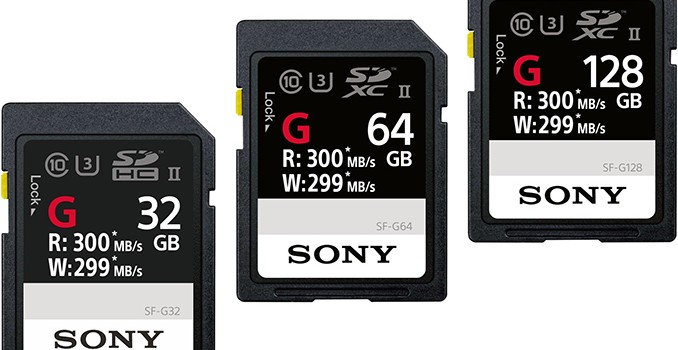
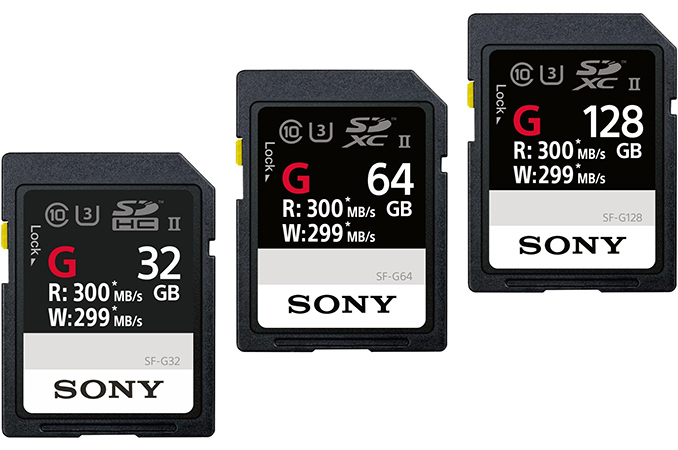
The Sony SF-G-series memory cards will be available in 32 GB (SDHC), 64 GB (SDXC), and 128 GB (SDXC) configurations. The key selling point of the new Sony SF-G cards is their performance: up to 300 MB/s read speed and up to 299 MB/s write speed, which a quick look finds is around 15% faster compared to competing products (such as the SanDisk Extreme PRO SD UHS-II or the Lexar Professional 2000x UHS-II, both of which offer up to 260 MB/s writes). The new cards from Sony are compatible with various types of SD-supporting devices (cameras, card readers, etc.), but to take full advantage of their speed one needs a device that fully supports the UHS-II bus and has the extra pins the wider bus requires.

Sony is not reveaing how they’re getting up to 299 MB/s sequential write performance in an SD card, instead only saying that it is enabled by its firmware. One possibility is that the cards use NAND flash memory with very large block sizes (supported by the SD 5.0 standard), which helps to boost write performance. In addition, the NAND controller inside the card may have a special pSLC cache with very fast writes and rather low usable capacities of the devices imply on that, but this could be verified only by testing one of these products.

Sony UHS-II SD Cards at Glance
  32 GB
SF-G32
64 GB
SF-G64
128 GB
SF-G128
Usable Capacity 28.8 GB 57.6 GB 115.2 GB
Read Speed up to 300 MB/s
Write Speed up to 299 MB/s
Minimum Sequential Write Speed 30 MB/s
Interface UHS-II
Availability Spring 2017
SDA Labels UHS-II, Class 10, U3

The new cards from Sony carry the Class 10 and U3 labels to show that their performance does not drop below 10 and 30 MB/s when used with those standards’ respective workloads. Being positioned for professional use, the Sony SF-G cards are also waterproof, static-proof, temperature-proof, and shock-proof, which is beneficial for people who travel a lot and/or have to use memory cards in tough conditions. In case the data on cards is lost, Sony supplies its File Rescue tool with them.

Sony’s SF-G-series SDXC cards will be available this spring. Pricing is to be determined, but it will vary depending on capacities. In addition to the flash memory cards, Sony will also offer its clients a UHS-II-capable MRW-S1 card reader with USB 3.0 interface, whose price is also unknown.

Related Reading:

Sony Announces SF-G UHS-II SD Cards: Up to Nearly 300 MB/s Read/Write Performance

Sony Announces SF-G UHS-II SD Cards: Up to Nearly 300 MB/s Read/Write Performance

Sony has announced its new lineup of SD cards for advanced 4K/8K, DSLR, and mirrorless cameras. The new SF-G-series memory cards use the UHS-II bus and one of Sony’s proprietary technologies to offer the company’s highest read/write performance to date — up to nearly 300 MB/s. The cards will hit the market in the coming months.

The Sony SF-G-series memory cards will be available in 32 GB (SDHC), 64 GB (SDXC), and 128 GB (SDXC) configurations. The key selling point of the new Sony SF-G cards is their performance: up to 300 MB/s read speed and up to 299 MB/s write speed, which a quick look finds is around 15% faster compared to competing products (such as the SanDisk Extreme PRO SD UHS-II or the Lexar Professional 2000x UHS-II, both of which offer up to 260 MB/s writes). The new cards from Sony are compatible with various types of SD-supporting devices (cameras, card readers, etc.), but to take full advantage of their speed one needs a device that fully supports the UHS-II bus and has the extra pins the wider bus requires.

Sony is not reveaing how they’re getting up to 299 MB/s sequential write performance in an SD card, instead only saying that it is enabled by its firmware. One possibility is that the cards use NAND flash memory with very large block sizes (supported by the SD 5.0 standard), which helps to boost write performance. In addition, the NAND controller inside the card may have a special pSLC cache with very fast writes and rather low usable capacities of the devices imply on that, but this could be verified only by testing one of these products.

Sony UHS-II SD Cards at Glance
  32 GB
SF-G32
64 GB
SF-G64
128 GB
SF-G128
Usable Capacity 28.8 GB 57.6 GB 115.2 GB
Read Speed up to 300 MB/s
Write Speed up to 299 MB/s
Minimum Sequential Write Speed 30 MB/s
Interface UHS-II
Availability Spring 2017
SDA Labels UHS-II, Class 10, U3

The new cards from Sony carry the Class 10 and U3 labels to show that their performance does not drop below 10 and 30 MB/s when used with those standards’ respective workloads. Being positioned for professional use, the Sony SF-G cards are also waterproof, static-proof, temperature-proof, and shock-proof, which is beneficial for people who travel a lot and/or have to use memory cards in tough conditions. In case the data on cards is lost, Sony supplies its File Rescue tool with them.

Sony’s SF-G-series SDXC cards will be available this spring. Pricing is to be determined, but it will vary depending on capacities. In addition to the flash memory cards, Sony will also offer its clients a UHS-II-capable MRW-S1 card reader with USB 3.0 interface, whose price is also unknown.

Related Reading:

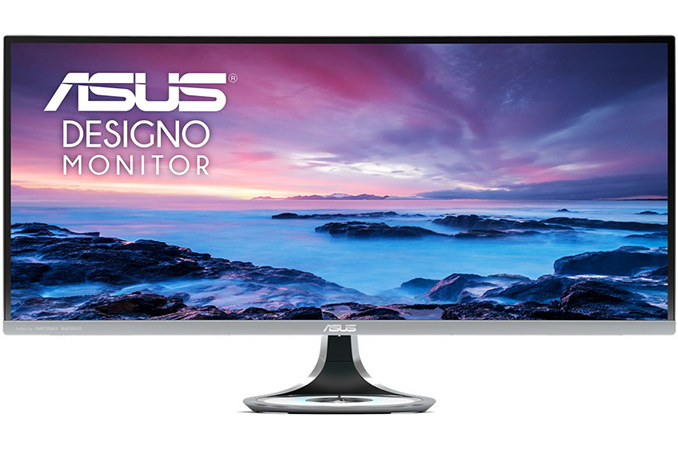
ASUS Designo Curve MX34VQ Incoming: 34" Ultrawide Curved Display with Qi Charging

ASUS Designo Curve MX34VQ Incoming: 34″ Ultrawide Curved Display with Qi Charging

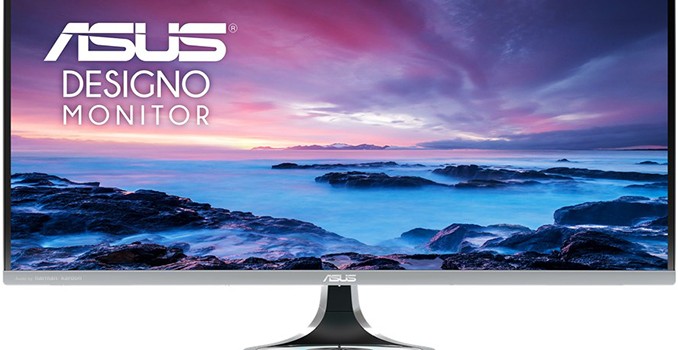
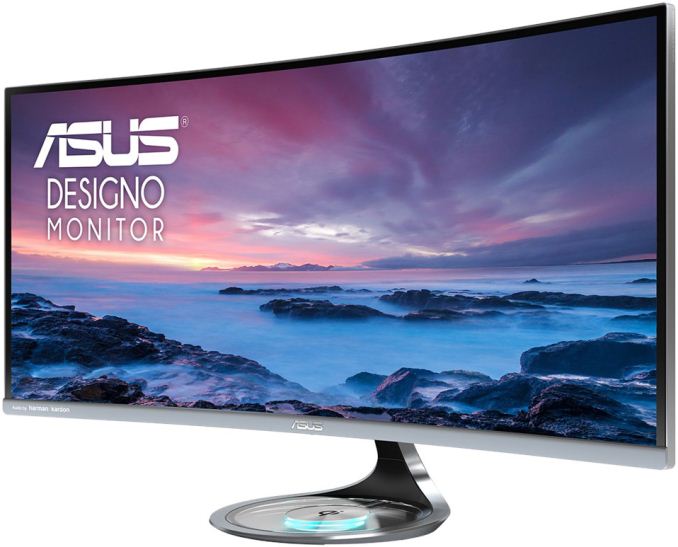
ASUS has started to ship its Designo Curve MX34VQ display that was originally announced in mid-2016. At present, a number of retailers are offering pre-orders on the monitor, starting that it is “coming soon.” The monitor is based around a UWQHD-class panel and is equipped with a wireless Qi charging device as well as an audio sub-system co-developed with Harman Kardon. In addition, the display has a 100 Hz refresh rate, a feature that should appeal to gamers.

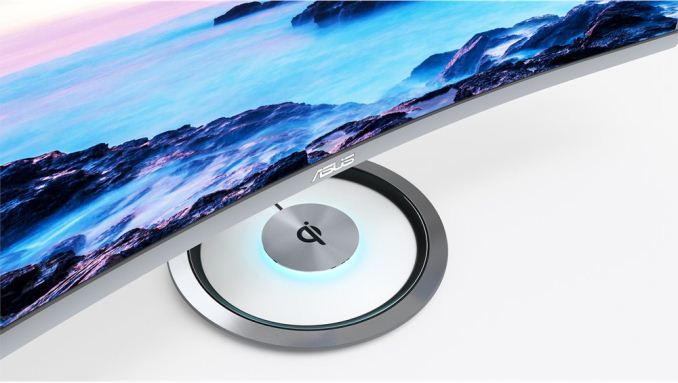
The ASUS Designo Curve MX34VQ has a number of similarities with another ultrawide curved display with a Qi charger, the MX38VQ, which was introduced earlier this year. The two monitors share many design elements, such as ultra-thin bezels, a Harman Kardon-developed audio sub-system consisting of two 8 W speakers, a curved stand made of metal and plastic, and a Qi charger with acrylic elements and blue lighting. Where the two displays differ is in their panels, curvature and other specifications.

The ASUS Designo Curve MX34VQ is based on a 34” VA panel with a 3440×1440 resolution (2.39:1 aspect ratio), offering a maximum brightness of 300 nits, a 3000:1 contrast ratio, a 100 Hz refresh rate, 178°/178° viewing angles, a 4 ms response time, and 1800R curvature. The panel can reproduce 16.7 million colors and appears to be a pretty typical sRGB gamut design. As for connectivity, the Designo Curve MX34VQ monitor has three HDMI 2.0 ports, a DisplayPort 1.2 port (PiP and PBP functions are supported), and a 3.5-mm audio jack.

ASUS Designo Curve MX34VQ
Panel 34″ VA
Resolution 3440 × 1440
Refresh Rate 100 Hz
Response Time 4 ms gray-to-gray
Brightness 300 cd/m²
Contrast 3000:1
Viewing Angles 178°/178° horizontal/vertical
Color Saturation 16.7 million colors (sRGB?)
Pixel Pitch 0.2316 mm
Pixel Density 110 ppi
Inputs 1 x DisplayPort 1.2 (HDCP)
3 x HDMI 2.0 (HDCP)
Qi Wireless Charging 5W/1A with aurora lighting
Audio 8 W × 2
Harmon/Kardon
Launch Price $799 (?)

The ASUS Designo Curve MX34VQ can be pre-ordered from Amazon and B&H for $799, which seems to be its official price. If that does end up being the official price then it’ll be a bit lower than I had initially expected, given the stylish design and rather decent specifications. For comparison, similar curved ultrawide monitors without Qi support have tended to retail for $899 and higher. In any case, the exact availability date is unknown, but with pre-orders opening up it’s reasonable to assume that the MX34VQ will finally hit the shelves in the coming weeks.

Related Reading: