
Vik


Hands On With the Huawei Honor 6X

Hands On With the Huawei Honor 6X

Last year at CES, Honor announced a new mid-range smartphone, the Honor 5X, for the US market that aimed to bring premium smartphone features to a lower price point. The SoC and display were in line with expectations given the price, but it also had an aluminum unibody design, a fairly good camera, and a fingerprint scanner that, at the time, were mostly seen in high-end designs costing ~600 USD rather than ~250 USD.

This year at CES 2017, Huawei announced that it’s bringing the Honor 6X to the US, which includes several improvements over its predecessor. It still uses an aluminum unibody construction, but it feels much more sturdy than the Honor 5X, giving it a more premium feel. The rounded corners and sides make it comfortable to hold, but also a little slippery when combined with the sandblasted finish.

The Honor 6X still uses plastic RF windows along the top and bottom on the back, like so many other Huawei designs. The plastic has a similar texture to the metal back, but the color is a little off, interrupting the smooth lines and otherwise attractive design.

The capacitive fingerprint sensor on the back supports EMUI’s “touch and hold” and slide gestures, which allow you to optionally snap a photo, answer a call, or stop an alarm by holding a finger to the sensor. Sliding a finger vertically across the sensor lowers and raises the notification shade.

There’s a single-piece volume rocker and power button on the right edge that give a decent click when pressed, and there’s a 3.5mm headphone jack and noise cancelling microphone on the top edge. It’s a bit puzzling to see a microUSB port on the bottom as USB Type-C is pretty ubiquitous at this point. To its right is the single downward firing speaker.

The entire front is covered in glass, which is slightly bevelled along the edges. A plastic screen protector comes pre-applied, although it does not reach all the way to the edges. The 5.5-inch 1080p IPS LCD display has a standard sRGB color gamut and a rather cool white point that gives the screen a blue tint. Huawei lists the peak brightness at 450 nits.

  Huawei Honor 6X Huawei Honor 5X
SoC HiSilicon Kirin 655

4x Cortex-A53 @ 2.1GHz
4x Cortex-A53 @ 1.7GHz
Mali-T830MP2

Qualcomm Snapdragon 616

4x Cortex-A53 @ 1.5GHz
4x Cortex-A53 @ 1.2GHz
Adreno 405

RAM 3GB / 4GB LPDDR3-1866 2GB LPDDR3-1600
NAND 32GB / 64GB (eMMC 5.1)
+ microSD
16GB (eMMC 4.51)
+ microSD
Display 5.5-inch 1920×1080 IPS LCD 5.5-inch 1920×1080 IPS LCD
Dimensions 150.9 x 76.2 x 8.2 mm
162 grams
151.3 x 76.3 x 8.15 mm
158 grams
Modem HiSilicon Balong (Integrated)
2G / 3G / 4G LTE
Qualcomm X5 (Integrated)
2G / 3G / 4G LTE (Category 4)
SIM Size 2x NanoSIM 1x NanoSIM, 1x MicroSIM
(dual standby)
Front Camera 8MP, 1/4″ Sony IMX219 Exmor R, f/2.0 5MP, 1/4″ OmniVision OV5648, 1.4 µm pixels, f/2.4
Rear Camera Primary:
12MP, 1/2.9” Sony IMX386 Exmor RS, 1.25µm pixels, f/2.2, PDAF, HDR, LED flash

Depth:
2MP, 1/5” OmniVision OV2680, 1.75µm pixels

13MP, 1/3.06” Sony IMX214 Exmor RS, 1.12µm pixels, f/2.0, AF, HDR, LED flash
Battery 3340 mAh
non-replaceable
3000 mAh (11.4Wh)
non-replaceable
Connectivity 802.11b/g/n (2.4GHz), BT 4.1, GPS/GNSS, microUSB 2.0 802.11b/g/n (2.4GHz), BT 4.1, GPS/GNSS, microUSB 2.0
Launch OS Android 6.0 with EMUI 4.1 Android 5.1.1 with EMUI 3.1

Inside is a Kirin 655 SoC paired with either 3GB or 4GB of LPDDR3 RAM. It’s interesting to note how Huawei is becoming more vertically integrated, using its Kirin SoCs in more of its products. With eight Cortex-A53 CPU cores and a 16nm FinFET process, the Kirin 655 should provide good power efficiency.

Internal storage gets a boost from 16GB in the Honor 5X to either 32GB or 64GB, which can be expanded with a microSD card. The 6X also gets an 11% larger battery, but unfortunately the wireless connectivity remains the same, only supporting up to 2.4GHz 802.11n Wi-Fi.

On the camera side of things, the 12MP rear camera has slightly larger pixels than most phones in this segment, and also adds some neat features like PDAF that are generally only seen in higher-end devices. The depth camera is nothing particularly special here and as a result the setup looks a lot like the HTC One M8 from previous generations, especially when it comes to background defocus performance as the accuracy with which it does the background blur and how it handles progressive defocus is not particularly clean. Thankfully unlike the Honor 5X which had a fairly low frame rate preview the Honor 6X does a lot better here and has much better focus thanks to the addition of PDAF. It’s also fairly obvious that the luminance noise reduction is fairly aggressive here but we’ll have to see just how much of a problem it really is with a full review.

The Honor 6X will be available in gold, gray, and silver with a few different memory and storage configurations. The 3GB version, which starts at $249.99, will be available for pre-order in the US on January 4 and will begin shipping January 15. It will also be available in France, Germany, Italy, Spain, United Kingdom, the Netherlands, Russia, Malaysia, the United Arab Emirates, and Saudi Arabia starting January 4 for 249 EUR. The 4GB version won’t be available until later in the first quarter and will cost $299.99 or 299 EUR.


NVIDIA Launches GeForce GTX 1050 TI & GTX 1050 For Laptops

NVIDIA Launches GeForce GTX 1050 TI & GTX 1050 For Laptops

With CES kicking off this week, we have a spate of laptop-related announcements. As Intel is launching their Kaby Lake quad core (4+2) SKUs for laptops, so too are new video cards are being launched to use in those systems. To that end, today NVIDIA i…

Linksys Enters Mesh Wi-Fi Market with Velop Whole Home Wi-Fi, Expands MAX-STREAM Lineup

Linksys Enters Mesh Wi-Fi Market with Velop Whole Home Wi-Fi, Expands MAX-STREAM Lineup

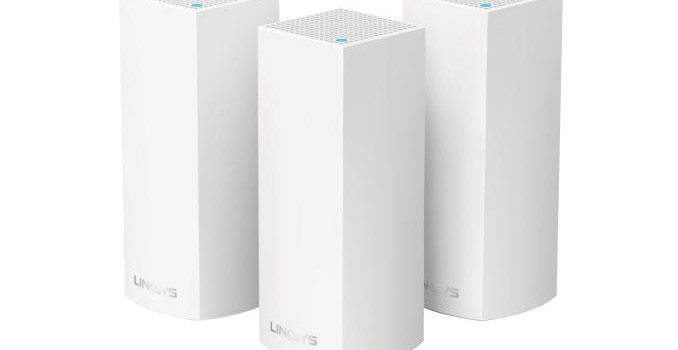
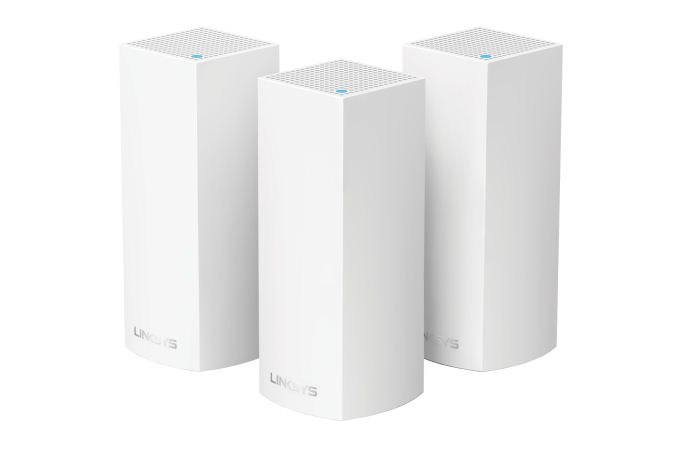
Linksys has updates in three different product lines as part of CES 2017. The new product line is the Velop Whole Home W-Fi mesh networking kit. Linksys is definitely late to the mesh party, but, the delay has enabled them to put in the most important set of features present in the currently available solutions.

In the current market, Netgear’s Orbi is undoubtedly one of the leading ‘mesh’ solutions. By placing a dedicated backhaul radio (4×4 802.11ac), and restricting the arrangement of the primary router and satellites to a star topology, Orbi provided excellent performance numbers. The adoption of Qualcomm Atheros’s Wi-Fi SON firmware features also enabled a good user experience.

Linksys adopts a similar platform on the software side as well as high-level operation (one channel for backhaul and another for client communication). On the hardware side, the main SoC is still the Qualcomm Atheros IPQ 4019. However, instead of having a 4×4 802.11ac backhaul radio using the QCA9984 like the Orbi, Linksys has opted to use the more economical 2×2 802.11ac QCA9886 radio. This makes the solution an AC2200-class one (we are seeing many routers in this class being launched at CES 2017). Like the Netgear Orbi, the Linksys Velop also supports beamforming, Wave 2 MU-MIMO capabilities, and can advertise itself as a ‘tri-band’ router.

Interestingly, the members in a Velop installation can have either wired or wireless backhaul. The wireless backhaul can be dynamically chosen based on the available communication channels (either of the 5 GHz bands or the 2.4 GHz band). This allows configuration in multiple mesh modes – point-to-point, real mesh, star, line, or tree. The self-healing aspects of Wi-Fi SON enable the most suitable path for communication in the case of a broken connection.

In order to enable better performance with suitable antenna placement, the Velop units, like the Orbi, adopt a tower design. The industrial design, like that of most other mesh Wi-Fi kits, is attractive enough to not stow away in a closet (something that is very important for a good mesh Wi-Fi experience). Linksys is making the Velop available in 1-, 2- and 3-packs, starting today. The three kits are priced at $200, $350, and $500.

Given the hardware configuration and radio details, it looks like the Netgear Orbi might still take the performance crown for scenarios requiring around 2000 – 4000 sq. ft. of coverage. However, Velop brings across some very interesting features to the mesh market. In terms of ease of use, the product follows a mobile-first setup and usage process, as well as Amazon Alexa integration – features that are apt for the target market. The technical transparency also provides us with enough insight into the scenarios and use-cases in which it might be an effective option. Particularly, if a wired backhaul is possible, the Velop could turn out to be a very good candidate to extend Wi-Fi reach. Additional insights into the real-world performance of the Velop kits is definitely something to look out for in the near future.

In other Linksys CES 2017 news, the MAXSTREAM lineup has gained some additional members – the Max-Stream AC2200 Tri-Band MU-MIMO Gigabit Router (EA8300) is the single router version of the Velop platform. The same SoC and radios are used to provide two 5 GHz SSIDs and one 2.4 GHz SSID. The router comes with 256MB of DDR3 RAM and 256MB of flash memory. Availability is slated for Spring 2017, with a MSRP of $200.

The Linksys EA8300

The Max-Stream AC4000 Tri-Band MU-MIMO Gigabit Router (EA9300) is one of the first routers based on the next-generation Broadcom network processor with a 1.8 GHz ARM v8 quad-core CPU, the BCM4908. It supports the Broadcom XStream configuration (two 5 GHz bands and one 2.4 GHz band) with Wave 2 MU-MIMO capabilities. The radio used in the EA9300 is the Broadcom BCM4365E. This appears to be a 3×3 variant of the BCM4366. Note that this radio supports the non-standard 1024 QAM for a 25% higher throughput number (1625 Mbps in each 5 GHz band for a 3×3 configuration, compared to 1300 Mbps for the standard 3×3 configuration with 80 MHz channels). The 2.4 GHz band also supports up to 750 Mbps with this proprietary scheme, allowing for the router to be advertised as AC4000 (1625 + 1625 + 750 Mbps). Availability is slated for Spring 2017, with a MSRP of $300.

The Linksys EA9300

Both the EA8300 and the EA9300 work with Amazon Alexa for a voice-activated experience. Linksys has put extra focus in the Android / iOS apps for a mobile-first setup and management process. They are also designed to provide a seamless roaming experience with a single SSID and easy connection to the Max-Stream lineup of range extenders.

Linksys is also bringing a Wave 2 MU-MIMO 2×2 USB 3.0 WLAN adapter to the market with the WUSB6400M. It is also slated to come to the market in Spring 2017. The MSRP will be $60. Additional MU-MIMO client nodes can help consumers take full advantage of their MU-MIMO routers. These types of USB adapters are important for the MU-MIMO ecosystem.

On the cable modem side, Linksys is also planning to launch a DOCSIS 3.1 version – the CM3132 with 32 downstream and 8 upstream channels. In terms of the core platform, it is similar to Netgear’s CM1000, which is already in the market. However, the CM3132 differentiates itself with the availability of two Ethernet ports (unlike the single one in the Netgear CM1000). Availability is slated for Spring 2017, and the MSRP will be $200.

AMD Announces FreeSync 2: Easier & Lower Latency HDR Gaming

AMD Announces FreeSync 2: Easier & Lower Latency HDR Gaming

Though they don’t get quite as much ongoing attention as video cards due to their slower update cadence, one of the nicer innovations in the last few years in the gaming hardware ecosystem has been variable refresh displays. By taking displays o…