Vik


HTC Announces the HTC Bolt - A Sprint-Exclusive Smartphone for LTE Plus

HTC Announces the HTC Bolt – A Sprint-Exclusive Smartphone for LTE Plus

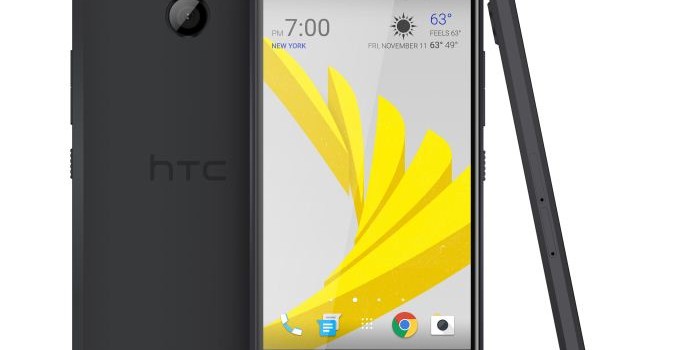
Early this morning HTC took the wraps off of a new phone that will be exclusive to Sprint, the Bolt. Not to be confused with the old HTC Thunderbolt, the Bolt is a somewhat less than flagship phone that roughly follows the same path as last year’s HTC One A9, offering another take on a high-end phone design with a slightly different configuration. Coupled with its change in hardware, the Bolt also serves as a network showcase of sorts for Sprint and their latest-generation LTE Plus network.

  HTC One M9 HTC 10 HTC Bolt
SoC Snapdragon 810
4x Cortex-A57 @ 2Ghz
4x Cortex-A53 @ 1.5GHz
Adreno 430

(TSMC 20SoC)

Snapdragon 820
2x Kryo @ 2.15GHz
2x Kryo @ 1.6GHz
Adreno 530

(Samsung 14LPP)

Snapdragon 810
4x Cortex-A57 @ 2Ghz
4x Cortex-A53 @ 1.5GHz
Adreno 430

(TSMC 20SoC)

RAM 3GB LPDDR4 4GB LPDDR4 3GB LPDDR4
NAND 32GB NAND + microSD 32/64GB NAND + microSD 32 NAND + microSD
Display 5” 1080p
Super LCD3
5.2” 1440p
Super LCD5
5.5” 1440p
Super LCD3
Network 2G / 3G / 4G LTE (Category 6/9 LTE) 2G / 3G / 4G LTE (Category 6/9 LTE) 2G / 3G / 4G LTE (Category 6/9 LTE)
Dimensions 144.6 x 69.7 x 9.61mm, 157g 145.9 x 71.9 x 3-9mm, 161g 153.6 x 77.3 x 3.7-8.1mm, 174g
Camera 20MP Rear Facing f/2.2, 1.12µm, 1/2.4″ (Toshiba T4KA7) 12MP Rear Facing w/ OIS and laser AF, f/1.8, 1.55µm, 1/2.3″
(Sony IMX377)
16MP Rear Facing w/ OIS and PDAF, f/1.7
4MP Front Facing, f/2.0, 2µm
(OmniVision OV4688)
5MP Front Facing w/ OIS, f/1.8, 1.34µm
(Samsung S5K4E6)
8MP Front Facing
Battery 2840 mAh (10.93 Whr) 3000 mAh (11.55 Whr) 3200 mAh (12.32 Whr)
OS Android 5 w/ HTC Sense 7 Android 6 w/ HTC Sense Android 7 w/ HTC Sense
Connectivity 1×1 802.11a/b/g/n/ac,
BT 4.1, (BCM4356),
USB2.0, GPS/GLONASS, NFC
2×2 802.11a/b/g/n/ac,
BT 4.2, (BCM4359)
USB-C, USB3.1,
GPS/GLONASS (US, JP)
GPS/GLONASS/Beidou (EU, Asia)
NFC
802.11a/b/g/n/ac,
BT 4.1, NFC,
USB-C (2.0)
GPS/GLONASS
Fingerprint Sensor N/A Capacitive Capacitive
SIM NanoSIM NanoSIM NanoSIM
Launch Price $649 $699 $600

Starting as always with the specs, while it’s obvious from the announcement that the Bolt is not meant to be a true competitor to the 10, I must admit the choice of hardware surprised me. HTC has opted to go with Qualcomm’s struggling (and at this point relatively old) Snapdragon 810 SoC, a staple of 2015 flagship phones that combined 4 ARM Cortex-A57 cores with 4 ARM Cortex-A53 cores and built on TSMC’s 20nm process. The fact that this phone is meant to be below the HTC 10 rules out Snapdragon 820. And HTC stated that one of Sprint’s requirements was the ability to do 3x carrier aggregation, which rules out the Snapdragon 600 series. The Bolt’s development cycle was also shorter than usual, so HTC needed to stick with an SoC it had previous experience with. Using the Snapdragon 810 does give us a good idea of what to expect for phone performance, and performance stability, though.

In terms of physical design, the Bolt is not much different than the 10, and I imagine that was intentional. With a 5.5-inch 2560×1440 display the phone is larger than the HTC 10, but it retains the former’s general curved design and button placement. This gives HTC’s latest phones a common style to them, which for HTC helps them stand apart from the likes of Samsung and the other Android handset vendors. The display itself is one of HTC’s Super LCD3 panels, the same generation as the HTC One M9.

The big news for HTC and Sprint here is of course the cellular connectivity. Backed by the Snapdragon 810’s integrated X10 mode, the Bolt is meant to showcase Sprint’s LTE Plus network. LTE Plus specifically takes advantage of carrier aggregation, with Sprint offering LTE on 800MHz, 1900MHz, and their recently recovered 2.5GHz spectrum. In the case of the Bolt, this allows for aggregating up to 3 20MHz channels over those bands. And though it’s beyond the scope of a news article, I’m curious as to how well 2.5GHz is working in practice for Sprint, given the greater hurdles that come from its reduced ability to penetrate buildings.

Otherwise many of the phone’s features and specifications are consistent with other high-end Android phones, including a fingerprint sensor and USB Type-C connectivity (albeit only 2.0 speeds). Meanwhile, relative to the HTC 10, HTC has gone with a higher resolution rear camera here, utilizing a 16MP sensor versus the HTC 10’s 12MP. Though specific sensor information isn’t available, the overall camera module is on the higher end, incorporating OIS and phase-detection auto focus. Further in the Bolt’s favor, the phone is IP57 rated. This is a rating we don’t see too often, and relative to the more common IP67 means that it has the same degree of water resistance as some other phones, but lower dust resistance, merely being protected against dust, but not completely sealed against it.

Powering the phone is a size-appropriate 3200mAh battery, which means we’re looking at a 7% capacity increase versus the battery found in the 5.2-inch HTC 10. And as this is a Snapdragon 810-based phone, it supports Qualcomm’s Quick Charge 2.0 rapid charging technology. However on the other hand, inexplicably missing is a 3.5mm headphone jack; despite the fact that this phone is larger than HTC’s other phones, the company has gone the Apple route and removed it. Instead HTC offers a set of USB-C headphones, otherwise you’ll need to track down a USB-C audio adapter. On the plus side, however, the phone does feature a microSD card slot, for users who find the single 32GB configuration to be too small.

Finally, the Bolt is the first HTC phone that will ship with Android 7. As usual, HTC is applying their Sense UI to Android, which has itself been upgraded to keep up with the latest release of Android.

Wrapping things up, as a Sprint exclusive, Sprint will of course be handling distribution. The carrier is listing the phone at $600 ($25 x 24 months), and while the Bolt is not being positioned as a flagship-level phone, the pricing unfortunately isn’t going to be too far off. As we noted in yesterday’s buyer’s guide, you can already find the HTC 10 for $549, which makes the Bolt the de facto more expensive phone, a somewhat awkward position, all things considered.

Gallery: HTC Bolt

HTC Announces the HTC Bolt - A Sprint-Exclusive Smartphone for LTE Plus

HTC Announces the HTC Bolt – A Sprint-Exclusive Smartphone for LTE Plus

Early this morning HTC took the wraps off of a new phone that will be exclusive to Sprint, the Bolt. Not to be confused with the old HTC Thunderbolt, the Bolt is a somewhat less than flagship phone that roughly follows the same path as last year’s HTC One A9, offering another take on a high-end phone design with a slightly different configuration. Coupled with its change in hardware, the Bolt also serves as a network showcase of sorts for Sprint and their latest-generation LTE Plus network.

  HTC One M9 HTC 10 HTC Bolt
SoC Snapdragon 810
4x Cortex-A57 @ 2Ghz
4x Cortex-A53 @ 1.5GHz
Adreno 430

(TSMC 20SoC)

Snapdragon 820
2x Kryo @ 2.15GHz
2x Kryo @ 1.6GHz
Adreno 530

(Samsung 14LPP)

Snapdragon 810
4x Cortex-A57 @ 2Ghz
4x Cortex-A53 @ 1.5GHz
Adreno 430

(TSMC 20SoC)

RAM 3GB LPDDR4 4GB LPDDR4 3GB LPDDR4
NAND 32GB NAND + microSD 32/64GB NAND + microSD 32 NAND + microSD
Display 5” 1080p
Super LCD3
5.2” 1440p
Super LCD5
5.5” 1440p
Super LCD3
Network 2G / 3G / 4G LTE (Category 6/9 LTE) 2G / 3G / 4G LTE (Category 6/9 LTE) 2G / 3G / 4G LTE (Category 6/9 LTE)
Dimensions 144.6 x 69.7 x 9.61mm, 157g 145.9 x 71.9 x 3-9mm, 161g 153.6 x 77.3 x 3.7-8.1mm, 174g
Camera 20MP Rear Facing f/2.2, 1.12µm, 1/2.4″ (Toshiba T4KA7) 12MP Rear Facing w/ OIS and laser AF, f/1.8, 1.55µm, 1/2.3″
(Sony IMX377)
16MP Rear Facing w/ OIS and PDAF, f/1.7
4MP Front Facing, f/2.0, 2µm
(OmniVision OV4688)
5MP Front Facing w/ OIS, f/1.8, 1.34µm
(Samsung S5K4E6)
8MP Front Facing
Battery 2840 mAh (10.93 Whr) 3000 mAh (11.55 Whr) 3200 mAh (12.32 Whr)
OS Android 5 w/ HTC Sense 7 Android 6 w/ HTC Sense Android 7 w/ HTC Sense
Connectivity 1×1 802.11a/b/g/n/ac,
BT 4.1, (BCM4356),
USB2.0, GPS/GLONASS, NFC
2×2 802.11a/b/g/n/ac,
BT 4.2, (BCM4359)
USB-C, USB3.1,
GPS/GLONASS (US, JP)
GPS/GLONASS/Beidou (EU, Asia)
NFC
802.11a/b/g/n/ac,
BT 4.1, NFC,
USB-C (2.0)
GPS/GLONASS
Fingerprint Sensor N/A Capacitive Capacitive
SIM NanoSIM NanoSIM NanoSIM
Launch Price $649 $699 $600

Starting as always with the specs, while it’s obvious from the announcement that the Bolt is not meant to be a true competitor to the 10, I must admit the choice of hardware surprised me. HTC has opted to go with Qualcomm’s struggling (and at this point relatively old) Snapdragon 810 SoC, a staple of 2015 flagship phones that combined 4 ARM Cortex-A57 cores with 4 ARM Cortex-A53 cores and built on TSMC’s 20nm process. The fact that this phone is meant to be below the HTC 10 rules out Snapdragon 820, but that HTC didn’t use one of Qualcomm’s better received Snapdragon 600 SoCs is unexpected. It also gives us a good idea of what to expect for phone performance, and performance stability.

In terms of physical design, the Bolt is not much different than the 10, and I imagine that was intentional. With a 5.5-inch 2560×1440 display the phone is larger than the HTC 10, but it retains the former’s general curved design and button placement. This gives HTC’s latest phones a common style to them, which for HTC helps them stand apart from the likes of Samsung and the other Android handset vendors. The display itself is one of HTC’s Super LCD3 panels, the same generation as the HTC One M9.

The big news for HTC and Sprint here is of course the cellular connectivity. Backed by the Snapdragon 810’s integrated X10 mode, the Bolt is meant to showcase Sprint’s LTE Plus network. LTE Plus specifically takes advantage of carrier aggregation, with Sprint offering LTE on 800MHz, 1900MHz, and their recently recovered 2.5GHz spectrum. In the case of the Bolt, this allows for aggregating up to 3 20MHz channels over those bands. And though it’s beyond the scope of a news article, I’m curious as to how well 2.5GHz is working in practice for Sprint, given the greater hurdles that come from its reduced ability to penetrate buildings.

Otherwise many of the phone’s features and specifications are consistent with other high-end Android phones, including a fingerprint sensor and USB Type-C connectivity (albeit only 2.0 speeds). Meanwhile, relative to the HTC 10, HTC has gone with a higher resolution rear camera here, utilizing a 16MP sensor versus the HTC 10’s 12MP. Though specific sensor information isn’t available, the overall camera module is on the higher end, incorporating OIS and phase-detection auto focus. Further in the Bolt’s favor, the phone is IP57 rated. This is a rating we don’t see too often, and relative to the more common IP67 means that it has the same degree of water resistance as some other phones, but lower dust resistance, merely being protected against dust, but not completely sealed against it.

Powering the phone is a size-appropriate 3200mAh battery, which means we’re looking at a 7% capacity increase versus the battery found in the 5.2-inch HTC 10. And as this is a Snapdragon 810-based phone, it supports Qualcomm’s Quick Charge 2.0 rapid charging technology. However on the other hand, inexplicably missing is a 3.5mm headphone jack; despite the fact that this phone is larger than HTC’s other phones, the company has gone the Apple route and removed it. Instead HTC offers a set of USB-C headphones, otherwise you’ll need to track down a USB-C audio adapter. On the plus side, however, the phone does feature a microSD card slot, for users who find the single 32GB configuration to be too small.

Finally, the Bolt is the first HTC phone that will ship with Android 7. As usual, HTC is applying their Sense UI to Android, which has itself been upgraded to keep up with the latest release of Android.

Wrapping things up, as a Sprint exclusive, Sprint will of course be handling distribution. The carrier is listing the phone at $600 ($25 x 24 months), and while the Bolt is not being positioned as a flagship-level phone, the pricing unfortunately isn’t going to be too far off. As we noted in yesterday’s buyer’s guide, you can already find the HTC 10 for $549, which makes the Bolt the de facto more expensive phone, a somewhat awkward position, all things considered.

Gallery: HTC Bolt

NVIDIA Announces Record Q3 FY 2017 Results

NVIDIA Announces Record Q3 FY 2017 Results

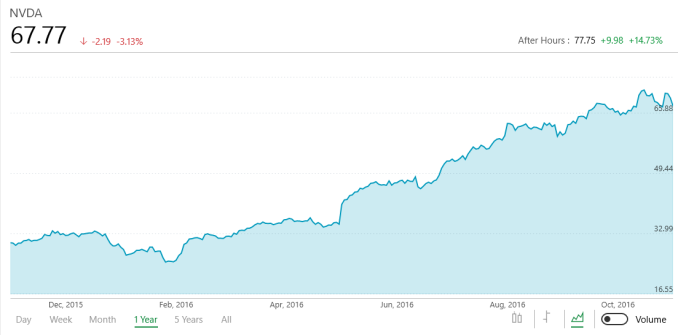
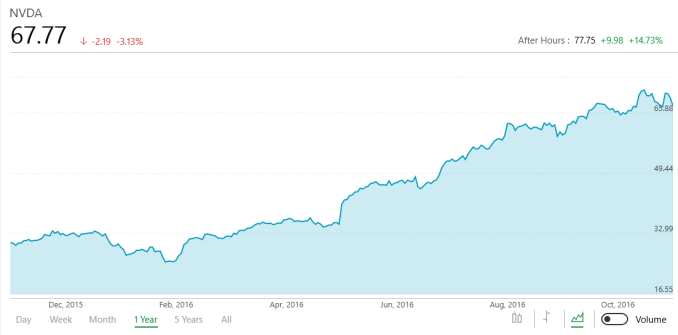
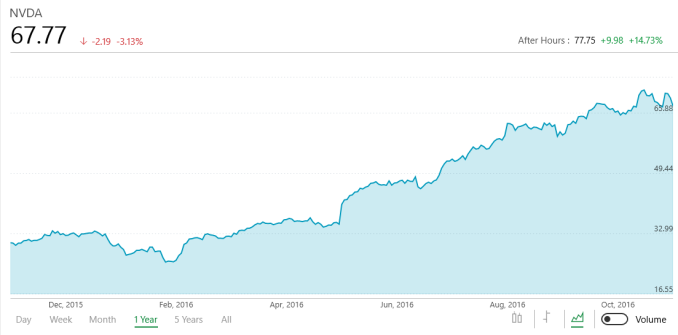
Today NVIDIA announced their fiscal earnings for the third quarter of their 2017 fiscal year (and yes, that’s not a typo). NVIDIA has cracked the $2 billion mark for quarterly revenue, with earnings of $2.004 billion this quarter. This is up an impressive 54% compared to the same quarter last year. This record revenue follows a previous record for Q2, and NVIDIA is forecasting revenue for next quarter of $2.1 billion, plus or minus two percent. With this rate of growth, they will easily surpass their best yearly earnings ever which was $5.01 billion announced in January 2016. They are on pace for close to $7 billion for the year, which is a dramatic increase at a time when the core PC market is in decline. Gross margin for this quarter was up 2.7% year-over-year to 59.0%, and operating income was up 161% to $639 million. Net income for the quarter was $542 million, up 120% over last year, and earnings per share came in at $0.83, up 89% year-over-year.

NVIDIA Q3 2017 Financial Results (GAAP)
  Q3’2017 Q2’2017 Q3’2016 Q/Q Y/Y
Revenue (in millions USD) $2004 $1428 $1305 +40.3% +53.6%
Gross Margin 59.0% 57.9% 56.3% +1.1% +2.7%
Operating Income (in millions USD) $639 $317 $245 +102% +161%
Net Income $542 $261 $246 +108% +120%
EPS $0.83 $0.41 $0.44 +102% +89%

NVIDIA has done a decent job diversifying itself, but it’s core market is still consumer GPU sales. With the launch of Pascal, NVIDIA has maintained a very healthy performance lead, and that has certainly translated into sales. Gaming related sales for this quarter came in at a staggering $1.244 billion, up 63.5% compared to Q3 2016. NVIDIA gained more revenue in the gaming segment this quarter than all of AMD’s Computing and Graphics segment earned in their last quarter. Clearly there was some pent-up demand for the FinFET based GPUs after being on 28 nm for so long. Professional Visualization had a good quarter as well, with revenues of $207 million. That is a 9% increase year-over-year, although they did have a 3% drop in revenue compared to their previous quarter.

With the rise in GPU compute in the datacenter, NVIDIA has aggressively pursued this market, and it is starting to make some real inroads here as well. For Q3 2017, NVIDIA had revenue of $240 million in their Datacenter group, which is up from $82 million a year ago, or a 193% increase in revenue year-over-year. Datacenter revenue is now the second largest segment for NVIDIA, and only a year ago it was half of the professional GPU revenue.

Automotive continues to be a solid performer for NVIDIA too, and they’ve released quite a few SoCs specifically for this market. NVIDIA announced that it has an agreement to supply Tesla Motors the DRIVE PX 2 platform to power a new AutoPilot system in the Model S, X, and upcoming 3. With a maximum TDP of 250 Watts, DRIVE PX 2 casts off the mobile SoC constraints of the previous design, despite still having NVIDIA’s Denver CPU paired with Cortex-A57. With the continued investment in this sector, NVIDIA has seen strong growth here, and revenue for this quarter was $127 million, which is up from $79 million a year ago, or a gain of 60%.

Finally, OEM and IP had earnings of $186 million for the quarter, which is down slightly from the $193 million they earned a year ago, but with the recent announcement that they will power the Nintendo Switch, perhaps they will see some growth here in the future.

NVIDIA Quarterly Revenue Comparison (GAAP)
In millions Q3’2017 Q2’2017 Q3’2016 Q/Q Y/Y
Gaming $1244 $781 $761 +59.3% +63.5%
Professional Visualization $207 $214 $190 -3.3% +8.9%
Datacenter $240 $151 $82 +58.9% +192.7%
Automotive $127 $119 $79 +6.7% +60.8%
OEM & IP $186 $163 $193 +14.1% -3.6%

This entire year has been very good for NVIDIA, but this quarter in particular has seen some very strong growth. The best news for NVIDIA and their investors is that they are not just seeing growth in their diversified markets, although they are doing very well there, but the growth in their core market was incredibly strong as well.

Source: NVIDIA Investor Relations

NVIDIA Announces Record Q3 FY 2017 Results

NVIDIA Announces Record Q3 FY 2017 Results

Today NVIDIA announced their fiscal earnings for the third quarter of their 2017 fiscal year (and yes, that’s not a typo). NVIDIA has cracked the $2 billion mark for quarterly revenue, with earnings of $2.004 billion this quarter. This is up an impressive 54% compared to the same quarter last year. This record revenue follows a previous record for Q2, and NVIDIA is forecasting revenue for next quarter of $2.1 billion, plus or minus two percent. With this rate of growth, they will easily surpass their best yearly earnings ever which was $5.01 billion announced in January 2016. They are on pace for close to $7 billion for the year, which is a dramatic increase at a time when the core PC market is in decline. Gross margin for this quarter was up 2.7% year-over-year to 59.0%, and operating income was up 161% to $639 million. Net income for the quarter was $542 million, up 120% over last year, and earnings per share came in at $0.83, up 89% year-over-year.

NVIDIA Q3 2017 Financial Results (GAAP)
  Q3’2017 Q2’2017 Q3’2016 Q/Q Y/Y
Revenue (in millions USD) $2004 $1428 $1305 +40.3% +53.6%
Gross Margin 59.0% 57.9% 56.3% +1.1% +2.7%
Operating Income (in millions USD) $639 $317 $245 +102% +161%
Net Income $542 $261 $246 +108% +120%
EPS $0.83 $0.41 $0.44 +102% +89%

NVIDIA has done a decent job diversifying itself, but it’s core market is still consumer GPU sales. With the launch of Pascal, NVIDIA has maintained a very healthy performance lead, and that has certainly translated into sales. Gaming related sales for this quarter came in at a staggering $1.244 billion, up 63.5% compared to Q3 2016. NVIDIA gained more revenue in the gaming segment this quarter than all of AMD’s Computing and Graphics segment earned in their last quarter. Clearly there was some pent-up demand for the FinFET based GPUs after being on 28 nm for so long. Professional Visualization had a good quarter as well, with revenues of $207 million. That is a 9% increase year-over-year, although they did have a 3% drop in revenue compared to their previous quarter.

With the rise in GPU compute in the datacenter, NVIDIA has aggressively pursued this market, and it is starting to make some real inroads here as well. For Q3 2017, NVIDIA had revenue of $240 million in their Datacenter group, which is up from $82 million a year ago, or a 193% increase in revenue year-over-year. Datacenter revenue is now the second largest segment for NVIDIA, and only a year ago it was half of the professional GPU revenue.

Automotive continues to be a solid performer for NVIDIA too, and they’ve released quite a few SoCs specifically for this market. NVIDIA announced that it has an agreement to supply Tesla Motors the DRIVE PX 2 platform to power a new AutoPilot system in the Model S, X, and upcoming 3. With a maximum TDP of 250 Watts, DRIVE PX 2 casts off the mobile SoC constraints of the previous design, despite still having NVIDIA’s Denver CPU paired with Cortex-A57. With the continued investment in this sector, NVIDIA has seen strong growth here, and revenue for this quarter was $127 million, which is up from $79 million a year ago, or a gain of 60%.

Finally, OEM and IP had earnings of $186 million for the quarter, which is down slightly from the $193 million they earned a year ago, but with the recent announcement that they will power the Nintendo Switch, perhaps they will see some growth here in the future.

NVIDIA Quarterly Revenue Comparison (GAAP)
In millions Q3’2017 Q2’2017 Q3’2016 Q/Q Y/Y
Gaming $1244 $781 $761 +59.3% +63.5%
Professional Visualization $207 $214 $190 -3.3% +8.9%
Datacenter $240 $151 $82 +58.9% +192.7%
Automotive $127 $119 $79 +6.7% +60.8%
OEM & IP $186 $163 $193 +14.1% -3.6%

This entire year has been very good for NVIDIA, but this quarter in particular has seen some very strong growth. The best news for NVIDIA and their investors is that they are not just seeing growth in their diversified markets, although they are doing very well there, but the growth in their core market was incredibly strong as well.

Source: NVIDIA Investor Relations

Alienware 13 R3: Quad-Core CPU, GeForce GTX 1060, QHD OLED, VR Ready

Alienware 13 R3: Quad-Core CPU, GeForce GTX 1060, QHD OLED, VR Ready

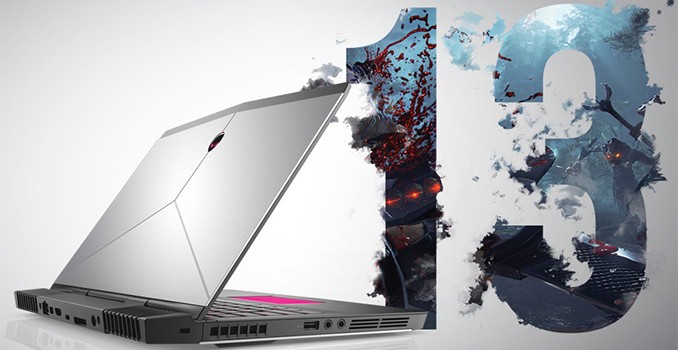
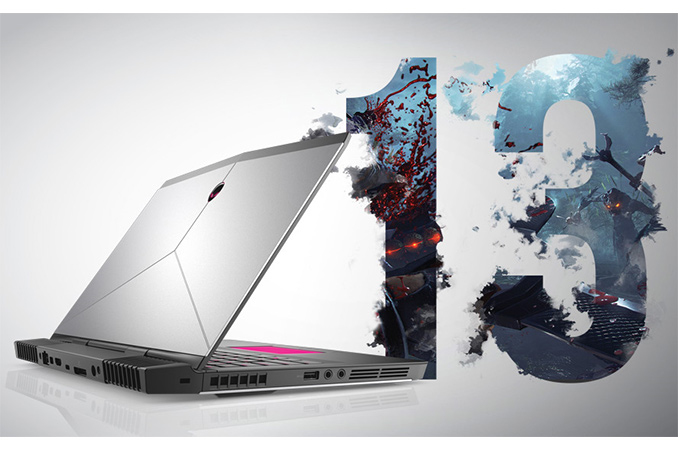
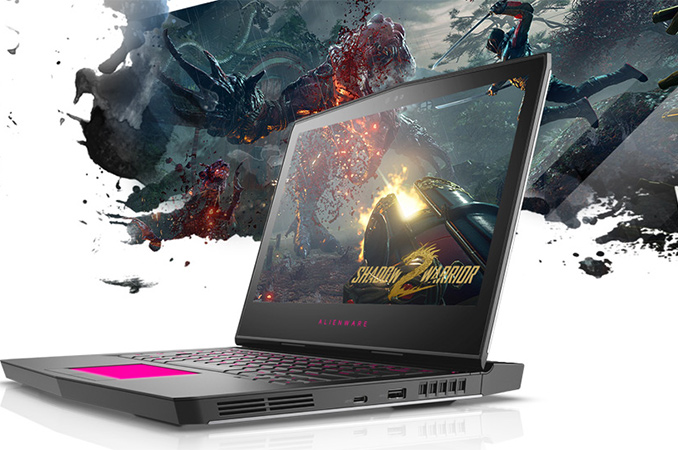
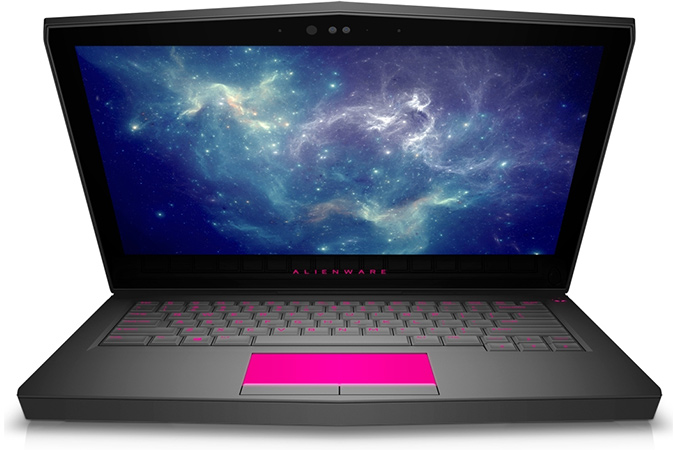
Alienware last week introduced the third generation of its 13” gaming notebooks. The manufacturer describes its new Alienware 13 R3 machines as the world’s first 13-inch laptops capable of handling VR workloads and equips them with appropriate hardware, such as quad-core Intel Core CPU, NVIDIA’s GeForce GTX 1060 GPU, high-end SSDs and the appropriate ports. To appeal to traditional gamers, Alienware also offers an optional QHD OLED display with its 13” notebooks.

Dell’s boutique PC division introduced its first 13” gaming laptop, the Alienware 13, in late 2014. While the system was relatively powerful, its performance was not maxed out (a dual-core CPU, a low-end GPU, and an HDD in an entry-level configuration) and its key selling point was support for the Graphics Amplifier, an external box for video cards. The second-generation Alienware 13 released in 2015 got considerably faster graphics, but it still used dual-core CPUs, which can provide insufficient performance for come games. The manufacturer decided to improve the performance density of its third-generation compact gaming notebook significantly, which is why the Alienware 13 R3 comes with a quad-core Intel Core i5/i7 CPU and a rather powerful 16nm GPU. Moreover, the key selling point of the PC is not its eGFX support (it is still supported), but compliance with minimum requirements for VR gaming set by Oculus VR.

Alienware offers four Alienware 13 R3 models based on the 45W Intel Core i5-6300HQ or the 45W Intel Core i7-6700HQ and all models will feature NVIDIA’s GeForce GTX 1060 GPU with 6 GB of GDDR5 memory. The systems come equipped with 8 or 16 GB of DDR4 SDRAM (upgradeable to 32 GB), one or two SATA or PCIe SSDs (upgradeable to 2 TB of storage), Rivet Networks’ Killer 1435 802.11ac 2×2 WiFi + Bluetooth 4.1 and E2400 GbE controllers, an HD webcam with IR presence detection and so on. On the connectivity front, the Alienware 13 R3 supports Thunderbolt 3, USB-A, USB-C, mDP 1.2, HDMI 2.0 ports, 3.5 mm audio jacks as well as a Graphics Amplifier port. To further appeal to gamers, the Alienware 13 R3 has improved audio sub-systems (with larger speaker boxes), a TactX keyboard with n-key rollover and ‘optimized key shape’ as well as AlienFX lighting that uses fiber-optic guides.

Alienware 13 R3 (2016)
  i5-6300 HQ
dkcwe01h
i5-6300 HQ
dkcwe02h
i7-6700 HQ
dkcwe03h
i7-6700 HQ
dkcwe04h
CPU Intel Core i5-6300HQ
4C/4T
2.30/3.20 GHz
6 MB LLC
HD Graphics 530
45 W
Intel Core i7-6700HQ
4C/8T
2.60/3.50 GHz
6 MB LLC
HD Graphics 530
45 W
dGPU NVIDIA GeForce GTX 1060
6 GB of GDDR5 at 8 GT/s
1280 SPs
80 texture units
48 ROPs
192-bit memory bus
DRAM Installed 8 GB
DDR4-2133
(8 GB × 1)
16 GB
DDR4-2133
(8 GB × 2)
8 GB
DDR4-2400
(8 GB × 1)
8 GB
DDR4-2400
(8 GB × 1)
Upgradeable 32 GB
DDR4-2133
(16 GB × 2)
32 GB
DDR4-2400
(16 GB × 2)
32 GB
DDR4-2400
(16 GB × 2)
32 GB
DDR4-2400
(16 GB × 2)
Display Type TN IPS OLED OLED
Resolution 1366×768 1920×1080 2560×1440
Brightness 200 cd/m² 300 cd/m² 400 cd/m²
Contrast   unknown 100,000:1
Touch +
Storage
(2x M.2)
Installed 180 GB SATA 256 GB PCIe 512 GB PCIe
Upgradeable 1 TB PCIe + 1 TB PCIe SSD
Battery 76 Wh
Wireless Connectivity Rivet Networks Killer 1435
802.11ac 2×2 WiFi + Bluetooth 4.1
Ports Thunderbolt 3 × 1 (Type-C)
USB 3.1 × 1 (Type-C)
USB 3.0 × 2 (Type A)
GbE × 1 (Killer E2400)
mDP 1.2 × 1
HDMI 2.0 × 1
 3.5 mm audio × 2
Graphics Amplifier × 1
Camera Windows Hello
Tobii Eye Tracking
Dimensions 390 × 259 × 23.3 mm
15.35 × 10.2 × 0.92 inches
Weight 2 kg
5 lbs
Price $1200 $1500 $1800 $2100

From a performance point of view, the Alienware 13 R3 meets the minimum requirements set by Oculus VR for games compatible with the Oculus Rift VR headset. However it’s worth noting from a connectivity point of view that not everything is simple. The system only has two USB Type-A ports, whereas the Oculus VR headset needs three USB 3.0 ports and one USB 2.0 for Xbox One controller. This would suggest the need for USB hubs (or USB ports on the Graphics Amplifier — it has four of them).

A note on the camera – Dell actively promotes both the use of a Windows Hello capable camera system (presumably using Intel’s RealSense) as well as the integration of Tobii’s eye-tracking software. Up until this implementation we had seen Tobii’s eye-tracking implementation using special sensors, but it sounds as if the R13 can still do this with the Windows Hello capable system. We would imagine that it might not be as accurate, or be more computationally expensive, but it can be an interesting feature nonetheless.

Up next are displays. The configurations featuring Intel Core i5 CPUs come with a TN HD (1366×768) or a touch-sensing IPS FHD (1920×1080) panel. Meanwhile, the Core i7-based laptops can boast with QHD OLED panels (2560×1440) with touch support, 400 nits brightness and 100,000:1 contrast. All Alienware 13 R3 notebooks are equipped with a 76 Wh lithium-ion battery (up from 51 Wh inside the A13 R2), but the supplier did not mention battery life of different configurations.

The new Alienware 13 R3 laptops are already available in the U.S. They will hit Europe next week and China later this month. The most affordable version (Core i5-6300HQ, GeForce GTX 1060, 8 GB RAM, 180 GB SSD, HD TN display, etc.) costs $1200, whereas the premium model (Core i7-6700HQ, GeForce GTX 1060, 16 GB RAM, 512 GB PCIe SSD, QHD OLED display, etc.) is available for $2100. All configurations of the Alienware 13 R3 can be customized to better meet the needs of their owners. Moreover, since the A13 R3 laptops support external graphics (there is no word whether they support TB3-based eGFX or have to use the Graphics Amplifier exclusively), they can be upgraded over time.

Related Reading: