News


LG Announces the 34UC79G: 34-Inch Curved 21:9 Display with 2560 × 1080 Resolution, 144 Hz Refresh Rate for $700
LG Announces the 34UC79G: 34-Inch Curved 21:9 Display with 2560 × 1080 Resolution, 144 Hz Refresh Rate for $700

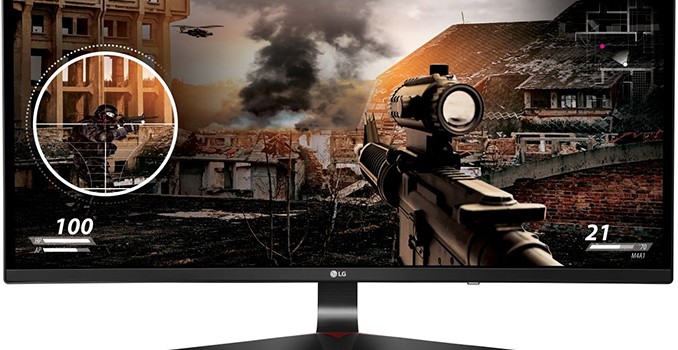
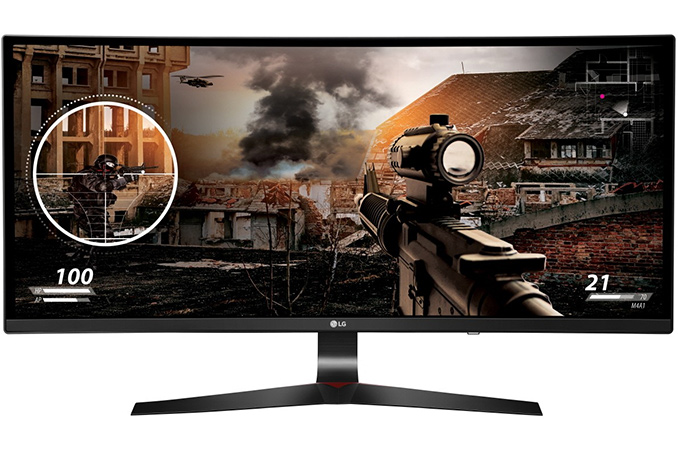
LG was one of the first suppliers to bring displays with 21:9 aspect ratio to consumers a couple of years ago, and at IFA 2016 the company introduced its new ultra-wide monitor for demanding gamers, the LG 34UC79G. The gaming display offers an interesting mix of features, combining a curved 2560×1080 panel with support for AMD’s FreeSync technology, and a maximum refresh rate of 144 Hz.

Drilling down, the LG UltraWide 34UC79G’s differentiating features are clearly meant to be its curved panel and refresh rate, courtesy of a new panel from LG. High refresh rate curved displays have been rare up until now, with entries such as Acer’s Predator Z35 and ASUS’ ROG Swift PG348Q essentially being overclocked versions of older panels. Looking at LG’s new panel under the hood, we have AH-IPS panel with a resolution of 2560×1080, a 5ms GtG response time, a peak brightness of 300 nits, and a contrast ratio of 1000:1. The panel is capable of a native 144 Hz refresh rate, making the 34UC79G a pretty exclusive monitor.

LG UltraWide 34UC79G
Panel 34″ AH-IPS
Native Resolution 2560 × 1080
Refresh Rate 144 Hz
Response Time 5 ms gray-to-gray
Brightness 250 cd/m²
Contrast 1000:1
Viewing Angles 178°/178° horizontal/vertical
Pixel Pitch 0.312 mm
Curvature 3800R (?)
Anti-Glare Coating Yes
Inputs DisplayPort 1.2
HDMI
USB Hub 2-port USB 3.0 hub: two USB-A receptacles, one supports fast charging
Audio 7 W × 2
audio in/out ports
Launch Price $699

LG positions its 34UC79G as an “ultimate” solution for gamers, which is why the trade-off between high refresh rate and high resolution seems to be reasonable, at least until LG Display starts to produce ultra-wide panels with higher resolutions and increased refresh rate. LG claims that the monitor supports the range of dynamic refresh rates between 50 and 144 Hz, which seems to be a good implementation of AMD’s FreeSync technology.

To connect to PC, the LG 34UC79G can use an HDMI or one of two DisplayPort 1.2a connectors. The monitor also has a dual-port USB 3.0 hub to connect a mouse and a keyboard (it even has a special holder for their cable management). Besides, the company also integrated two 7 W speakers with MaxxAudio surround technology into the display, which could be useful for those, who do not have enough desk space for sizeable speakers.
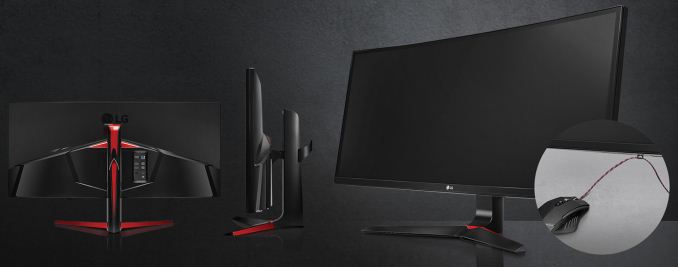
The LG 34UC79G display is already available in the U.S. for $699.99, other markets are expected to follow shortly.

LG Announces the 34UC79G: 34-Inch Curved 21:9 Display with 2560 × 1080 Resolution, 144 Hz Refresh Rate for $700

LG Announces the 34UC79G: 34-Inch Curved 21:9 Display with 2560 × 1080 Resolution, 144 Hz Refresh Rate for $700

LG was one of the first suppliers to bring displays with 21:9 aspect ratio to consumers a couple of years ago, and at IFA 2016 the company introduced its new ultra-wide monitor for demanding gamers, the LG 34UC79G. The gaming display offers an interesting mix of features, combining a curved 2560×1080 panel with support for AMD’s FreeSync technology, and a maximum refresh rate of 144 Hz.

Drilling down, the LG UltraWide 34UC79G’s differentiating features are clearly meant to be its curved panel and refresh rate, courtesy of a new panel from LG. High refresh rate curved displays have been rare up until now, with entries such as Acer’s Predator Z35 and ASUS’ ROG Swift PG348Q essentially being overclocked versions of older panels. Looking at LG’s new panel under the hood, we have AH-IPS panel with a resolution of 2560×1080, a 5ms GtG response time, a peak brightness of 300 nits, and a contrast ratio of 1000:1. The panel is capable of a native 144 Hz refresh rate, making the 34UC79G a pretty exclusive monitor.

LG UltraWide 34UC79G
Panel 34″ AH-IPS
Native Resolution 2560 × 1080
Refresh Rate 144 Hz
Response Time 5 ms gray-to-gray
Brightness 250 cd/m²
Contrast 1000:1
Viewing Angles 178°/178° horizontal/vertical
Pixel Pitch 0.312 mm
Curvature 3800R (?)
Anti-Glare Coating Yes
Inputs DisplayPort 1.2
HDMI
USB Hub 2-port USB 3.0 hub: two USB-A receptacles, one supports fast charging
Audio 7 W × 2
audio in/out ports
Launch Price $699

LG positions its 34UC79G as an “ultimate” solution for gamers, which is why the trade-off between high refresh rate and high resolution seems to be reasonable, at least until LG Display starts to produce ultra-wide panels with higher resolutions and increased refresh rate. LG claims that the monitor supports the range of dynamic refresh rates between 50 and 144 Hz, which seems to be a good implementation of AMD’s FreeSync technology.

To connect to PC, the LG 34UC79G can use an HDMI or one of two DisplayPort 1.2a connectors. The monitor also has a dual-port USB 3.0 hub to connect a mouse and a keyboard (it even has a special holder for their cable management). Besides, the company also integrated two 7 W speakers with MaxxAudio surround technology into the display, which could be useful for those, who do not have enough desk space for sizeable speakers.

The LG 34UC79G display is already available in the U.S. for $699.99, other markets are expected to follow shortly.

AMD Releases Radeon Software Crimson Edition 16.9.1, Adds Deus Ex Mankind Divided DX12 Support

AMD Releases Radeon Software Crimson Edition 16.9.1, Adds Deus Ex Mankind Divided DX12 Support

AMD has released their first Radeon driver update for September this week with Radeon Software Crimson Edition 16.9.1. Notable in this release is that along with the usual batch of fixes, this build adds support for the newly released “preview” for the DirectX 12 rendering path in Deus Ex: Mankind Divided.

But before we get to Deus Ex, let’s talk about bug fixes. Display driver version 16.40.2011 of Radeon Software Crimson Edition 16.9.1 has the (now typical) moderate list of fixes. Of note, a couple of flickering issues have been fixed, one involving 144Hz non-FreeSync displays and another with desktop rendering on FreeSync displays. There is now a fix for negative CrossFire scaling in Total War: Warhammer on Radeon RX 400 series configurations, and a fix for hanging in Grand Theft Auto V. Lastly, AMD has also implemented a fix for an issue that caused some RX 400 series cards to suffer from high GPU usage when resuming from sleep.

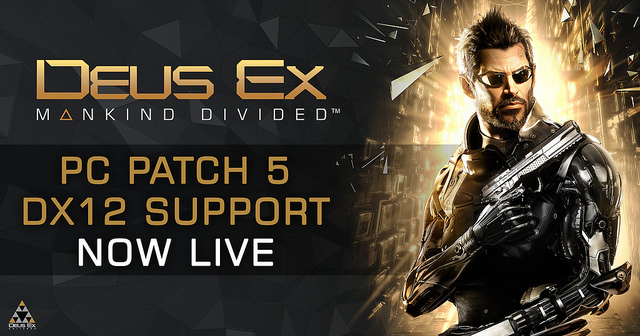
After all the new fixes we are given a DX11 DOTA 2 CrossFire profile, and more importantly, support for the new DirectX 12 rendering path in Deus Ex: Mankind Divided. It should be noted however that the DX12 path is being released as a “preview” – accessible through Steam as a beta update – as it’s not quite ready for widespread use. Otherwise the final release of the DX12 patch is expected on the week of September 19th, 2016, and will also add DX12 Muti-GPU support. Eidos Montreal expects everyone to see improvements, but in the event of issues they encourage users to roll back to the main branch and state that there are no visual or gameplay differences between the DX11 and DX12 versions.

As always, those interested in reading more or installing the updated hotfix drivers for AMD’s desktop, mobile, and integrated GPUs can find them either under the driver update section in Radeon Settings or on AMDs Radeon Software Crimson Edition download page.

Source: AMD

Source: Steam Community

AMD Releases Radeon Software Crimson Edition 16.9.1, Adds Deus Ex Mankind Divided DX12 Support

AMD Releases Radeon Software Crimson Edition 16.9.1, Adds Deus Ex Mankind Divided DX12 Support

AMD has released their first Radeon driver update for September this week with Radeon Software Crimson Edition 16.9.1. Notable in this release is that along with the usual batch of fixes, this build adds support for the newly released “preview” for the DirectX 12 rendering path in Deus Ex: Mankind Divided.

But before we get to Deus Ex, let’s talk about bug fixes. Display driver version 16.40.2011 of Radeon Software Crimson Edition 16.9.1 has the (now typical) moderate list of fixes. Of note, a couple of flickering issues have been fixed, one involving 144Hz non-FreeSync displays and another with desktop rendering on FreeSync displays. There is now a fix for negative CrossFire scaling in Total War: Warhammer on Radeon RX 400 series configurations, and a fix for hanging in Grand Theft Auto V. Lastly, AMD has also implemented a fix for an issue that caused some RX 400 series cards to suffer from high GPU usage when resuming from sleep.

After all the new fixes we are given a DX11 DOTA 2 CrossFire profile, and more importantly, support for the new DirectX 12 rendering path in Deus Ex: Mankind Divided. It should be noted however that the DX12 path is being released as a “preview” – accessible through Steam as a beta update – as it’s not quite ready for widespread use. Otherwise the final release of the DX12 patch is expected on the week of September 19th, 2016, and will also add DX12 Muti-GPU support. Eidos Montreal expects everyone to see improvements, but in the event of issues they encourage users to roll back to the main branch and state that there are no visual or gameplay differences between the DX11 and DX12 versions.

As always, those interested in reading more or installing the updated hotfix drivers for AMD’s desktop, mobile, and integrated GPUs can find them either under the driver update section in Radeon Settings or on AMDs Radeon Software Crimson Edition download page.

Source: AMD

Source: Steam Community