Vik


Seagate Introduces BarraCuda 2.5” HDDs with Up to 5 TB Capacity
Seagate Introduces BarraCuda 2.5” HDDs with Up to 5 TB Capacity

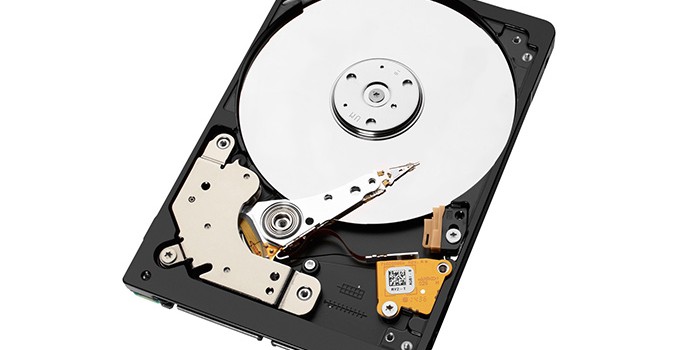
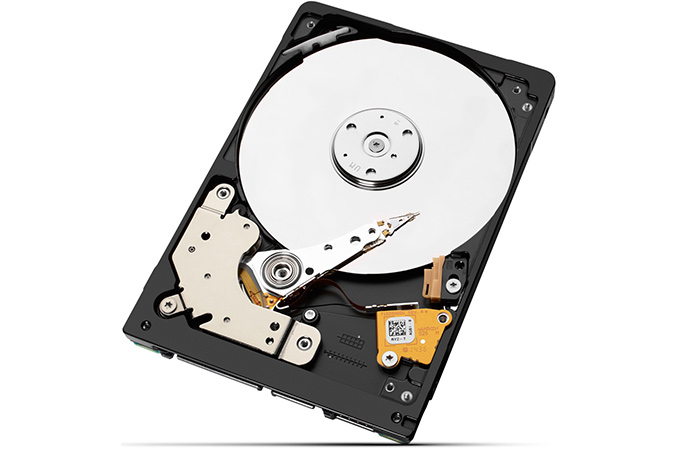
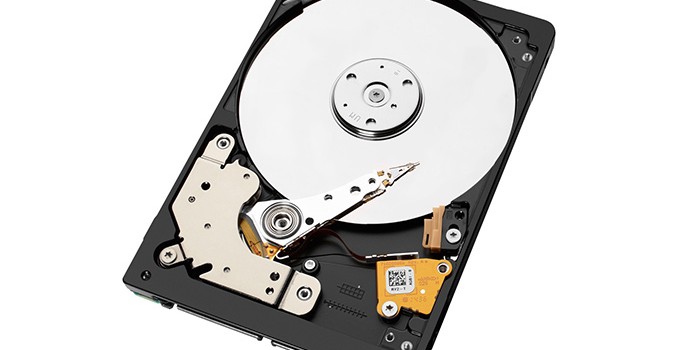
Seagate has formally introduced a new family of hard drives in the 2.5” form-factor. It is designed for laptops as well as external storage solutions. The new BarraCuda HDDs are based on 1 TB shingled magnetic recording platters and Seagate’s multi-tier caching technology. They enhance the maximum capacity of the company’s 2.5” HDDs to 5 TB – making the BarraCuda ST5000LM000 the world’s highest-capacity 2.5” hard drive.

The new Seagate BarraCuda 2.5” drives resemble the company’s Mobile HDDs introduced earlier this year and use a similar set of technologies: motors with 5400 RPM spindle speed, platters based on shingled magnetic recording technology with over 1300 Gb/in2 areal density, and multi-tier caching. The 3 TB, 4 TB and 5 TB BarraCuda 2.5” HDDs that come with a 15 mm z-height are designed for external storage solutions because virtually no laptop can accommodate drives of that thickness. Meanwhile, the 7 mm z-height drives (500 GB, 1 TB and 2 TB) are aimed at mainstream laptops and SFF desktops that need a lot of storage space.

All the new BarraCuda 2.5” HDDs feature 128 MB of DRAM cache as well as multi-tier caching (MTC) technology, which is designed to hide peculiarities of SMR. Hard drives featuring shingled recording write new magnetic tracks that overlap part of the previously written tracks. This may slow down the writing process since the architecture requires HDDs to rewrite adjacent tracks after any writing operation. To “conceal” such peculiarities, Seagate does a number of tricks. Firstly, it organizes SMR tracks into bands in a bid to limit the amount of overwriting. Secondly, the MTC technology uses several bands of PMR tracks on the platters, around 1 GB of NAND flash cache as well as DRAM cache. When workloads generate relatively small amount of writes, the HDD writes data to NAND and/or to the PMR tracks at a predictable data rate. Then, during light workloads or idle time, the HDD transfers written data from the caches to SMR tracks, as described by Mark Re (CTO of Seagate) earlier this year.

To a large extent, Seagate’s multi-tier cache determines the performance of the company’s BarraCuda 2.5″ and Mobile HDD drives. For example, when Seagate announced its Mobile HDD products earlier this year, the company declared maximum sustainable transfer rate of the HDD at 100 MB/s. However, the documentation was altered later in the summer to reflect a maximum transfer rate of 140 MB/s (possibly due to updated firmware, or a change in the performance measurement method). Now, the high-capacity BarraCuda 2.5” (3 TB, 4 TB and 5 TB) drives are rated for 130 MB/s, while the mainstream BarraCuda 2.5” (500 GB, 1 TB and 2 TB) are rated for 140 MB/s. This is still below the 145 – 169 MB/s offered by PMR-based Laptop HDDs from the company.

Seagate BarraCuda 2.5″ HDDs
  5 TB 4 TB 3 TB 2 TB 1 TB 500 GB
Platters/Heads 5/10 4/8 | 5/10* 3/6 2/4 1/2
Spindle Speed 5400 RPM
Cache 128 MB + multi-tier caching technology
Transfer Rate 140 MB/s
Avg Latency 5.6 ms
Areal Density 1307 Gb/in² avg 1320 Gb/in² avg
Recording Density 2254 Kb/in avg 2276 Kb/in avg
Track Density 580 Ktracks/inch avg
Idle Power 1.1 W 0.5 W 0.45 W
Read/Write Power 1.9/2.1 W 1.7/1.8 W 1.6/1.7 W
Interface SATA 6 Gbps
Form-Factor 2.5″/15 mm 2.5″/7 mm
Model Number ST5000LM000 ST4000LM024 ST3000LM024 ST2000LM015 ST1000LM048 ST500LM030
*While the vast majority of the Seagate BarraCuda 2.5″ 4 TB HDDs will use a four-platter configuration, some Seagate customers have apparently requested a five-platter configuration. Obviously, being based on 800 GB platters, such drives have lower areal density and, perhaps, different performance and behavior.

Seagate’s new BarraCuda 2.5”/7 mm HDDs for laptops should hit notebooks in the coming weeks as the company is already shipping them to its customers. Seagate does not currently offer SED and FIPS options for its BarraCuda family (those who need encryption can still get Seagate’s Mobile HDDs based on SMR technology). The company plans to add these technologies to the BarraCuda arsenal in the future.

The BarraCuda 2.5”/15 mm drives for external storage solutions will be used inside Seagate’s own DAS devices such as the Backup Plus Portable Drive and the Expansion Portable Hard Drive products. The Seagate Backup Plus Plus Portable Drive 5 TB (STDR5000100) is due in early November and will cost around $150 – $160. This device will be the world’s highest-capacity portable DAS and will not immediately have direct rivals in this particular form-factor. At present, the maximum-capacity 2.5” HDD offered by Western Digital is 4 TB with a 12.5 mm z-height. It is used inside a number of My Passport drives.

All the BarraCuda 2.5” drives are backed by a two-year warranty.
 

Seagate Introduces BarraCuda 2.5” HDDs with Up to 5 TB Capacity

Seagate Introduces BarraCuda 2.5” HDDs with Up to 5 TB Capacity

Seagate has formally introduced a new family of hard drives in the 2.5” form-factor. It is designed for laptops as well as external storage solutions. The new BarraCuda HDDs are based on 1 TB shingled magnetic recording platters and Seagate’s multi-tier caching technology. They enhance the maximum capacity of the company’s 2.5” HDDs to 5 TB – making the BarraCuda ST5000LM000 the world’s highest-capacity 2.5” hard drive.

The new Seagate BarraCuda 2.5” drives resemble the company’s Mobile HDDs introduced earlier this year and use a similar set of technologies: motors with 5400 RPM spindle speed, platters based on shingled magnetic recording technology with over 1300 Gb/in2 areal density, and multi-tier caching. The 3 TB, 4 TB and 5 TB BarraCuda 2.5” HDDs that come with a 15 mm z-height are designed for external storage solutions because virtually no laptop can accommodate drives of that thickness. Meanwhile, the 7 mm z-height drives (500 GB, 1 TB and 2 TB) are aimed at mainstream laptops and SFF desktops that need a lot of storage space.

All the new BarraCuda 2.5” HDDs feature 128 MB of DRAM cache as well as multi-tier caching (MTC) technology, which is designed to hide peculiarities of SMR. Hard drives featuring shingled recording write new magnetic tracks that overlap part of the previously written tracks. This may slow down the writing process since the architecture requires HDDs to rewrite adjacent tracks after any writing operation. To “conceal” such peculiarities, Seagate does a number of tricks. Firstly, it organizes SMR tracks into bands in a bid to limit the amount of overwriting. Secondly, the MTC technology uses several bands of PMR tracks on the platters, around 1 GB of NAND flash cache as well as DRAM cache. When workloads generate relatively small amount of writes, the HDD writes data to NAND and/or to the PMR tracks at a predictable data rate. Then, during light workloads or idle time, the HDD transfers written data from the caches to SMR tracks, as described by Mark Re (CTO of Seagate) earlier this year.

To a large extent, Seagate’s multi-tier cache determines the performance of the company’s BarraCuda 2.5″ and Mobile HDD drives. For example, when Seagate announced its Mobile HDD products earlier this year, the company declared maximum sustainable transfer rate of the HDD at 100 MB/s. However, the documentation was altered later in the summer to reflect a maximum transfer rate of 140 MB/s (possibly due to updated firmware, or a change in the performance measurement method). Now, the high-capacity BarraCuda 2.5” (3 TB, 4 TB and 5 TB) drives are rated for 130 MB/s, while the mainstream BarraCuda 2.5” (500 GB, 1 TB and 2 TB) are rated for 140 MB/s. This is still below the 145 – 169 MB/s offered by PMR-based Laptop HDDs from the company.

Seagate BarraCuda 2.5″ HDDs
  5 TB 4 TB 3 TB 2 TB 1 TB 500 GB
Platters/Heads 5/10 4/8 | 5/10* 3/6 2/4 1/2
Spindle Speed 5400 RPM
Cache 128 MB + multi-tier caching technology
Transfer Rate 140 MB/s
Avg Latency 5.6 ms
Areal Density 1307 Gb/in² avg 1320 Gb/in² avg
Recording Density 2254 Kb/in avg 2276 Kb/in avg
Track Density 580 Ktracks/inch avg
Idle Power 1.1 W 0.5 W 0.45 W
Read/Write Power 1.9/2.1 W 1.7/1.8 W 1.6/1.7 W
Interface SATA 6 Gbps
Form-Factor 2.5″/15 mm 2.5″/7 mm
Model Number ST5000LM000 ST4000LM024 ST3000LM024 ST2000LM015 ST1000LM048 ST500LM030
*While the vast majority of the Seagate BarraCuda 2.5″ 4 TB HDDs will use a four-platter configuration, some Seagate customers have apparently requested a five-platter configuration. Obviously, being based on 800 GB platters, such drives have lower areal density and, perhaps, different performance and behavior.

Seagate’s new BarraCuda 2.5”/7 mm HDDs for laptops should hit notebooks in the coming weeks as the company is already shipping them to its customers. Seagate does not currently offer SED and FIPS options for its BarraCuda family (those who need encryption can still get Seagate’s Mobile HDDs based on SMR technology). The company plans to add these technologies to the BarraCuda arsenal in the future.

The BarraCuda 2.5”/15 mm drives for external storage solutions will be used inside Seagate’s own DAS devices such as the Backup Plus Portable Drive and the Expansion Portable Hard Drive products. The Seagate Backup Plus Plus Portable Drive 5 TB (STDR5000100) is due in early November and will cost around $150 – $160. This device will be the world’s highest-capacity portable DAS and will not immediately have direct rivals in this particular form-factor. At present, the maximum-capacity 2.5” HDD offered by Western Digital is 4 TB with a 12.5 mm z-height. It is used inside a number of My Passport drives.

All the BarraCuda 2.5” drives are backed by a two-year warranty.
 

Samsung CFG70: Curved 144Hz Displays with Quantum Dot Backlighting and AMD FreeSync

Samsung CFG70: Curved 144Hz Displays with Quantum Dot Backlighting and AMD FreeSync

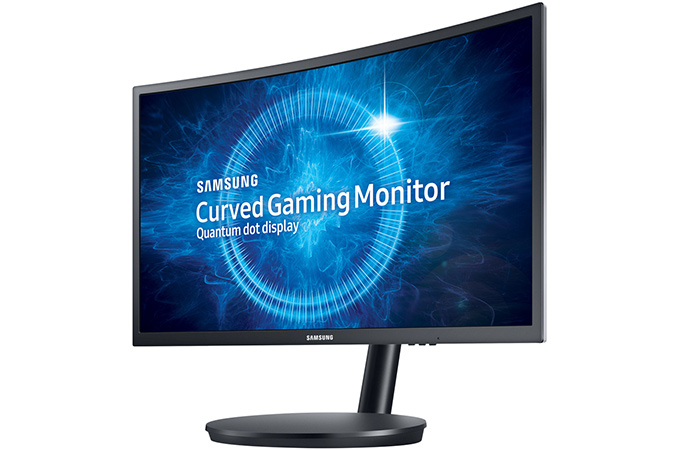
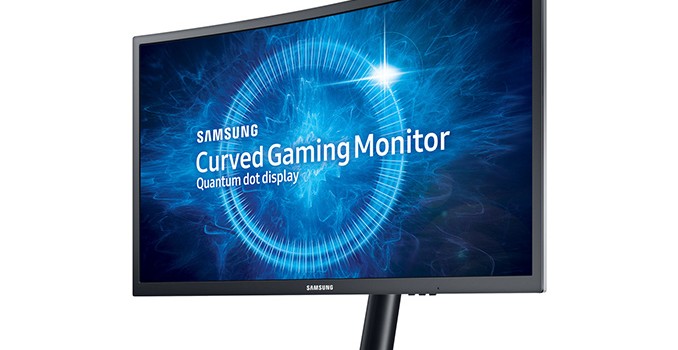
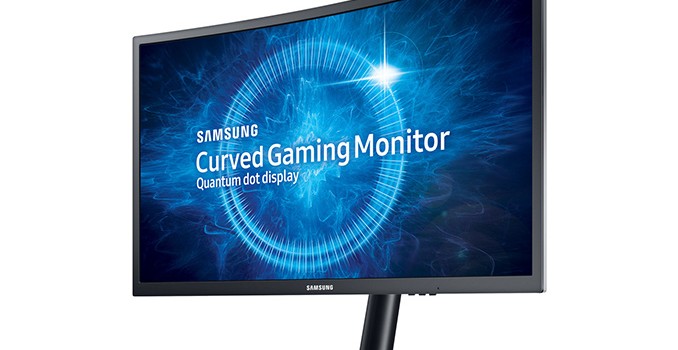
Samsung was among the first television manufacturers to use quantum dot technology for its products, and this week the company has continued that trend by introducing the industry’s first curved monitors for gamers featuring quantum dots. The new 24” and 27” displays boast a wider color gamut and a very high contrast ratio, in addition to support for AMD’s FreeSync technology and a 144 Hz refresh rate.

Samsung’s CFG70 monitors are based on the company’s curved 8-bit VA panels with 1 ms moving picture response time (MPRT), as well as a 144 Hz refresh rate as well as the static contrast ratio to 3000:1, which is higher compared to many advanced displays on the market. As for brightness, the 24” CFG70 offers 350 nits, which is in line with other contemporary high-end displays. At present, Samsung does not share a lot of details about its CFG70 monitors, but we do know that the screens have 1800R curvature along with 178° viewing angles.

The purpose of using quantum dot technology is to expand color gamut of the display by increasing intensity of red and green wavelengths (you can read more here). Samsung confirms that in the case of the CFG70, quantum dots help to produce more accurate dark reds and greens, which increases the contrast. In addition, Samsung says that the use of quantum dot technology for the backlighting of the CFG70 has allowed the company to expand the color gamut to 125% of the sRGB color space.

However despite the monitors’ larger-than-sRGB gamut, at this point Samsung is only confirming that the monitors’ firmware supports the sRGB color space, listing nothing about the AdobeRGB or DCI-P3 color spaces. This is an important consideration due to the fact that it potentially limits the usefulness of having a color gamut over 100% of sRGB to begin with. With most monitor designs, manufacturers who offer larger gamuts also support color spaces that can use that gamut, which doesn’t appear to be the case for Samsung.

The catch then is that having a gamut that exceeds a particular standard will not produce an accurate result when using that wider gamut. Case in point, sRGB content would end up oversaturated since it’s meant for a smaller gamut, and the lack of support for larger color spaces makes it difficult to use the wider gamut with anything else. It is hard to believe that Samsung decided to develop a set of monitors that would produce incorrect colors out-of-the-box, so hopefully Samsung is offering a true 100% sRGB mode as well. This would negate the wider gamut of the monitors, but it would ensure their accuracy.

Moving on, the improved contrast ratio should give you the idea about the advantages that the quantum dot technology brings to the CFG70.

Samsung’s CFG70 Gaming Curved Displays with Quantum Dot
  24″
C24FG70FQN
27″
 
Panel 24″ VA 27″ VA
Native Resolution 1920×1080 unknown
Maximum Refresh Rate 144 Hz
Response Time 1 ms MPRT
Brightness 350 cd/m²
Contrast 3000:1
Viewing Angles 178°/178° horizontal/vertical
Curvature 1800R
Color Gamut 125% sRGB
Dynamic Refresh Rate Tech AMD FreeSync
Inputs 1 × DP 1.2
2 × HDMI 2.0
Audio 3.5 mm input/output
Link C24FG70FQN

Besides being the first curved gaming monitors with quantum dots, the Samsung CFG70 are also among the first displays to use AMD’s FreeSync over HDMI technology (for maximum compatibility, the devices are also equipped with DisplayPort inputs). While we do not know the exact dynamic refresh ranges supported by the screens, 144 Hz maximum refresh rate implies on relatively wide dynamic ranges, more than enough to allow for AMD’s low framerate compensation to work.

The CFG70 displays currently do not have direct rivals: there are not of a lot of monitors that use quantum dots right now, and when it comes to gaming monitors with high refresh rates, Samsung is the first maker to use the tech. Moreover, the CFG70 are the first curved displays to feature quantum dots.

Samsung said that the CFG70 displays will be available worldwide, but did not mention their prices. Given the unique combination of characteristics, it is reasonable to expect Samsung to try to capitalize on it.

Samsung CFG70: Curved 144Hz Displays with Quantum Dot Backlighting and AMD FreeSync

Samsung CFG70: Curved 144Hz Displays with Quantum Dot Backlighting and AMD FreeSync

Samsung was among the first television manufacturers to use quantum dot technology for its products, and this week the company has continued that trend by introducing the industry’s first curved monitors for gamers featuring quantum dots. The new 24” and 27” displays boast a wider color gamut and a very high contrast ratio, in addition to support for AMD’s FreeSync technology and a 144 Hz refresh rate.

Samsung’s CFG70 monitors are based on the company’s curved 8-bit VA panels with 1 ms moving picture response time (MPRT), as well as a 144 Hz refresh rate as well as the static contrast ratio to 3000:1, which is higher compared to many advanced displays on the market. As for brightness, the 24” CFG70 offers 350 nits, which is in line with other contemporary high-end displays. At present, Samsung does not share a lot of details about its CFG70 monitors, but we do know that the screens have 1800R curvature along with 178° viewing angles.

The purpose of using quantum dot technology is to expand color gamut of the display by increasing intensity of red and green wavelengths (you can read more here). Samsung confirms that in the case of the CFG70, quantum dots help to produce more accurate dark reds and greens, which increases the contrast. In addition, Samsung says that the use of quantum dot technology for the backlighting of the CFG70 has allowed the company to expand the color gamut to 125% of the sRGB color space.

However despite the monitors’ larger-than-sRGB gamut, at this point Samsung is only confirming that the monitors’ firmware supports the sRGB color space, listing nothing about the AdobeRGB or DCI-P3 color spaces. This is an important consideration due to the fact that it potentially limits the usefulness of having a color gamut over 100% of sRGB to begin with. With most monitor designs, manufacturers who offer larger gamuts also support color spaces that can use that gamut, which doesn’t appear to be the case for Samsung.

The catch then is that having a gamut that exceeds a particular standard will not produce an accurate result when using that wider gamut. Case in point, sRGB content would end up oversaturated since it’s meant for a smaller gamut, and the lack of support for larger color spaces makes it difficult to use the wider gamut with anything else. It is hard to believe that Samsung decided to develop a set of monitors that would produce incorrect colors out-of-the-box, so hopefully Samsung is offering a true 100% sRGB mode as well. This would negate the wider gamut of the monitors, but it would ensure their accuracy.

Moving on, the improved contrast ratio should give you the idea about the advantages that the quantum dot technology brings to the CFG70.

Samsung’s CFG70 Gaming Curved Displays with Quantum Dot
  24″
C24FG70FQN
27″
 
Panel 24″ VA 27″ VA
Native Resolution 1920×1080 unknown
Maximum Refresh Rate 144 Hz
Response Time 1 ms MPRT
Brightness 350 cd/m²
Contrast 3000:1
Viewing Angles 178°/178° horizontal/vertical
Curvature 1800R
Color Gamut 125% sRGB
Dynamic Refresh Rate Tech AMD FreeSync
Inputs 1 × DP 1.2
2 × HDMI 2.0
Audio 3.5 mm input/output
Link C24FG70FQN

Besides being the first curved gaming monitors with quantum dots, the Samsung CFG70 are also among the first displays to use AMD’s FreeSync over HDMI technology (for maximum compatibility, the devices are also equipped with DisplayPort inputs). While we do not know the exact dynamic refresh ranges supported by the screens, 144 Hz maximum refresh rate implies on relatively wide dynamic ranges, more than enough to allow for AMD’s low framerate compensation to work.

The CFG70 displays currently do not have direct rivals: there are not of a lot of monitors that use quantum dots right now, and when it comes to gaming monitors with high refresh rates, Samsung is the first maker to use the tech. Moreover, the CFG70 are the first curved displays to feature quantum dots.

Samsung said that the CFG70 displays will be available worldwide, but did not mention their prices. Given the unique combination of characteristics, it is reasonable to expect Samsung to try to capitalize on it.