Vik


Google Cans Project Ara: No Modular Smartphones Incoming
Google Cans Project Ara: No Modular Smartphones Incoming

Word comes this week that Google has given up its plans to build modular smartphones with interchangeable parts, having cancelled all ongoing Project Ara efforts. According to reports by Reuters and Re/code.it appears that the price of the final handsets was going to be so high as to make viability questionable, as the modular phones lost some of the cost and performance advantages of hardware integration. The company reportedly plans to concentrate on other hardware projects, including its Chromebooks and various Android-based devices.

Google began to explore the concept of modular smartphones in 2012, and publicly announced its Project Ara in late October, 2013. The company thought that for many people it would make sense to configure their smartphones themselves and then upgrade modules, as new ones come out, instead of getting entirely new handsets.

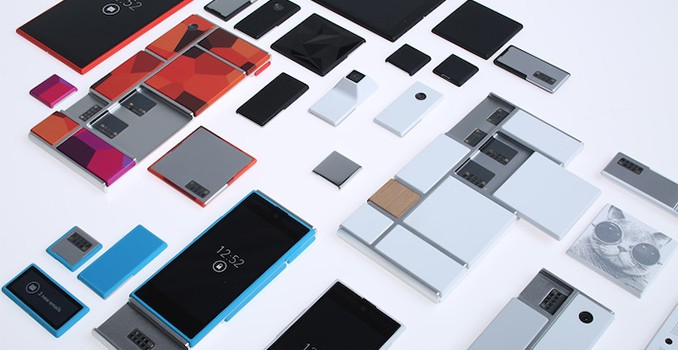
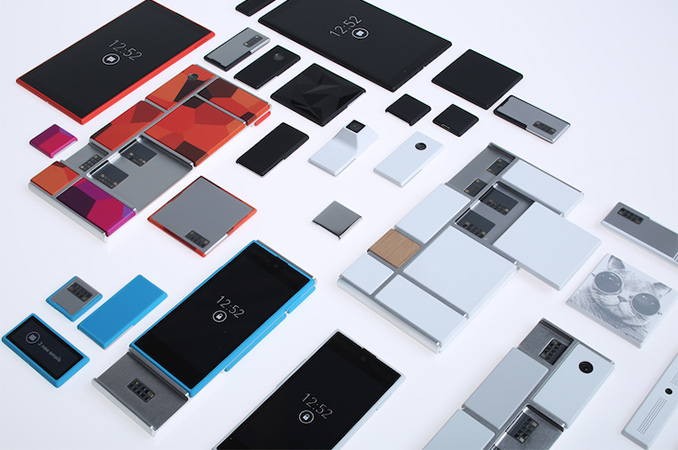
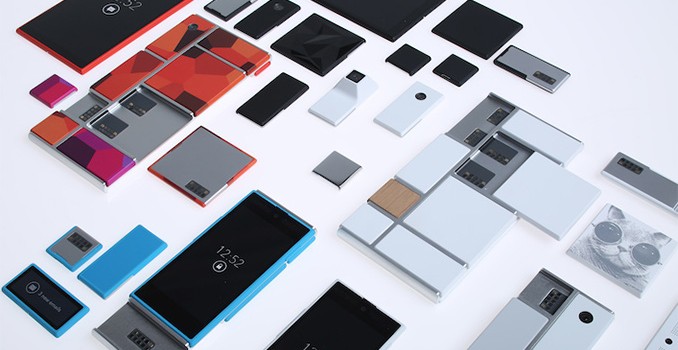
Initially, Google considered building a fully modular smartphone with a PC-like architecture in a bid to enable upgrades of core components like SoC, antenna, sensors and so on. However, this required a lot of efforts in hardware standardization, interconnection, compatibility as well as software support. Back in May, the company announced changes of the Project Ara concept. Google said that core components of modular smartphones would not be upgradeable, but users would still be able to switch camera sensors, speakers and even add secondary displays. Google promised to introduce a working Project Ara model this fall and then release a commercial product for consumers in 2017.

Modern smartphones are self-contained, cannot be upgraded and their repair is often tricky at best. However, such integration allows manufacturers to make them sleeker and cheaper. By contrast, Google’s modular design appeared to be rather bulky. Moreover, Re/code reports that Google struggled to come out with a modular smartphone that could perform up to expectations and come in at a viable cost. The price of modules themselves was also a potential concern, as they’d need to be built to handle the modular system and wouldn’t necessarily enjoy the high volume sales of a solitary phone design.

As it turns out, Rick Osterloh, the new senior vice president of hardware at Google, decided to cancel Project Ara even in its “limited” form announced back in May. The company will no longer invest in the project, but may license technologies and patents it developed over the past several years to parties interested in building their upgradeable smartphones, according to reports. Keep in mind though that Google yet has to confirm its intentions regarding Project Ara.

Recently Motorola came up with the Moto Mods idea to sell add-on accessories for its Moto Z smartphones. The add-ons can transform the handset into a camera with decent optics, a projector or a stereo system. Apparently, even though Project Ara is gone for good, the concept of add-ons for smartphones lives on.
Sources: Reuters, Re/code, The Verge.

Google Cans Project Ara: No Modular Smartphones Incoming

Google Cans Project Ara: No Modular Smartphones Incoming

Word comes this week that Google has given up its plans to build modular smartphones with interchangeable parts, having cancelled all ongoing Project Ara efforts. According to reports by Reuters and Re/code.it appears that the price of the final handsets was going to be so high as to make viability questionable, as the modular phones lost some of the cost and performance advantages of hardware integration. The company reportedly plans to concentrate on other hardware projects, including its Chromebooks and various Android-based devices.

Google began to explore the concept of modular smartphones in 2012, and publicly announced its Project Ara in late October, 2013. The company thought that for many people it would make sense to configure their smartphones themselves and then upgrade modules, as new ones come out, instead of getting entirely new handsets.

Initially, Google considered building a fully modular smartphone with a PC-like architecture in a bid to enable upgrades of core components like SoC, antenna, sensors and so on. However, this required a lot of efforts in hardware standardization, interconnection, compatibility as well as software support. Back in May, the company announced changes of the Project Ara concept. Google said that core components of modular smartphones would not be upgradeable, but users would still be able to switch camera sensors, speakers and even add secondary displays. Google promised to introduce a working Project Ara model this fall and then release a commercial product for consumers in 2017.

Modern smartphones are self-contained, cannot be upgraded and their repair is often tricky at best. However, such integration allows manufacturers to make them sleeker and cheaper. By contrast, Google’s modular design appeared to be rather bulky. Moreover, Re/code reports that Google struggled to come out with a modular smartphone that could perform up to expectations and come in at a viable cost. The price of modules themselves was also a potential concern, as they’d need to be built to handle the modular system and wouldn’t necessarily enjoy the high volume sales of a solitary phone design.

As it turns out, Rick Osterloh, the new senior vice president of hardware at Google, decided to cancel Project Ara even in its “limited” form announced back in May. The company will no longer invest in the project, but may license technologies and patents it developed over the past several years to parties interested in building their upgradeable smartphones, according to reports. Keep in mind though that Google yet has to confirm its intentions regarding Project Ara.

Recently Motorola came up with the Moto Mods idea to sell add-on accessories for its Moto Z smartphones. The add-ons can transform the handset into a camera with decent optics, a projector or a stereo system. Apparently, even though Project Ara is gone for good, the concept of add-ons for smartphones lives on.
Sources: Reuters, Re/code, The Verge.

LG 38UC99 Announced: 37.5-Inch Curved 21:9 Display with 3840×1600 Resolution

LG 38UC99 Announced: 37.5-Inch Curved 21:9 Display with 3840×1600 Resolution

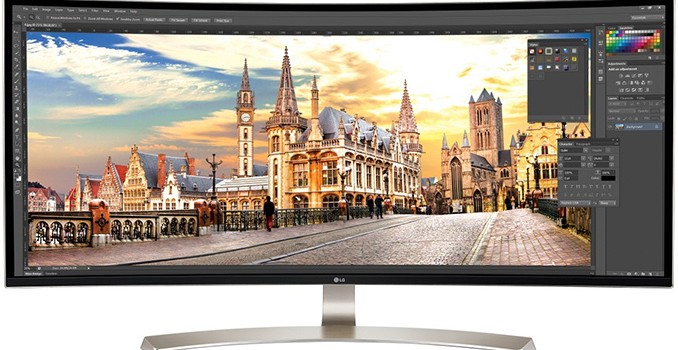
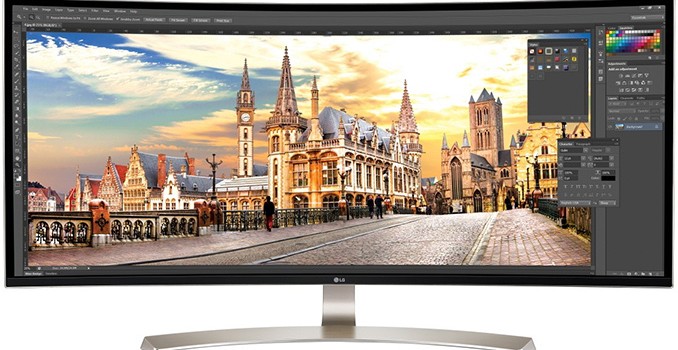
This week at IFA in Berlin LG introduced a new flagship UltraWide display. The new monitor is called the LG 38UC99 and it’s LG’s largest UltraWide display to date, with a diagonal size of 37.5 inches. With a horizontal resolution of 3840 pixels, and support for 99% of the sRGB color gamut, LG appears to be positioning the monitor as one well suited for displaying UltraHD content filmed in an aspect ratio of 2.35:1 or 2.40:1. Gamers aren’t left out either, with support for AMD FreeSync being included as well.

The basic specifications for the panel are listed below. There aren’t any big surprises as far as the panel goes, with a resolution of 3840 x 1600, a 5ms GtG response time, a peak brightness of 300 nits, and a contrast ratio of 1000:1. When you look at the monitor as a whole there are a few interesting points. The monitor has a built in USB 3.0 hub, which is generally expected of high end monitors, but in this case there are two USB Type-A connectors as well as a USB Type-C connector. LG has noted that the Type-C port can charge mobile devices, but there’s no word yet on whether they support high wattage charge modes as part of the USB Power Deliver spec.

The monitor also has two 10W speakers, and it can be paired with smartphones or other devices via Bluetooth to play audio wirelessly. I would expect that most users interested in buying the LG 38UC99 for watching movies will also have a good set of speakers to go with it, but the feature is there for users who may not have enough desk space to fit such a large monitor and a sizeable pair of speakers.

LG UltraWide 38UC99
Panel 37.5″ IPS
Resolution 3840 × 1600
Refresh Rate 60 Hz
Response Time 5 ms gray-to-gray
Brightness 300 cd/m²
Contrast 1000:1
Viewing Angles 178°/178° horizontal/vertical
Color Saturation 99% sRGB
Pixel Pitch 0.23 mm
Pixel Density 110 ppi
Anti-Glare Coating Yes
USB Hub 3-port USB 3.0 hub: two USB-A, one USB-C receptacles
USB-C port supports charging
Audio 10 W × 2
Launch Price $1499 (?)

LG can really be credited with bringing 21:9 displays to market in any significant capacity. A few years ago it was just a niche form factor, and prior to that it didn’t really exist at all. Since then it has been adopted by many different users, including fans of movies, gamers, and users looking to improve on productivity without having to set up two separate displays. In the case of the 38UC99 the display is curved, which may limit its appeal among some groups, particularly those who need proper accuracy for geometry displayed on the monitor like users doing computer assisted design work.

Right now the LG 38UC99 doesn’t have an official price, but several reports have stated that it will cost $1499 at launch. That places it strictly in high-end territory, but that’s not really a surprise for a monitor of this size with these specifications.

Sources: LG, DisplaySpecifications, TechCrunch.

LG 38UC99 Announced: 37.5-Inch Curved 21:9 Display with 3840×1600 Resolution

LG 38UC99 Announced: 37.5-Inch Curved 21:9 Display with 3840×1600 Resolution

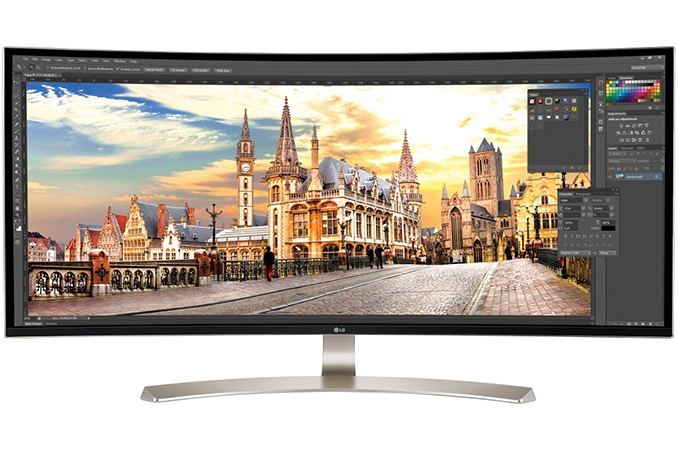
This week at IFA in Berlin LG introduced a new flagship UltraWide display. The new monitor is called the LG 38UC99 and it’s LG’s largest UltraWide display to date, with a diagonal size of 37.5 inches. With a horizontal resolution of 3840 pixels, and support for 99% of the sRGB color gamut, LG appears to be positioning the monitor as one well suited for displaying UltraHD content filmed in an aspect ratio of 2.35:1 or 2.40:1. Gamers aren’t left out either, with support for AMD FreeSync being included as well.

The basic specifications for the panel are listed below. There aren’t any big surprises as far as the panel goes, with a resolution of 3840 x 1600, a 5ms GtG response time, a peak brightness of 300 nits, and a contrast ratio of 1000:1. When you look at the monitor as a whole there are a few interesting points. The monitor has a built in USB 3.0 hub, which is generally expected of high end monitors, but in this case there are two USB Type-A connectors as well as a USB Type-C connector. LG has noted that the Type-C port can charge mobile devices, but there’s no word yet on whether they support high wattage charge modes as part of the USB Power Deliver spec.

The monitor also has two 10W speakers, and it can be paired with smartphones or other devices via Bluetooth to play audio wirelessly. I would expect that most users interested in buying the LG 38UC99 for watching movies will also have a good set of speakers to go with it, but the feature is there for users who may not have enough desk space to fit such a large monitor and a sizeable pair of speakers.

LG UltraWide 38UC99
Panel 37.5″ IPS
Resolution 3840 × 1600
Refresh Rate 60 Hz
Response Time 5 ms gray-to-gray
Brightness 300 cd/m²
Contrast 1000:1
Viewing Angles 178°/178° horizontal/vertical
Color Saturation 99% sRGB
Pixel Pitch 0.23 mm
Pixel Density 110 ppi
Anti-Glare Coating Yes
USB Hub 3-port USB 3.0 hub: two USB-A, one USB-C receptacles
USB-C port supports charging
Audio 10 W × 2
Launch Price $1499 (?)

LG can really be credited with bringing 21:9 displays to market in any significant capacity. A few years ago it was just a niche form factor, and prior to that it didn’t really exist at all. Since then it has been adopted by many different users, including fans of movies, gamers, and users looking to improve on productivity without having to set up two separate displays. In the case of the 38UC99 the display is curved, which may limit its appeal among some groups, particularly those who need proper accuracy for geometry displayed on the monitor like users doing computer assisted design work.

Right now the LG 38UC99 doesn’t have an official price, but several reports have stated that it will cost $1499 at launch. That places it strictly in high-end territory, but that’s not really a surprise for a monitor of this size with these specifications.

Sources: LG, DisplaySpecifications, TechCrunch.

Lenovo Reveals Yoga 910 Convertible: Intel’s Kaby Lake Meets 4K Display and Ultra-Thin Form-Factor

Lenovo Reveals Yoga 910 Convertible: Intel’s Kaby Lake Meets 4K Display and Ultra-Thin Form-Factor

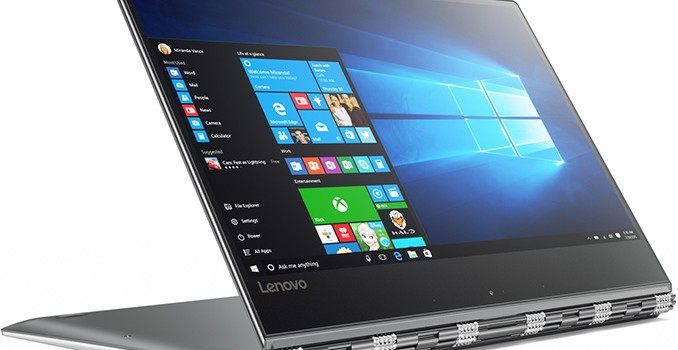
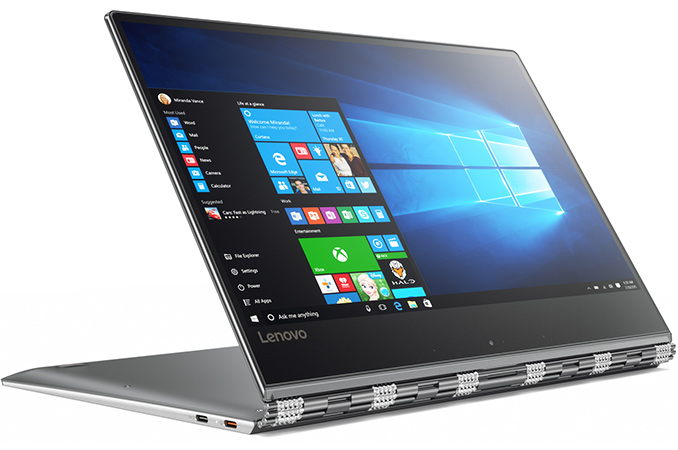
Lenovo this week took the wraps of its new Yoga 910 convertible, an aluminium 2-in-1 equipped with a 4K UHD display and is based on Intel’s upcoming 7th generation Core processors codenamed Kaby Lake. The Yoga 910 inherits distinctive form-factor from the previous-gen Yoga 900 laptops, makes it slightly thinner and adds a fingerprint reader to the familiar design.

The Lenovo Yoga 910 is the direct successor of the Yoga 900 introduced last year, which at present is Lenovo’s top-of-the-range offering in the Yoga lineup. The new Yoga 910 will not only offer higher performance (something that is logical to expect from a PC based on a newer CPU), but also a slightly larger 13.9” IPS display panel with either 4K (3840×2160) or FHD (1920×1080) resolution. Thanks to thinner bezel, the larger screen does not affect dimensions of the convertible, and in fact the new model is even a little smaller and thinner (14.3 mm vs 14.9 mm) than its predecessor. Still, it is noteworthy that the Yoga 910 weighs 1.38 kg (3.04 lbs), which is around 80 grams more than the weight of the Yoga 900. When it comes to battery life the UHD model can offer 10.5 hours on one charge (in line with current models that have 3K displays), whereas the FHD promises to work for up to 15.5 hours (which is a massive improvement over current SKUs).

Lenovo Yoga Specifications
  Yoga 3 Pro Yoga 900 Yoga 910
Processor Intel Core M-5Y71 (4.5W) Intel Core i7-6500U (15W) Intel Core i7-7000 series
Memory 8GB DDR3L-1600 8-16GB DDR3L-1600 Up to 16 GB
Graphics Intel HD 5300 
(24 EUs, Gen 8)
Intel HD 520
(24 EUs, Gen 9)
Intel HD Graphics
Display 13.3″ Glossy IPS
16:9 QHD+ (3200×1800) LCD
13.3″ Glossy IPS 
​16:9 QHD+ (3200×1800) LED
13.9″ 4K (3840 x 2160) IPS
13.9” FHD (1920×1080) IPS
Hard Drive(s) 256GB/512GB SSD
(Samsung PM851)
256GB/512GB SSD (Samsung ?) Up to 1 TB PCIe SSD
Networking Broadcom 802.11ac 
(2×2:2 802.11ac)
Intel Wireless AC-8260 (2×2:2 802.11ac) 2×2:2 802.11ac
Audio JBL Stereo Speakers
1.5w x 2
Headset jack
JBL Stereo Speakers Dolby® DS 1.0
Headset jack
JBL Stereo Speakers with
Dolby Audio Premium
Headset jack
Battery 4 cell 44Wh
40W Max AC Adapter
4 cell 66Wh Unknown
Buttons/Ports Power Button
Novo Button
2 x USB 3.0 
Headset Jack
Volume Control
Auto Rotate Control
DC In with USB 2.0 Port
1 x Micro-HDMI
SD Card Reader
Power Button
2 x USB 3.0-A
1 x USB 3.0-C
Headset Jack
SD Card Reader
DC In with USB 3.0-A Port


Power Button
1 x USB 3.0-A
1 x USB 3.0-C
1 x USB 2.0-C for charging
Headset Jack
SD Card Reader
 
Back Side Watchband Hinge with 360° Rotation
Air Vents Integral to Hinge
Dimensions 13″ x 9″ x 0.5″ 
330.2 x 228.6 x 12.8 mm
12.75″ x 8.86″ x 0.59″
324 x 225 x 14.9 mm
12.72″ x 8.84″ x 0.56″
322 x 224.5 x 14.6 mm
Weight 2.6 lbs (1.18kg) 2.8 lbs (1.3 kg) 3.04 lbs (1.38 kg)
Extras 720p HD Webcam
Backlit Keyboard
Colors Light Silver
Clementine Orange
Golden
Platinum Silver
Clementine Orange
Champagne Gold
Platinum Silver
Champagne Gold
Gunmetal
Pricing $1148 (256GB)
$1379 (512GB)
$1200 (8GB/256GB)
$1300 (8GB/512GB)
$1400 (16GB/512GB)
Starting from $1299

Lenovo has not revealed the complete specifications of the Yoga 910 just yet, but they note that it will use Intel’s Core i7 “Kaby Lake” 7000-series CPUs, up to 16 GB of RAM, a PCIe SSD (with up to 1 TB capacity) and will be equipped with a 802.11ac Wi-Fi + Bluetooth 4.1 module, a 4-in-1 card reader, 720p webcam, a dual-array microphone, two speakers made by JBL, as well as a fingerprint reader compatible with Windows Hello. For wired connectivity, the Yoga 910 has one USB 3.0 Type-C with video out functionality, one USB 2.0 Type-C for charging as well as one USB 3.0 Type-A port with always-on charging capability.

When Lenovo’s Yoga 910 laptops hit the market in October, they will be available in Champagne Gold, Platinum Silver and Gunmetal colors. Apparently, Lenovo is dropping its signature Clementine Orange color it uses for consumer notebooks in case of the Yoga 910. As for prices, the new convertibles will start at $1299, which is a $100 increase over current-gen models.